Endodontics · ErgoDenta catalog 2026
Endodontic Instruments
Hand instruments for locating canals, obturation and retreatment — endo explorers, spreaders, pluggers, root canal stoppers and ultra-thin microscopic mirrors.
 ↓
↓
The endodontic workflow
The right instrument for every step
From finding the orifice to compacting gutta-percha, endodontic hand instruments need fine, precise working ends.
- 01Locate
Find the canals
A long, fine endo explorer locates canal orifices and calcified entrances.
- 02See
Magnify
Ultra-thin microscopic mirrors give a clear image under the microscope without blocking access.
- 03Measure
Working length
Root canal stoppers and accessories keep files and measurements organised.
- 04Obturate
Condense
Spreaders for lateral condensation, pluggers for vertical compaction of warm gutta-percha.
- 05Retreat
Remove & retrieve
Gutta-percha removers help with retreatment; fine retrieval forceps help with broken instruments.
Shop by instrument type
Endodontic instrument categories
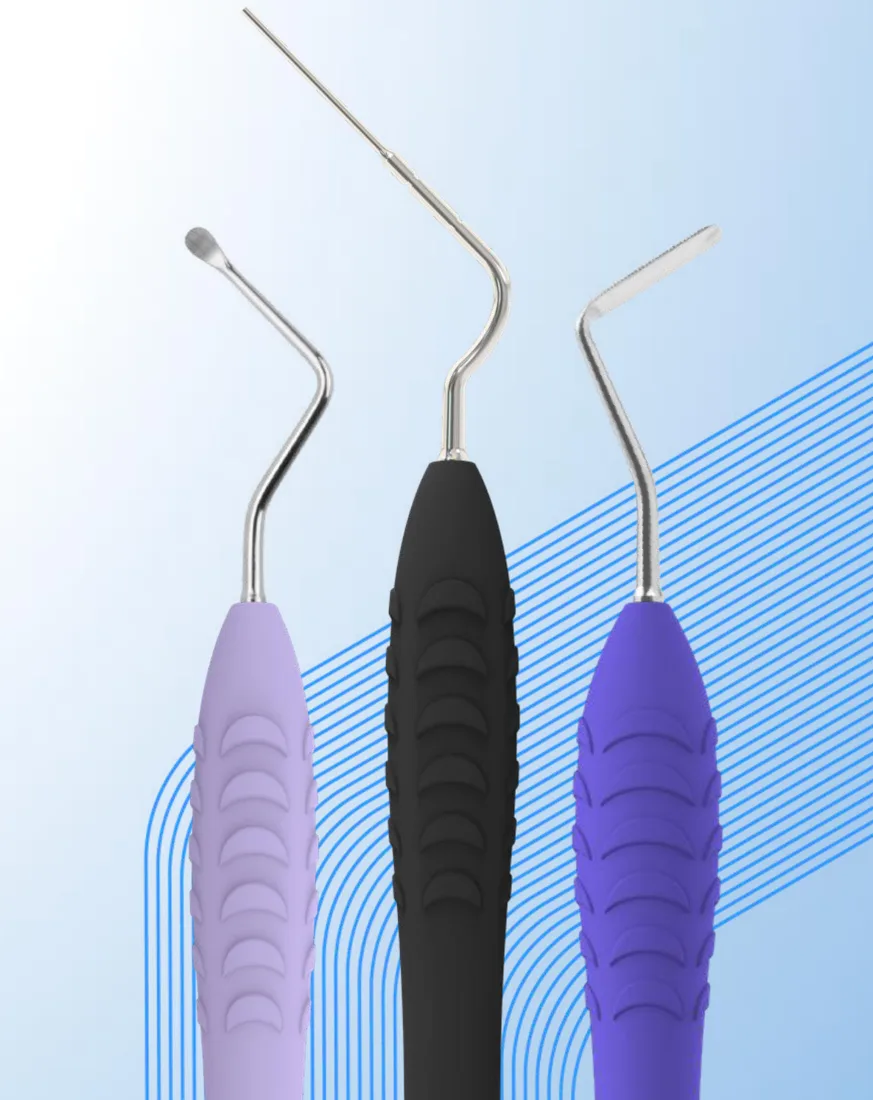
Fine working ends on ErgoX®, ErgoX® Plus, ErgoLite and steel handles.


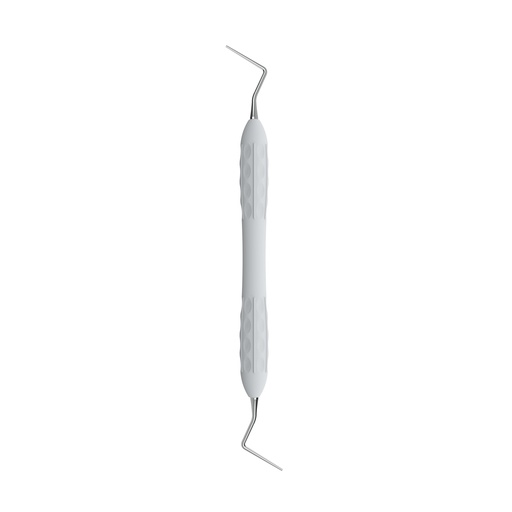
Endo Spreaders & Pluggers
9 instrumentsCombination spreader/plugger ends for lateral and vertical techniques.



ErgoLite Endo Instruments
2 instrumentsEndo plugger and root canal explorer on the economical ErgoLite X handle.
Choose your grip
Same working end. Your choice of handle.
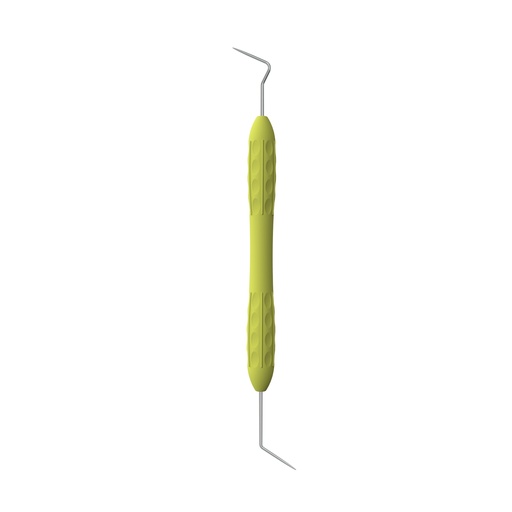
Endodontic work is fine motor work. Choose the grip that lets you stay precise through a long session. Below: the same Root Canal Explorer on each of them.
ErgoSteel
ErgoX® · ErgoLite
ErgoX® Plus

Our original ergonomic handle: balanced and comfortable for everyday use, in 15 colours for colour-coding.
Explore ErgoX® →
Stable grip, reduced pinch force and less fatigue: ergonomic comfort for long sessions.
Explore ErgoX® Plus →
A practical, economical handle option for everyday clinical work, in bright colours.
Explore ErgoLite →
Classic knurled steel handle (SP) for maximum tactile feedback.
Explore ErgoSteel →Microscopic HD endo mirrors — 0.7 mm ultra-thin
A clear image and an ultra-thin profile for work under the microscope, with HD mirror glass.
See the endo mirrors →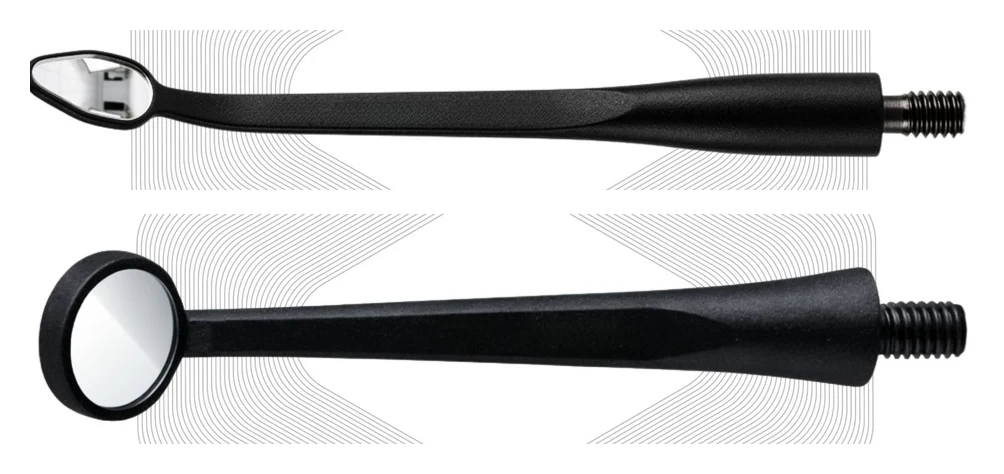



Learn more
Endodontic instrument guides
Practical, chairside guides from the ErgoDenta blog — patterns, technique and how to choose.
- Endodontic Instruments — Root Canal Steps and the Hand Instruments Used at Each
- Endodontic Hand Instruments — Pluggers & Spreaders
- Endo Explorers Explained — DG-16, CK-17
- Microscopic HD Endo Mirrors
- A Microscopic Endodontist on the 0.7 mm Mirror
- Stieglitz Forceps & Broken Instrument Retrieval
- Castellucci Prague 2026 — ErgoEndo Black Line
- ErgoDenta Endo Instruments
Questions
Endodontic Instruments — FAQ
What instruments are used in endodontics?
Endo explorers to locate canals, hand and rotary files to shape them, stoppers and rulers for working length, locking endo tweezers for paper points and cones, spreaders and pluggers for obturation, and micro mirrors for work under magnification. Endodontic instruments guide →
What are the steps of a root canal treatment?
Diagnosis, anaesthesia and rubber dam, access to the pulp chamber, locating the canals, measuring the working length, cleaning and shaping with irrigation, obturation with gutta-percha and sealer, and a coronal seal. Endodontic instruments guide →
What do the colours on endodontic files mean?
They follow the ISO code for the tip size: 15 white, 20 yellow, 25 red, 30 blue, 35 green, 40 black, repeating for larger sizes. Sizes 06, 08 and 10 are pink, grey and purple. Endodontic instruments guide →
What is the difference between an endo spreader and a plugger?
A spreader has a pointed tip and creates space for accessory cones in lateral condensation. A plugger has a flat tip and compacts gutta-percha vertically, usually warm. Endodontic instruments guide →
What is an endo explorer used for?
An endo explorer (for example a DG-16 pattern) has a long, fine tip used to find canal orifices and check for calcified or hidden canals. Endodontic instruments guide →
Why use a microscopic mirror?
Microscopic mirrors have small, thin heads that fit into the access cavity without blocking the view, and front-surface glass for a single, sharp image under magnification.
How are broken instruments retrieved?
Retrieval often combines ultrasonics and magnification with fine forceps such as Stieglitz forceps. Case selection and technique matter — see our retrieval guide.
Equipping an endodontic practice?
Tell us about your technique and microscope set-up — we will suggest explorers, pluggers, spreaders and mirrors.
Contact our teamFind a local distributor