Research collaborations with dental schools
We co-fund and co-design clinical research on ergonomics, instrument fatigue and colour-coded workflow with dental institutions worldwide. Bring the question — we bring the instruments and the partnership.
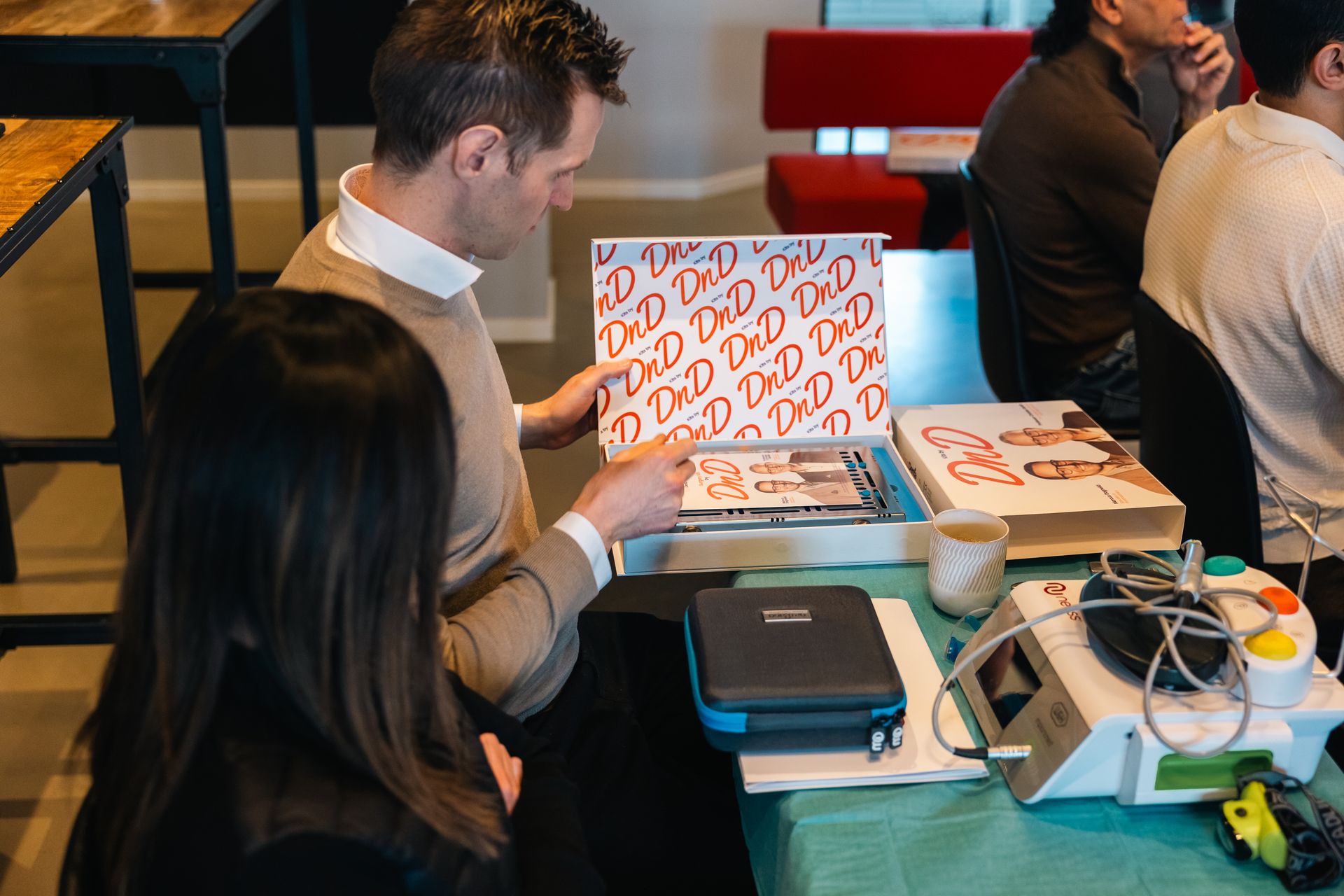
Better instruments build better clinicians. The earlier you put ergonomics into a dentist's hand, the longer their career lasts. — ErgoDenta Clinical Advisory Position
Research that translates to the chair
We're a Danish dental-instrument manufacturer with a clinical-research bias. Every product we ship has been clinically evaluated; every project we co-fund has to translate to better outcomes at the chair.
What we'd love to fund
Specific clinical and translational research areas where ErgoDenta is actively looking for academic partners.
Ergonomics & RSI prevention
Quantifying handle geometry, weight, grip diameter and silicone vs steel against EMG, posture and self-reported fatigue across long clinical sessions.
Edge retention & sharpening
Comparative studies of cryogenic-treated 440C steel (ErgoRazor) vs standard surgical steel — sharpness retention, sharpening cycles, instrument life.
Colour-coded workflow
Operatory efficiency, sterilisation reprocessing speed, error-rate reduction and traceability when colour-coded systems are introduced.
Modular tip systems
Cost-of-ownership, environmental impact and clinical performance of ErgoTip modular systems vs single-piece instruments.
Periodontal outcomes
Hand-instrument vs ultrasonic, area-specific Gracey vs universal curette outcomes, peri-implant maintenance with titanium curettes.
Dental education
How instrument quality on day one of training affects clinical confidence, technique acquisition and long-term ergonomic habits.
What each side brings
Research collaboration is a two-way exchange. Here's what's typically on the table.
What you (the institution) bring
- Clinical research expertise & methodology
- Access to patients, students, faculty
- Ethical / IRB approval pathway
- Publication & peer-review credibility
- Specific clinical or scientific question
- Lab space and EMG / measurement equipment if applicable
What we (ErgoDenta) bring
- Instruments & specimens at no charge
- Technical specifications, IFU and engineering data
- Partial research-grant funding (case-by-case)
- Manufacturing access for custom prototype variants
- Industry liaison & co-author support
- Reasonable promotion of published findings
How a collaboration starts
A typical timeline from first email to study kick-off is 4–8 weeks.
Initial outreach
Email info@ergodenta.dk with a brief project outline (1–2 pages): research question, hypothesis, methodology, instruments needed, timeline, requested support.
30-minute call
We'll respond within 48 hours and book a video call with our clinical advisory contact. This is where we test scientific fit and resource fit.
Letter of intent
If we're aligned, ErgoDenta issues a non-binding LOI specifying instruments to be supplied, any partial funding, IP ownership, publication terms and timeline.
Formal agreement
Standard research-collaboration agreement (your institution's template or ours). Independent ethics / IRB approval is the institution's responsibility; we provide any documentation needed for the submission.
Study kick-off
Instruments and any prototype variants are shipped at our cost. Our clinical-advisory contact is available for engineering questions throughout the study; otherwise we stay out of the methodology.
Publication & dissemination
Findings are owned by the investigating team. ErgoDenta is acknowledged where appropriate. We'll proudly share the publication with our network and translate it for clinical audiences if helpful.
Research collaboration FAQ
Does ErgoDenta provide research grant funding?
Who owns the intellectual property and the data?
Will ErgoDenta influence the methodology or hide unfavourable findings?
Can we publish without ErgoDenta's approval?
What about ethics / IRB approval?
Do you support student-led / PhD projects?
Have a project in mind?
Send a 1–2 page outline to info@ergodenta.dk. We respond within 48 hours and book a 30-minute call within the same week.
Email research enquiry