
Endo explorers explained — DG-16, CK-17, Pigtail & ErgoTip
Locating canal orifices is the first decision in every endodontic case. Here's how the DG-16, CK-17, Pigtail and ErgoTip endo explorers differ — and which to reach for in calcified, curved or narrow access cases.
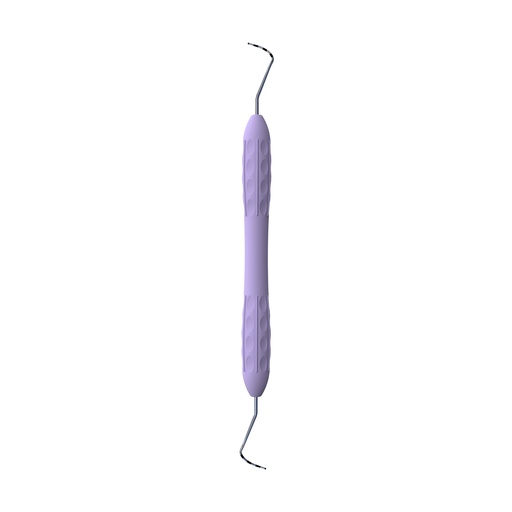
Canal orifice location sets the trajectory of the entire endodontic case. Miss the canal entry on access, and the rest of the procedure is uphill. The endodontic explorer is what you reach for once the access cavity is open — designed with a fine sharp tip and a specific shank curvature for tactile location of orifices. ErgoDenta carries 9 endo explorers across the DG-16, CK-17 and Pigtail families, plus ErgoTip® modular tips for use on the host handle.




Why the explorer geometry matters in endodontics
Once the access cavity is open, the operator's tactile sense becomes the primary navigation tool. A well-designed endo explorer translates the texture of the pulp chamber floor and the canal orifices into clear feedback through the operator's fingertips. The geometry of the working tip determines how clearly that signal comes through.
- Tip sharpness — sharp enough to engage the orifice opening but not so sharp it perforates a calcified floor.
- Shank length and curvature — long enough to reach posterior molar canals, curved enough to clear the access cavity walls.
- Working-end angle — the angle at which the tip approaches the canal orifice.
DG-16 — the workhorse
The DG-16 is the most widely used endodontic explorer worldwide. Double-ended with two long, slim, sharp tips offset at slightly different angles. The tip is fine enough to engage the smallest visible orifice and the shank length reaches comfortably into upper and lower molar access cavities.
Best used for:
- Routine canal orifice location in molars and premolars
- Confirming an orifice once tentatively located
- Tracing the floor of the pulp chamber for the dark line that marks an orifice
The DG-16 is the explorer that should be in every endodontic kit. If you can only afford one, this is it.
Chapter 3CK-17 — the calcified-canal explorer
The CK-17 has a more curved shank and a finer, slightly longer tip than the DG-16. The increased curvature lets the tip engage orifices that are partially obscured by the access cavity wall — particularly useful for the MB2 canal in upper first molars and for any case with significant calcification.
Best used for:
- MB2 canal location in upper first molars (the most common "missed" canal)
- Calcified canals where the orifice is reduced to a dot in the pulp floor
- Cases where the access cavity walls are obstructing direct DG-16 approach
Pigtail explorer — the curved tip
The Pigtail explorer has a tightly curved working tip — almost a complete coil — designed to retrieve broken instruments and small foreign bodies from the pulp chamber. It's not primarily a canal orifice locator; it's a retrieval tool that earns a place on the endodontic tray.
Best used for:
- Retrieving small fragments (cotton pellets, broken file tips, paper points)
- Working around obstructions in the pulp chamber
- Hooking a partially loose instrument out of an access cavity
ErgoTip® endo modular system
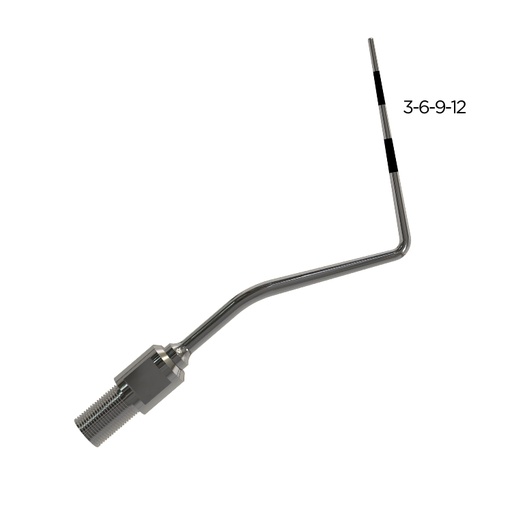
ErgoDenta's ErgoTip® system applies to endodontic explorers as well. A single host handle (ErgoTip-X, ErgoTip-XP or ErgoTip-Steel) accepts replaceable working tips — including DG-16-style and CP-12 style tips. When a tip dulls or bends, swap the tip rather than replacing the whole instrument.
For high-volume endodontic practices, this dramatically reduces the per-procedure cost of explorer maintenance — and the host handle stays consistent across the kit, so muscle memory carries from one tip to the next.
The ErgoTip endo range complements (rather than replaces) the standard DG-16 / CK-17 / Pigtail range — many endodontic practices keep both: ErgoTip for routine work, dedicated DG-16 / CK-17 for the difficult cases where the operator wants the original feel of a one-piece instrument.
Chapter 6Choosing your starter endo explorer set
- DG-16 — the workhorse, used in every case
- CK-17 — for MB2 location and calcified cases
- Pigtail — for retrieval tasks
- ErgoTip endo handle + 2-3 replaceable tips — for routine cases where tip-swap is more efficient than dedicated explorers
A four-piece kit covers 95% of endodontic location and retrieval tasks. Build out from there with longer-shank variants for posterior molar access if needed.
At a glanceThree endo explorer designs — at a glance
| Explorer | Tip geometry | Best for | Notes |
|---|---|---|---|
| DG-16 | Long slim sharp tip, dual-ended | Routine canal orifice location | The everyday workhorse |
| CK-17 | Finer tip, curved shank | MB2 location, calcified canals | Reaches around access cavity walls |
| Pigtail | Tight coil tip | Retrieval of fragments / debris | Not primarily a locator |
| ErgoTip Endo | Modular replaceable tip | Routine work + tip refresh | One handle, multiple tip types |
Build your endodontic explorer kit
9 dedicated endo explorers + ErgoTip® modular endo tips — across the DG-16, CK-17, Pigtail and ErgoTip families. from a Danish dental instrument company.
Browse all endodontic instruments →Frequently asked questions
What is a DG-16 endo explorer used for?
The DG-16 is the standard endodontic explorer for canal orifice location. Double-ended with two long sharp tips offset at slightly different angles. Used in every routine endo case to locate canal orifices once the access cavity is open. If you only buy one endo explorer, this is it.
What's the difference between DG-16 and CK-17?
The CK-17 has a more curved shank and a finer, slightly longer tip than the DG-16. The increased curvature lets the tip engage orifices that are partially obscured by the access cavity wall — particularly useful for MB2 canal location in upper first molars and for cases with significant calcification.
How do I find the MB2 canal in an upper first molar?
First, ensure your access cavity is wide enough on the mesial side — most MB2s are missed because the access doesn't extend mesially enough. Then use a CK-17 explorer to probe the dentine floor mesial to MB1 — the MB2 orifice is usually 2-3 mm mesial to MB1 and slightly buried in dentine. The curved CK-17 shank reaches under the access wall to engage the orifice that a DG-16 can't reach.
What is a pigtail explorer used for?
The Pigtail explorer has a tightly curved coil tip designed to retrieve small fragments from the pulp chamber — broken file tips, paper points, cotton pellets, small foreign bodies. It's not primarily an orifice locator; it's a retrieval tool that earns a place on the endodontic tray for the unexpected.
Should I use ErgoTip endo explorers or dedicated DG-16/CK-17?
Both have a place. ErgoTip is more cost-effective for routine work — swap the tip when dull rather than replacing the whole instrument. Dedicated DG-16/CK-17 give the original one-piece feel that some endodontists prefer for difficult cases. Many practices keep both: ErgoTip for routine, dedicated explorers for complex cases.
How sharp should an endo explorer tip be?
Sharp enough to engage a visible orifice with a light tap, not so sharp it perforates a calcified pulp floor. The DG-16 is generally sharper than the CK-17. Sharpen with a fine tapered diamond stone, working from the lateral aspect of the tip toward the point. Replace the explorer when the tip can no longer be sharpened to a fine point.
Can I use an endo explorer for periodontal work?
Not interchangeably. Endodontic explorers have very fine, sharp tips designed for hard-tissue tactile work in the access cavity. Periodontal explorers (Explorer 17, 11/12, etc.) have different shank lengths and tip geometries designed for sub-gingival calculus detection. Use each instrument for its designed purpose.
How long should an endo explorer last?
A dedicated DG-16 should last 12–24 months of regular endo practice with periodic sharpening. The tip eventually wears down beyond the point where sharpening can restore its profile — at that point replace the instrument. ErgoTip modular tips last 100–200 cases per tip; replace the tip rather than the handle.
Is the ErgoTip endo handle compatible with all endo tip types?
ErgoTip handles accept the full ErgoTip tip range — explorers, probes, curettes, and other working ends. The endo tip range specifically covers DG-16-style and CP-12-style tips suitable for endodontic location work. Check the catalogue for the current full tip compatibility list.
Do I need a long-shank endo explorer for posterior molars?
For most adult posterior molar access, the standard DG-16 reach is sufficient. Long-shank variants exist for cases where the operator needs additional reach — particularly second molars in patients with limited mouth opening. If you regularly find yourself stretching with a standard DG-16, a long-shank version is worth adding to the kit.