Reference list · with pictures
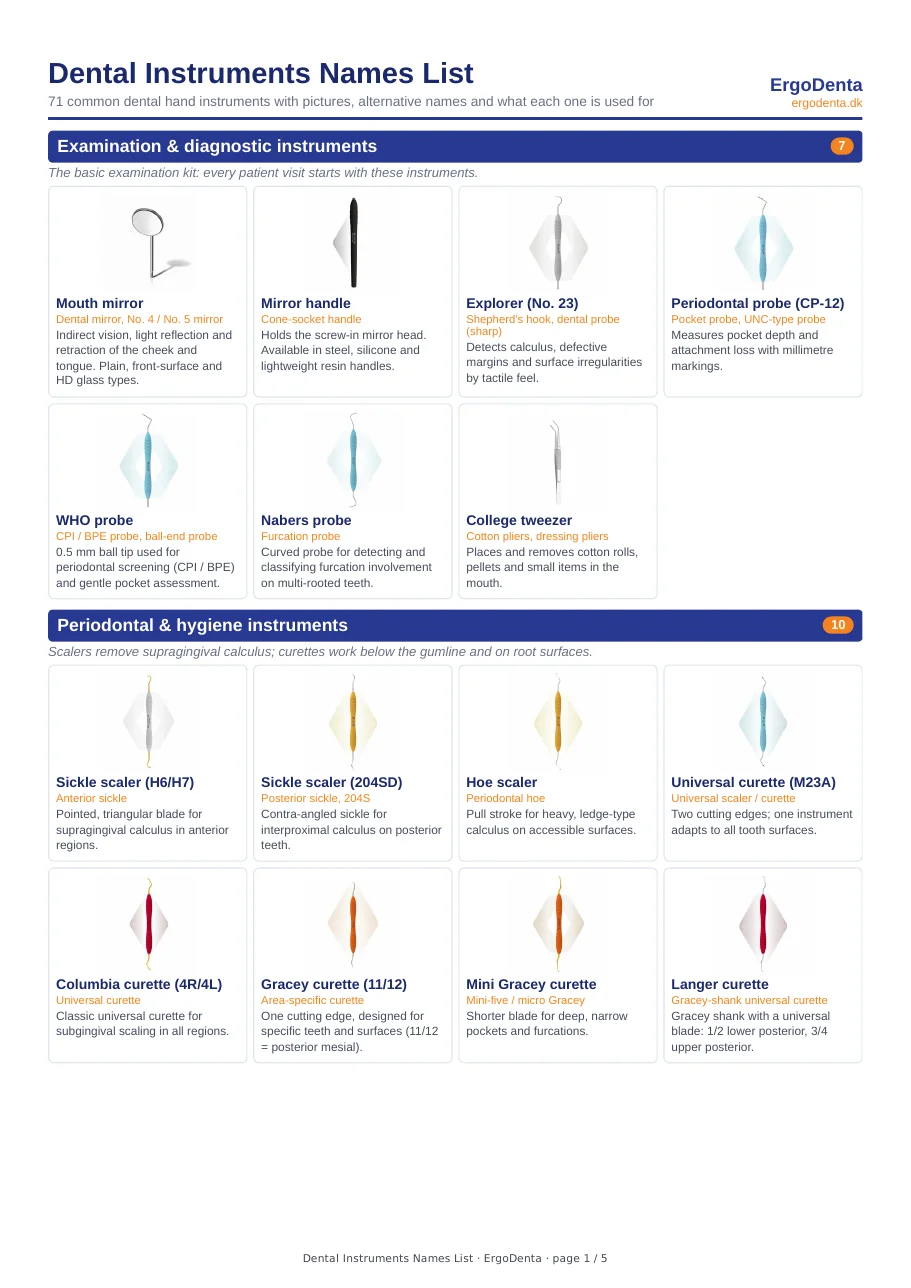
Every dental instrument has a name, and many have two or three. This list puts 71 common dental hand instruments on one page, grouped by use, each with a picture, its alternative names and one line on what it does.
It is written for dental assistants, hygienists, students and buyers who need to match a name to an instrument quickly, whether that is for setting up a tray, reading an order or learning the basics.
How to read a dental instrument name
Most dental instrument names combine three things: what it does (scaler, curette, excavator, elevator), who designed it (Gracey, Columbia, Langer, Nabers, Molt, Cryer, Heidbrink, Tofflemire, Castroviejo) and a number that identifies the working end.
Every hand instrument has the same three parts: the handle you hold, the shank that connects and angles the tip, and the working end (blade, nib, tip or beak). Double-ended instruments carry a mirror-image pair on one handle, which is why many names come in pairs such as Gracey 11/12 or Columbia 4R/4L.
Quick rule: scalers work above the gumline, curettes below it; explorers feel, probes measure; forceps grip, elevators loosen.
7 instruments
Examination & diagnostic instruments
The basic examination kit: every patient visit starts with these instruments.
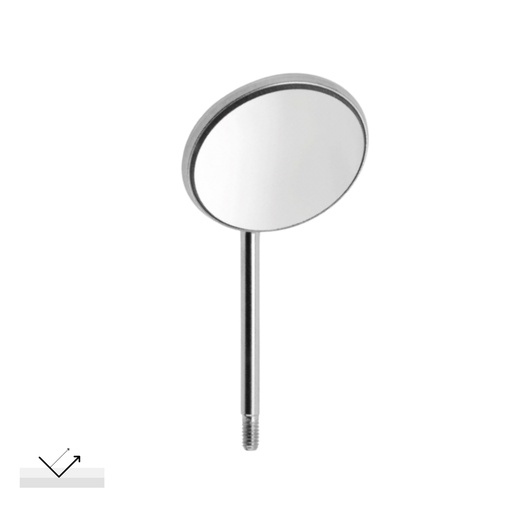 Mouth mirrorDental mirror, No. 4 / No. 5 mirrorIndirect vision, light reflection and retraction of the cheek and tongue. Plain, front-surface and HD glass types.View instrument →
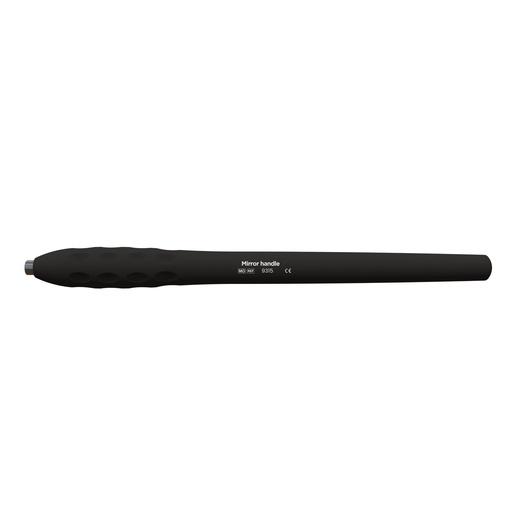 Mirror handleCone-socket handleHolds the screw-in mirror head. Available in steel, silicone and lightweight resin handles.View instrument →
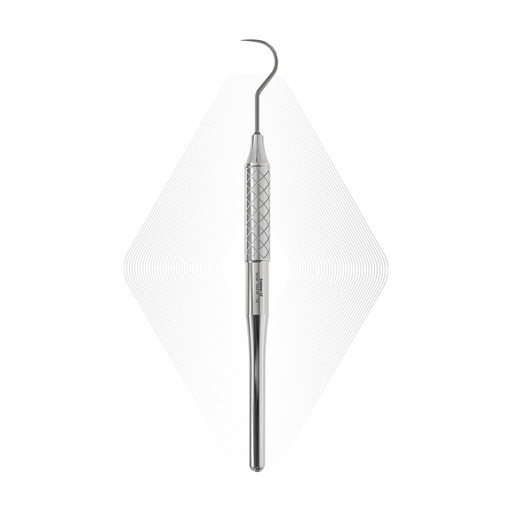 Explorer (No. 23)Shepherd's hook, dental probe (sharp)Detects calculus, defective margins and surface irregularities by tactile feel.View instrument →
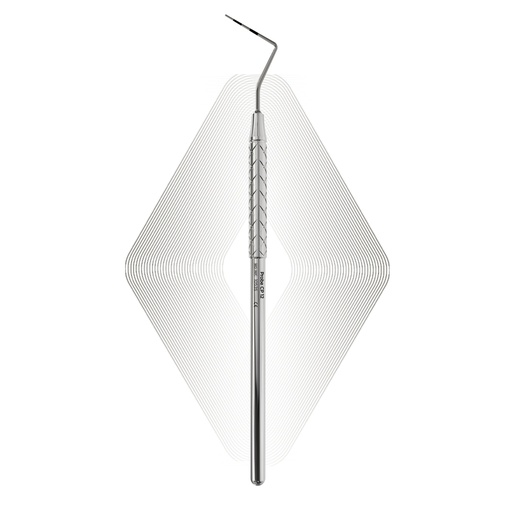 Periodontal probe (CP-12)Pocket probe, UNC-type probeMeasures pocket depth and attachment loss with millimetre markings.View instrument →
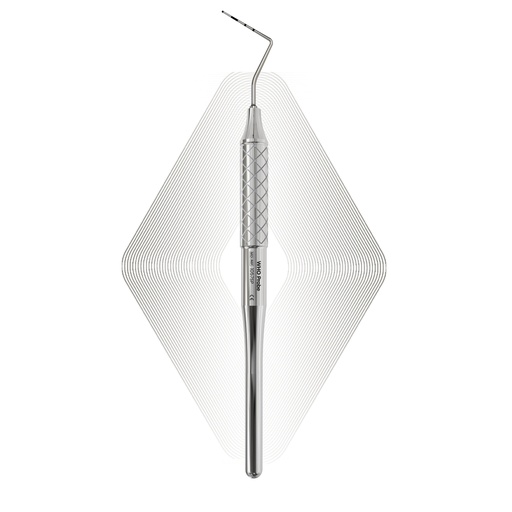 WHO probeCPI / BPE probe, ball-end probe0.5 mm ball tip used for periodontal screening (CPI / BPE) and gentle pocket assessment.View instrument →
 Nabers probeFurcation probeCurved probe for detecting and classifying furcation involvement on multi-rooted teeth.View instrument →
 College tweezerCotton pliers, dressing pliersPlaces and removes cotton rolls, pellets and small items in the mouth.View instrument →
10 instruments
Periodontal & hygiene instruments
Scalers remove supragingival calculus; curettes work below the gumline and on root surfaces.
 Sickle scaler (H6/H7)Anterior sicklePointed, triangular blade for supragingival calculus in anterior regions.View instrument →
 Sickle scaler (204SD)Posterior sickle, 204SContra-angled sickle for interproximal calculus on posterior teeth.View instrument →
 Hoe scalerPeriodontal hoePull stroke for heavy, ledge-type calculus on accessible surfaces.View instrument →
 Universal curette (M23A)Universal scaler / curetteTwo cutting edges; one instrument adapts to all tooth surfaces.View instrument →
 Columbia curette (4R/4L)Universal curetteClassic universal curette for subgingival scaling in all regions.View instrument →
 Gracey curette (11/12)Area-specific curetteOne cutting edge, designed for specific teeth and surfaces (11/12 = posterior mesial).View instrument →
 Mini Gracey curetteMini-five / micro GraceyShorter blade for deep, narrow pockets and furcations.View instrument →
 Langer curetteGracey-shank universal curetteGracey shank with a universal blade: 1/2 lower posterior, 3/4 upper posterior.View instrument →
 Implant curette (titanium)Implant-safe curette, blue titaniumTitanium working end for cleaning implant surfaces without scratching them.View instrument →
 Kirkland knifePeriodontal knife, gingivectomy knifeKidney-shaped blade for gingivectomy and gingival contouring.View instrument →
14 instruments
Restorative & filling instruments
From caries removal to placing, shaping and finishing the restoration.
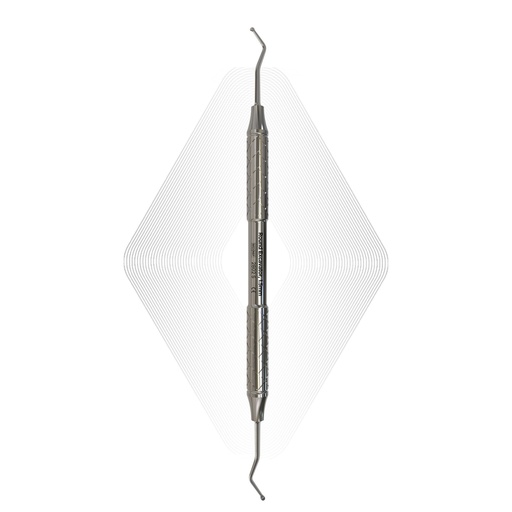 Round excavatorSpoon excavator, roundRemoves soft carious dentine with a scooping motion.View instrument →
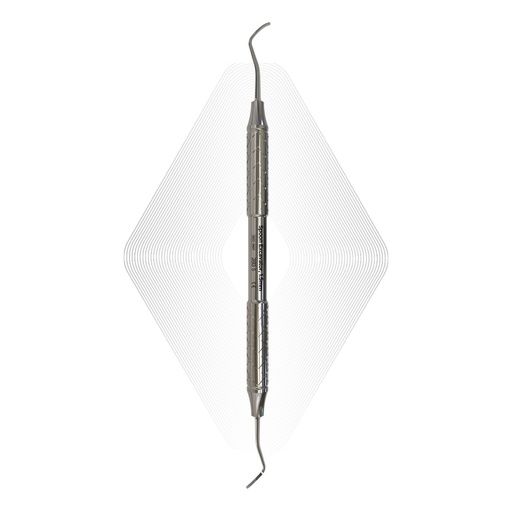 Spoon excavatorOval excavatorLarger oval spoon for bulk removal of caries and temporary material.View instrument →
 Gingival margin trimmerGMT, mesial / distalBevels and planes the gingival cavity margin in Class II preparations.View instrument →
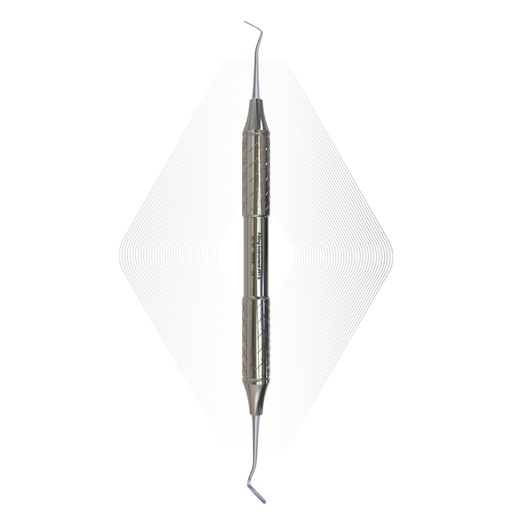 Filling instrument (PFI 6)Plastic filling instrument, flat plasticCarries and shapes composite, glass ionomer and liners.View instrument →
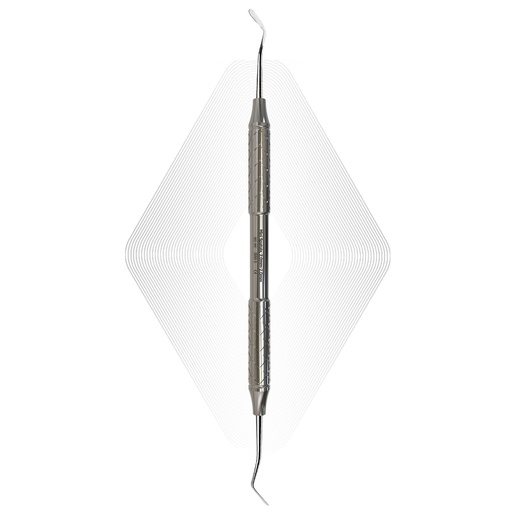 Composite spatulaMini spatula, placement spatulaPlaces and smooths composite in the cavity.View instrument →
 Plastic instrument (anterior)Composite modelling instrumentNon-stick instrument for building anterior contours.View instrument →
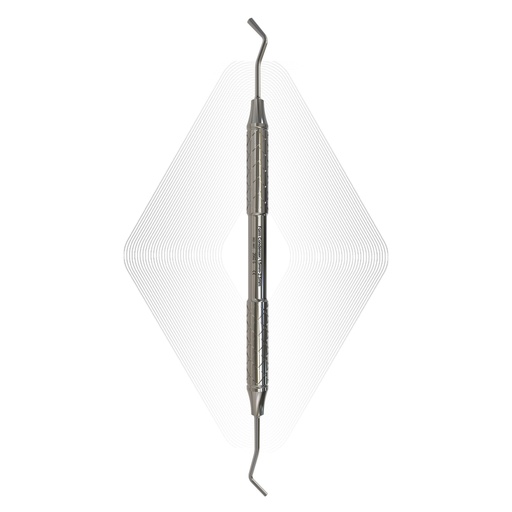 CondenserForm condenser, packerCondenses restorative material into the cavity and against the matrix.View instrument →
 Amalgam condenserAmalgam pluggerSerrated or smooth ends to pack amalgam in increments.View instrument →
 Ball burnisherBurnisher & pluggerSmooths and adapts the restoration surface and matrix band.View instrument →
 Carver (Nystrom)Anatomical carverCarves occlusal anatomy into the unset restoration.View instrument →
 Heidemann spatulaCement spatula / plastic instrumentMixes and places cements, liners and temporary materials.View instrument →
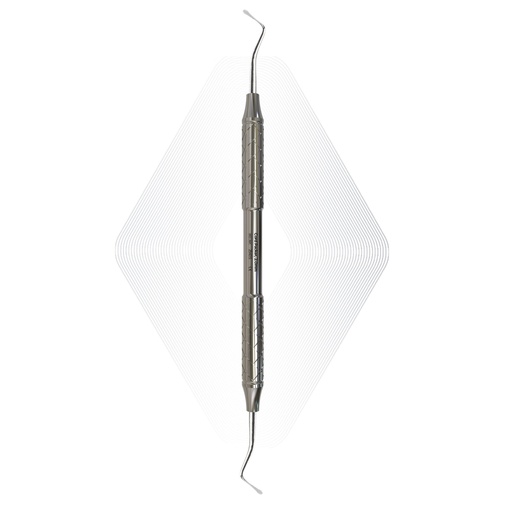 Cord packerRetraction cord packerPacks retraction cord into the sulcus before impressions.View instrument →
 Tofflemire matrix retainerMatrix band holderHolds a matrix band to form the missing wall of a Class II cavity.View instrument →
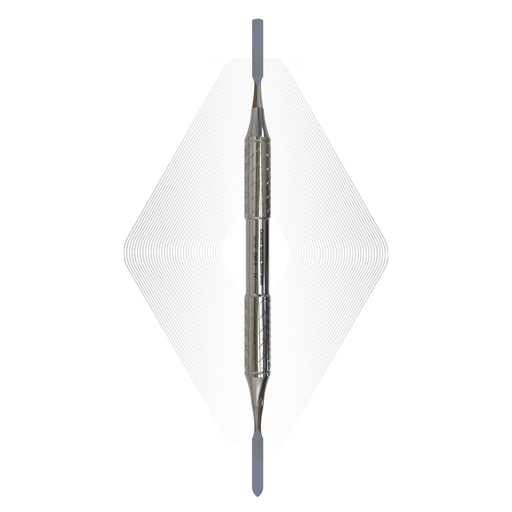 Cement spatulaMixing spatulaMixes cements and impression materials on a pad or glass slab.View instrument →
4 instruments
Rubber dam & isolation
Rubber dam gives a dry, clean field for restorative and endodontic work.
 Rubber dam punchAinsworth punchPunches holes of different sizes in the dam sheet.View instrument →
 Rubber dam clamp forcepsBrewer / Ivory clamp forcepsOpens, places and removes the rubber dam clamp.View instrument →
 Rubber dam clamp (12A)Molar clamp, winged / winglessAnchors the dam on the tooth; shapes are tooth-specific (molar, premolar, anterior).View instrument →
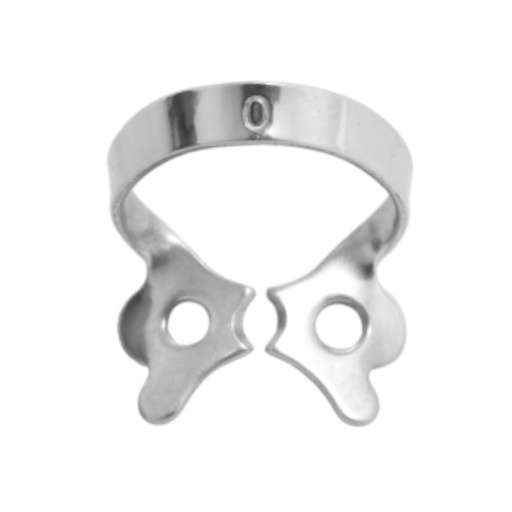 Anterior clamp (B4)Butterfly clampRetracts the dam and gingiva on anterior teeth for cervical restorations.View instrument →
5 instruments
Endodontic instruments
Hand instruments for locating canals and obturating the root canal system.
 Endo explorerCanal explorerLong, fine tip for locating canal orifices.View instrument →
 Endo spreaderFinger / hand spreaderCreates space for accessory cones in lateral condensation.View instrument →
 Endo pluggerVertical condenserFlat tip for vertical compaction of warm gutta-percha.View instrument →
 Endo tweezerLocking tweezer, cross-action tweezerHolds paper points and gutta-percha cones securely.View instrument →
 Micro mirrorEndo mirror, micro-surgical mirrorVery small / thin mirror head for work under the microscope.View instrument →
22 instruments
Extraction & oral surgery instruments
Forceps and elevators for extractions, plus the core surgical kit for flaps and suturing.
 Upper molar forcepsExtraction forceps No. 17 / 18R / 18LBeaks shaped to the buccal and palatal roots of upper molars.View instrument →
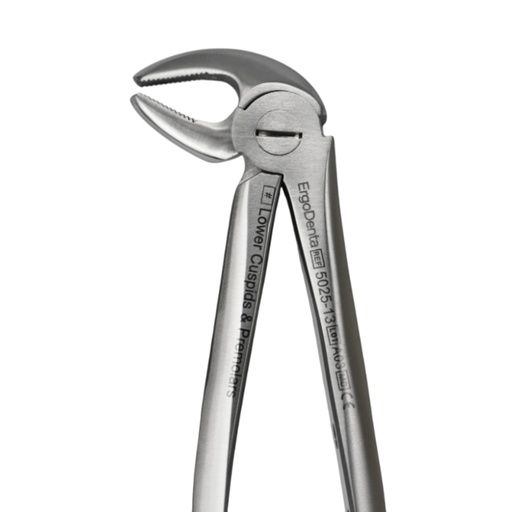 Lower molar forcepsExtraction forceps No. 13 / 22 / 23 (cowhorn)Grip the bifurcated roots of lower molars and premolars.View instrument →
 Lower anterior forcepsExtraction forceps No. 74Narrow beaks for lower incisors, canines and roots.View instrument →
 Straight elevator (Bein)Straight root elevatorLuxates teeth and roots before forceps are applied.View instrument →
 Luxating elevatorLuxatorThin, sharp blade that cuts the periodontal ligament for atraumatic extraction.View instrument →
 Cryer elevatorWinter / East-West elevatorTriangular blade for removing a remaining root after the neighbouring root is out.View instrument →
 Root tip elevator (Heidbrink)Root tip pickVery fine blade for fractured apical root tips.View instrument →
 PeriotomeAtraumatic extraction instrumentSevers the periodontal ligament to preserve bone for implants.View instrument →
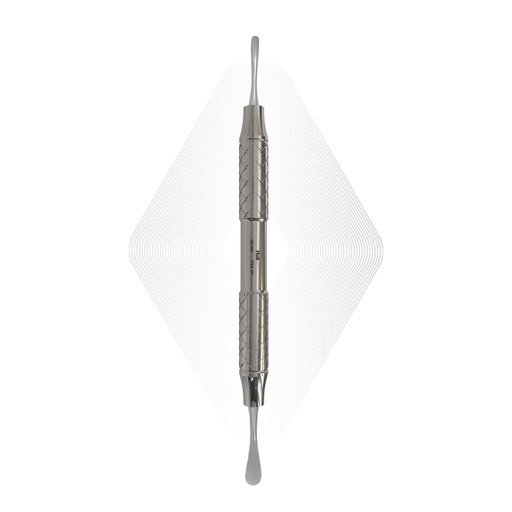 Periosteal elevator (Molt)Molt 9, Nordberg elevatorLifts the mucoperiosteal flap from the bone.View instrument →
 Surgical curette (Lucas)Bone curette, alveolar curetteRemoves granulation tissue and debris from extraction sockets.View instrument →
 Bone fileHoward bone fileSmooths sharp bone edges after extraction.View instrument →
 Scalpel handle (No. 3)Bard-Parker handleHolds blades No. 11, 12, 15 and 15c for incisions.View instrument →
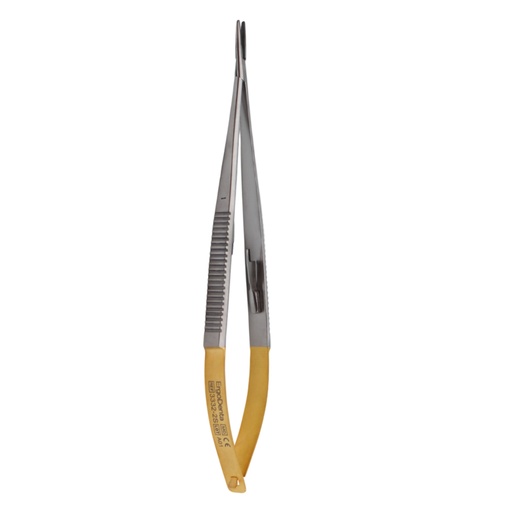 Needle holderCastroviejo, Mathieu, Crile-WoodGrips the suture needle; micro types for fine sutures.View instrument →
 Suture scissorsStitch scissorsCuts suture material; some have a notch for removing sutures.View instrument →
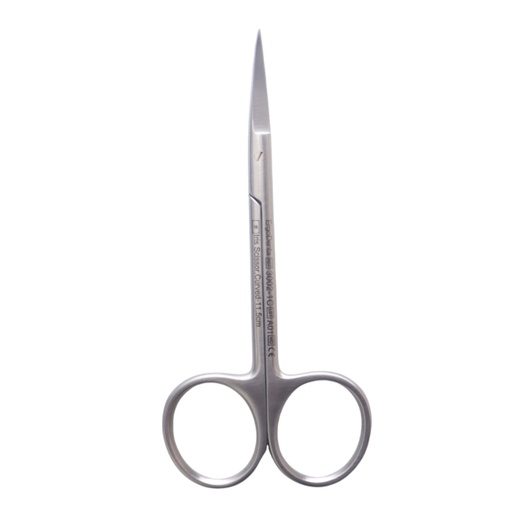 Iris scissorsFine tissue scissorsSmall, sharp scissors for trimming soft tissue.View instrument →
 La Grange scissorsGum scissors, double-curvedDouble-curved blades for trimming gingival tissue.View instrument →
 Goldman-Fox scissorsPeriodontal scissorsSerrated blade for trimming tissue during periodontal surgery.View instrument →
 Surgical tweezer (1:2)Tissue forceps, rat-tooth forcepsTeeth at the tip grip soft tissue without slipping.View instrument →
 Mosquito forcepsHaemostat, Halsted-MosquitoClamps vessels and grasps small fragments or root tips.View instrument →
 Langenbeck retractorTissue retractorHolds the flap and cheek away from the surgical site.View instrument →
 Minnesota retractorCawood-Minnesota cheek retractorRetracts the cheek and flap for access and visibility.View instrument →
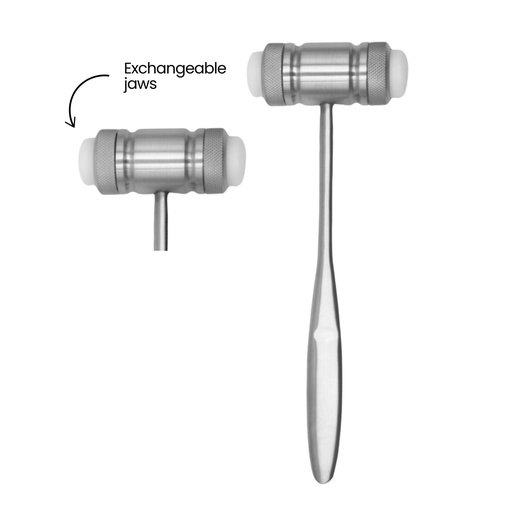 Surgical malletMead hammerUsed with osteotomes and chisels in bone surgery.View instrument →
7 instruments
Anaesthesia, prosthetics & orthodontics
Other hand instruments found in most general practices.
 Dental syringeCartridge syringe, aspirating syringeHolds the anaesthetic cartridge for local anaesthesia.View instrument →
 Crown removerCrown & bridge removerRemoves temporary and permanent crowns.View instrument →
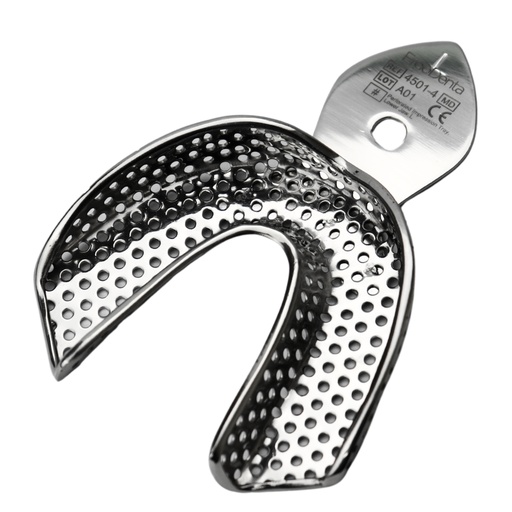 Impression trayPerforated stock trayCarries impression material into the mouth.View instrument →
 Mathieu plierLigature plier, Mathieu needle holderPlaces elastic and steel ligatures in orthodontics.View instrument →
 Weingart plierUniversal ortho plierGuides and bends archwires into brackets.View instrument →
 Bracket removal plierDebonding plierRemoves brackets at the end of orthodontic treatment.View instrument →
 Ligature tuckerOrtho directorTucks ligature ends and seats archwires.View instrument →
2 instruments
Organisation & sterilisation
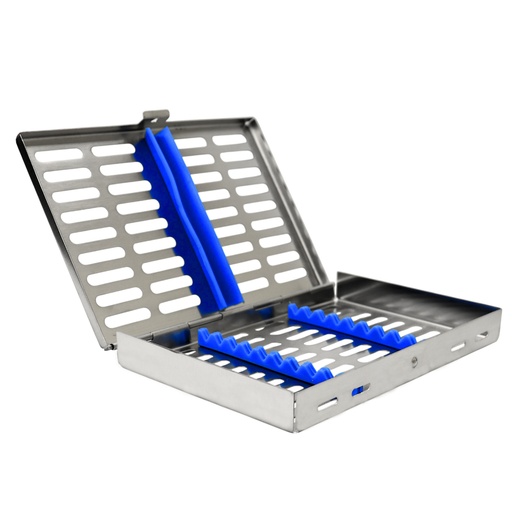
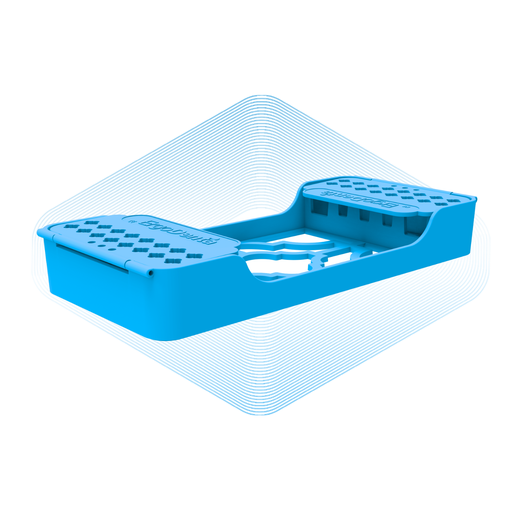
Keep instruments together through use, cleaning and sterilisation.
Take the list with you
The PDF version has every instrument on this page with its picture, alternative names and use: ideal for training new team members, labelling cassettes or checking an order.
Questions
Frequently asked questions
What are the names of the basic dental instruments?
The basic examination kit is the mouth mirror, the explorer (probe No. 23), the periodontal probe and the college tweezer (cotton pliers). Most general practices add scalers, curettes, excavators, filling instruments, extraction forceps and elevators.
What is the difference between a scaler and a curette?
A scaler (sickle or hoe) has a pointed or straight working end for calculus above the gumline. A curette has a rounded toe and back, so it can go below the gumline and adapt to the root surface. Universal curettes have two cutting edges; Gracey curettes have one and are area-specific.
What is the difference between an explorer and a periodontal probe?
An explorer has a sharp tip for feeling calculus, caries margins and restoration edges. A periodontal probe has a blunt, marked tip for measuring pocket depth in millimetres. The WHO probe has a 0.5 mm ball end used for periodontal screening.
Why do dental instruments have numbers?
Numbers identify the design of the working end. On curettes, numbers show the area of use (Gracey 11/12 posterior mesial, 13/14 posterior distal). On extraction forceps, the number identifies the tooth group, and on explorers and probes it identifies the tip shape or marking pattern.
Can I download this dental instruments list as a PDF?
Yes. The free PDF version of this list has all 71 instruments with pictures, alternative names and uses on five A4 pages. Use the download button at the top or bottom of this page.
Where are the instruments in this list made?
All pictures in this list show instruments from the ErgoDenta range. ErgoDenta is a Danish dental instrument company supplying clinics and distributors across Europe; every instrument in the list links to its product page.