What Are the Basic Dental Instruments? A Simple Guide for Every Operatory

From the examination kit to forceps — what each basic dental instrument does, with ErgoDenta examples.

Every dental treatment — from a routine check-up to a surgical extraction — starts with the same small family of hand instruments. Here is a plain-English guide to the basic dental instruments, what each one does, and how to choose them.

If you are setting up an operatory, training, or simply want to name the tools on the tray with confidence, this guide is for you. We will walk through the instruments group by group, in the order you tend to reach for them during an appointment, and show a representative ErgoDenta example of each so you can see exactly what it looks like.

1. The dental examination kit — the true basics

Almost every appointment begins with four instruments, together known as the basic examination set or diagnostic kit: the mouth mirror, the explorer, the periodontal probe and cotton pliers. Master these four and you understand the foundation of every dental tray. You will find all of them in the Diagnostics category.

Mouth mirror

The mouth mirror does three jobs at once: it reflects light onto the tooth, lets you see surfaces you cannot view directly (like the back of molars), and retracts the cheek or tongue. A front-surface mirror places the reflective coating on the front of the glass, giving a crisp, distortion-free image — the standard for clinical work. The mirror head screws into a separate, reusable handle.
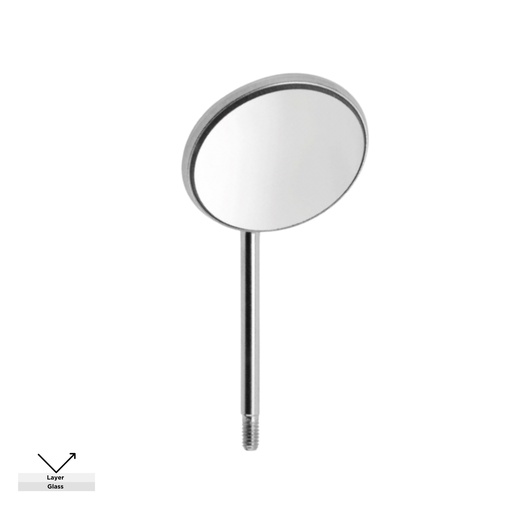
ErgoDenta Front-Surface Mouth Mirror No. 4 (1504F)
Front-Surface Mouth Mirror No. 4
Front-surface, No. 4 head — bright, ghost-free reflection for examination and indirect vision.
View product →
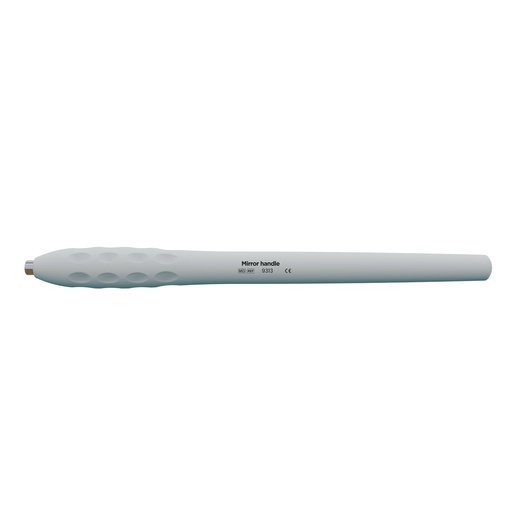
ErgoDenta ErgoLite Mirror Handle (9313)
ErgoLite Mirror Handle
Lightweight cone-socket handle that fits standard mirror heads; available in several colours.
View product →

Want the full picture on plain vs. front-surface vs. rhodium and magnifying mirrors? Read our companion guide, Dental Mouth Mirrors Explained, or browse all Mirrors.

Dental explorer

The explorer (or probe-explorer) has a fine, sharp tip used to feel for caries, check margins and detect calculus by touch. A popular format pairs an explorer end with a measuring probe end so one instrument does double duty.
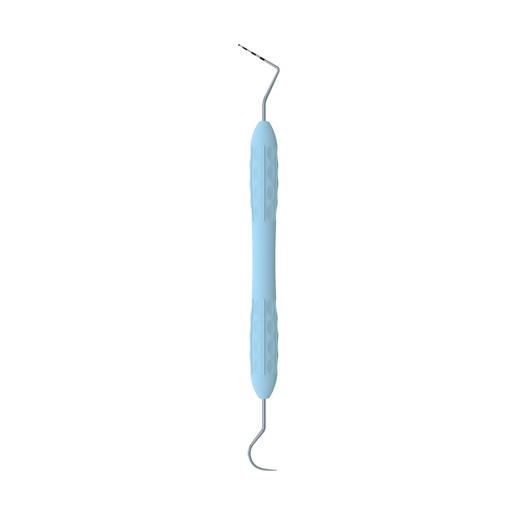
ErgoDenta Explorer 23 + Probe CP-2 (9105)
Explorer 23 + Probe CP-2
Explorer 23 paired with a CP-2 probe — caries detection and quick pocket checks in one instrument.
View product →

Explore the full range on the Explorers page.

Periodontal probe

The periodontal probe has a blunt, millimetre-marked tip for measuring the depth of the gingival sulcus and screening for gum disease. A Nabers probe is a curved version made specifically to detect furcation involvement between the roots of molars.
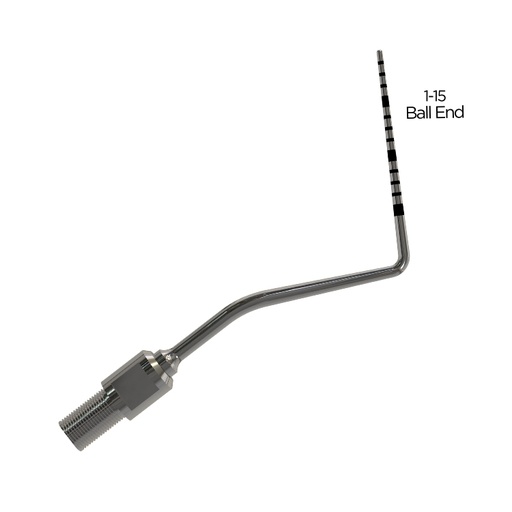
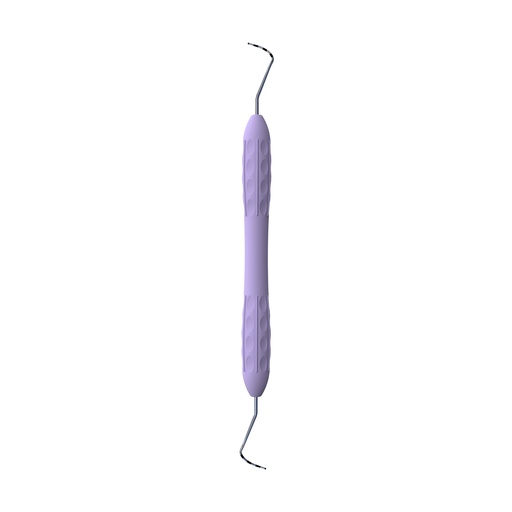
ErgoDenta North Carolina Probe CP-15 (155T)
North Carolina Probe CP-15
North Carolina (CP-15) probe with clear millimetre markings for accurate pocket charting.
View product →
ErgoDenta Nabers Furcation Probe (9104)
Nabers Furcation Probe
Curved Nabers probe for checking furcation involvement on multi-rooted teeth.
View product →

For a deep dive into UNC-15, Williams, WHO and Naber’s designs, see our Periodontal Probes Guide.

Cotton pliers (tweezers)

Cotton pliers — also called college or dressing tweezers — carry small items such as cotton pellets, paper points and retraction cord into and out of the mouth. They keep the working field clean and your fingers out of the way.

ErgoDenta Meriam Tweezers (3636-1A)
Meriam Tweezers
Serrated Meriam tweezers for a secure grip on pellets, points and small materials.
View product →

See how College, Adson, Meriam and micro-surgical patterns differ in Dental Tweezers Compared.

Why ergonomics matter even on the basics. These four instruments are picked up dozens of times a day. A lightweight, well-balanced handle with a comfortable grip reduces hand fatigue and improves tactile feel — which is exactly what the ErgoLite and ErgoTip ranges are designed for.

2. Scaling & periodontal instruments

Once teeth are examined, cleaning instruments remove plaque and calculus. A sickle scaler has a pointed tip and two sharp edges for hard deposits above the gumline; a curette has a rounded toe so it can work safely below the gumline. Both live in the Periodontics range.


ErgoDenta Micro Sickle Scaler 01-02 (9135)
Micro Sickle Scaler 01-02
Micro sickle scaler for fine supragingival calculus and tight contacts.
View product →
ErgoDenta Gracey 7-8 Curette (9133)
Gracey 7-8 Curette
Area-specific Gracey 7-8 curette for safe subgingival debridement.
View product →

Not sure which to reach for? Read Sickle Scalers vs. Curettes and our Gracey Curettes guide, or browse Sickle Scalers and Gracey Curettes.

3. Restorative & filling instruments

For fillings you need instruments to remove decay and to place and shape material. An excavator scoops out soft caries and temporary cement; plastic filling instruments and composite spatulas carry, condense and contour the restorative material. These sit in the Restoration category.
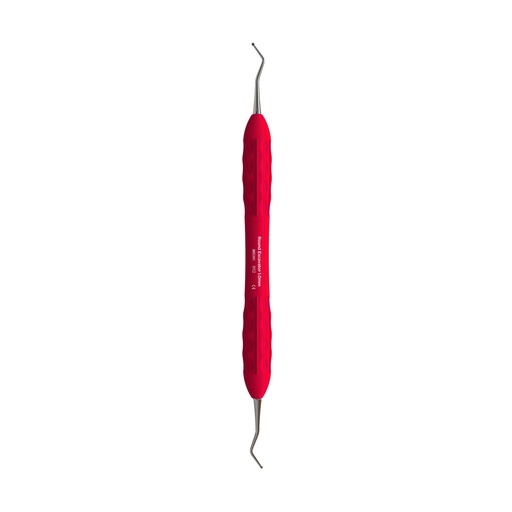

ErgoDenta Round Excavator 1.0 mm (9112)
Round Excavator 1.0 mm
Spoon excavator for removing soft caries and excess cement.
View product →
ErgoDenta Plastic Instrument – Anterior (9125)
Plastic Instrument – Anterior
Anterior plastic instrument for placing and shaping composite.
View product →
ErgoDenta Composite Spatula 6 (9124)
Composite Spatula 6
Composite spatula for smoothing and contouring restorations.
View product →

Building a restorative tray? Our Composite Filling Instruments guide breaks down pluggers, spatulas and carvers.

4. Extraction & minor surgery instruments

Surgical visits add instruments to loosen and remove teeth. Elevators (or luxators) widen the socket and loosen the tooth; extraction forceps, shaped to each tooth and arch, grip and deliver it. You can find these in the Extraction and Surgery ranges.
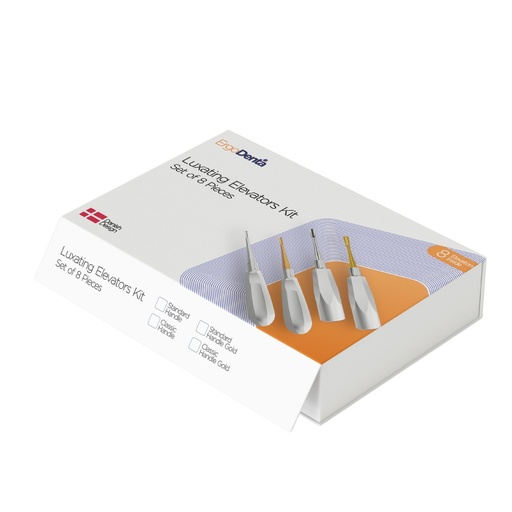

ErgoDenta Luxating Elevators Kit (6001)
Luxating Elevators Kit
A set of luxating elevators to loosen teeth atraumatically before extraction.
View product →
ErgoDenta Standard Extraction Forceps Kit, 10 pcs (5005)
Standard Extraction Forceps Kit, 10 pcs
A 10-piece standard forceps kit covering the common extraction positions.
View product →
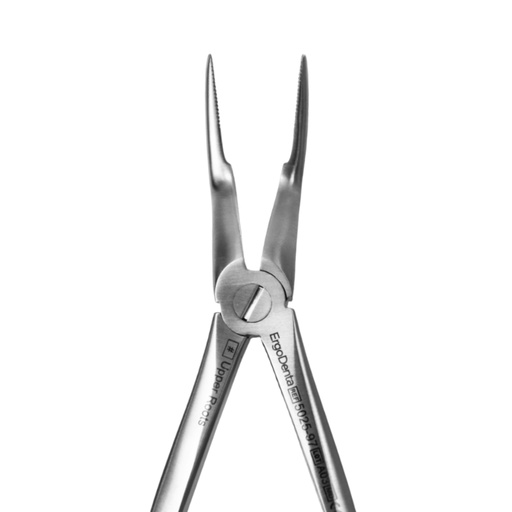
ErgoDenta Upper Roots Extraction Forcep (5025-97)
Upper Roots Extraction Forcep
Position-specific forcep — here for upper roots.
View product →

Forceps numbering can be confusing — our Extraction Forceps Numbering Guide decodes it.

5. Don’t forget sterilization & organization

A basic set is only as good as how it is cleaned and stored. Grouping a full setup in a cassette means it is sterilised, transported and laid out together — protecting the delicate tips and saving chairside time. Explore the Sterilize & Organize range to keep your basics tidy and ready.
Frequently asked questions

What are the basic dental instruments every clinic needs?
The core set is the diagnostic, or examination, kit: a mouth mirror, a dental explorer, a periodontal probe and a pair of cotton pliers (tweezers). Most operatories then add cleaning instruments (scalers and curettes), restorative instruments (excavators, pluggers and spatulas) and, for surgery, extraction forceps and elevators.
What is the difference between an explorer and a periodontal probe?
An explorer has a sharp, fine tip used to detect caries, calculus and surface irregularities by touch. A periodontal probe has a blunt, millimetre-marked tip used to measure pocket depth around the gingiva. Many clinicians keep a combination instrument with an explorer on one end and a probe on the other.
What are cotton pliers used for?
Cotton pliers (also called college tweezers or dressing tweezers) grip and carry small items — cotton pellets, paper points, gingival cord and medicaments — into and out of the mouth without using fingers, keeping the field clean.
What is the difference between a scaler and a curette?
A sickle scaler has a pointed tip and two cutting edges for removing supragingival calculus. A curette has a rounded toe and is designed to reach below the gumline safely for subgingival debridement. We cover this in detail in our scalers-vs-curettes guide.
What instruments are used for a tooth extraction?
Extractions use elevators (or luxators) to loosen the tooth and extraction forceps shaped to the specific tooth position to remove it. Forceps are numbered by the tooth and arch they fit.
How should basic dental instruments be cared for?
Rinse and clean instruments promptly, then sterilise them — ideally grouped in a cassette so a full setup is processed and stored together. Good organisation protects the working tips and speeds up chairside turnaround.
Are ErgoDenta instruments suitable for students and new clinics?
Yes. The lightweight, balanced ErgoLite and ErgoTip lines make a comfortable, affordable starting point, while the steel ranges suit established practices. Our hygienist starter-kit guide walks through building a first set.
Build your basic set with ErgoDenta
Ergonomic, autoclavable hand instruments for every operatory — from examination to surgery.
Browse all instruments →
Share this post
Aligner Pliers — Practical Guide to the ErgoDenta 8-Piece Orthodontic Range
A clinician-friendly walkthrough of every plier, when to reach for each, and how to pick TC vs Non-TC.