
Gracey Curettes: The Complete Guide for Dental Professionals
Everything you need to know about Gracey curettes — numbering, types, technique, and why ErgoDenta’s range gives you the edge in periodontal therapy.
Gracey curettes are area-specific periodontal instruments designed for precise subgingival scaling and root planing. Unlike universal curettes, each Gracey number is engineered with a specific blade angle, shank curvature, and working-end geometry to adapt perfectly to particular tooth surfaces. Mastering the Gracey numbering system is key to efficient, thorough debridement — and choosing the right instrument line can make all the difference in clinical outcomes and practitioner comfort.
Featured Gracey curettes
A selection of our most-requested numbers in the ErgoRazor® line — premium 440C steel with up to 3× longer sharpness.





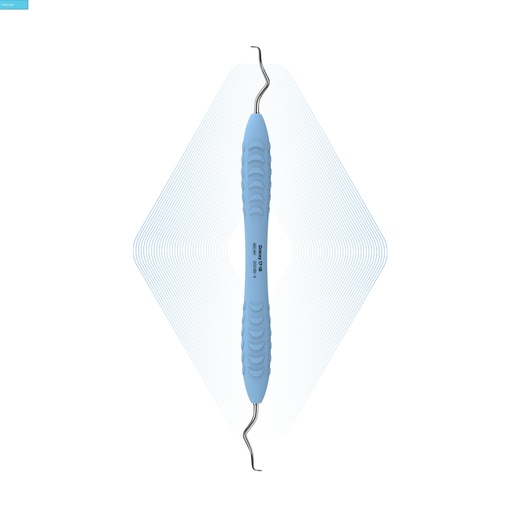
What Are Gracey Curettes?
Named after Dr. Clayton Gracey, these area-specific curettes revolutionized periodontal instrumentation. Each working end features a single cutting edge with the blade offset at a 70-degree angle to the lower shank — compared to the 90-degree angle of universal curettes. This offset creates a definite lower cutting edge that adapts safely into periodontal pockets without damaging soft tissue.
Gracey curettes are double-ended instruments made from medical-grade stainless steel. Each end is designed for a different tooth surface within the same area of the mouth, enabling efficient treatment without constant instrument changes. The rounded toe prevents tissue laceration, making them ideal for subgingival work.
Wondering when to use a Gracey rather than a universal curette? See our full comparison: Gracey vs Universal Curettes — Which to Use and When.
Chapter 2The Gracey Numbering System
There are 9 paired Gracey curettes in the traditional set. Each pair targets specific tooth surfaces in specific regions of the mouth. Here is the complete map — click any number to view that instrument.
Designed for all surfaces of anterior teeth including canines. The gentle shank curvature provides easy access to facial and lingual surfaces.
Shop Gracey 1/2 →Also for anterior teeth, extending to second premolars. The slightly different shank angle offers alternative wrist positioning.
Shop Gracey 3/4 →Versatile curette for anterior teeth and premolars, all surfaces. Allows better wrist ergonomics and deeper pocket access than 1/2 or 3/4.
Shop Gracey 5/6 →For buccal and lingual surfaces of molars and premolars. Often preferred for its comfortable shank design for both practitioner and patient.
Shop Gracey 7/8 →Alternative to 7/8 for buccal and lingual posterior surfaces. The different shank geometry suits certain clinical scenarios and access angles.
Shop Gracey 9/10 →Specifically designed for mesial surfaces of molars and premolars. One of the most commonly used Gracey curettes in clinical practice.
Shop Gracey 11/12 →For distal surfaces of posterior teeth. The shank curvature provides excellent adaptation to these harder-to-reach surfaces.
Shop Gracey 13/14 →An advanced alternative to 11/12 with a longer, more angled terminal shank. Provides superior access to deep mesial pockets.
Shop Gracey 15/16 →Complementary to 13/14 with an extended shank design. Particularly suited for accessing the distal surfaces of the last molars in the arch.
Shop Gracey 17/18 →Quick reference
Four types — from Standard to Titanium
Beyond the standard (Classic) Gracey, there are specialized variations designed for specific clinical challenges. ErgoDenta offers all four — each with the same area-specific numbering, but adapted for a different clinical need.
The original design with standard blade length and shaft diameter. Ideal for routine scaling and root planing in moderate pockets.
Shorter, thinner blade with tighter curvature. Closely matches root anatomy and irregularities. Perfect for furcations, narrow pockets, and maintenance therapy.
Same blade geometry as Classic but with a thicker, reinforced shaft. Designed to apply more pressure for removing heavy or tenacious calculus deposits.
Mini-Gracey geometry in implant-safe titanium, identifiable by their blue colour. Soft enough to clean abutments and implant collars without scratching.
Gracey 11-12 | ErgoRazor®
Classic geometry, full-length blade. The everyday choice for routine subgingival scaling and root planing in moderate pockets.
View product details →
Mini Gracey 11-12 | ErgoRazor®
Shorter, thinner blade and tighter curvature. The Mini-Five geometry follows root anatomy closely — ideal for narrow pockets, furcations and recall maintenance.
View product details →
Rigid Gracey 11-12 | ErgoDenta
Reinforced shaft for heavier removal forces. Use on tenacious interproximal calculus where a Classic shank would flex too much.
View product details →
Mini Gracey 1-2 Blue Titanium
Titanium working ends won’t scratch implant surfaces. Available in Mini Gracey 1‑2, 5‑6, 7‑8, 11‑12 and 13‑14 for full peri-implant coverage.
View titanium Mini Gracey →Available numbers across the range
Standard Gracey: 1‑2, 3‑4, 5‑6, 7‑8, 9‑10, 11‑12, 12‑13, 13‑14, 15‑16, 17‑18 — covering every area of the mouth.
Mini Gracey: 1‑2, 5‑6, 7‑8, 11‑12, 13‑14, 15‑16, 17‑18 — optimised for root anatomy and narrow spaces.
Rigid Gracey: 11‑12, 13‑14 — for heavy calculus on posterior interproximal surfaces.
Titanium Mini Gracey: 1‑2, 5‑6, 7‑8, 11‑12, 13‑14 — implant-safe blue working ends.
Chapter 4Two systems that elevate every Gracey
Beyond the type and the number, ErgoDenta offers two systems that change how a Gracey performs day to day. They’re not handles — they’re engineering choices applied to the working end.
ErgoRazor® — sharper steel that lasts longer
ErgoRazor is a sharpness system. Every ErgoRazor instrument is made from premium 440C stainless steel and undergoes advanced cryogenic treatment, transforming the steel microstructure at the molecular level. The result: cutting edges that are up to three times sharper out of the box and hold that sharpness up to three times longer than standard instruments. You work with lighter strokes, less hand fatigue, and fewer sharpening sessions in between procedures.
ErgoRazor® — the numbers
Available across the entire Gracey range — Standard, Mini and (for 11‑12, 13‑14) Rigid — paired with any of the ErgoX or ErgoSteel handles.
Gracey 11-12 | ErgoRazor®
The most popular ErgoRazor Gracey — mesial posterior surfaces, the workhorse of periodontal therapy.
View product →ErgoTip® — don’t sharpen, swap
ErgoTip is a modular system. The handle stays — the working tip is replaceable. When the tip becomes dull, simply swap it for a new one and keep working with a factory-fresh cutting edge. For busy clinics this can be more efficient than the time spent sharpening, and tip pricing across the range stays accessible. ErgoTip is available for every Gracey number in Standard, Razor, Razor Gold and Razor Black variants — so you can match the system to the procedure.
ErgoTip® — in short
One handle hosts many tips — swap when worn, no sharpening required, available in four finishes including the cryogenically treated Razor variant for the longest-lasting cutting edge.

Gracey 10 | ErgoTip Razor
A Razor-treated ErgoTip working tip on the modular handle — sharp from day one, swap when worn.
Explore the ErgoTip range →Choose your handle — choose your comfort
The right handle reduces wrist fatigue across long appointments and gives you the tactile feedback you need for subgingival work. Every Gracey number in our range can be paired with any of these handles, and the ErgoRazor and ErgoTip systems above can be applied on top.
| Handle | Material | Diameter | Best for |
|---|---|---|---|
| ErgoX® Silicone | Silicone over stainless steel | 11.5 mm | Standard ergonomic grip, all-day comfort |
| ErgoX® Plus Silicone | Silicone over stainless steel | 13.65 mm | Larger grip, maximum reduction in pinch force |
| ErgoSteel Standard Steel | Stainless steel | 9.5 mm | Classic feel, lightweight, fine tactile feedback |
| ErgoSteel Plus Steel | Stainless steel | 10 mm | Slightly thicker grip, precise feedback |
| ErgoLite X Lightweight | Lightweight resin over steel | Standard | Reduced weight for long lists, students and recall hygiene |
Each Gracey number is available across the handle lines above, then layered with the ErgoRazor sharpness system or ErgoTip modular system as needed. Explore the ranges: ErgoRazor® ErgoTip® ErgoLite All 95 Graceys
Chapter 6Clinical technique — the five fundamentals
Proper technique is essential for effective scaling and root planing while preserving tooth structure. Whichever Gracey, type, system and handle you’ve chosen — these five steps stay the same.
Hold the curette like a pen, with the pad of the middle finger resting on the shank. This provides maximum control and tactile sensitivity. With ErgoX or ErgoX Plus handles, grip fatigue is significantly reduced.
Rest your ring finger on a stable tooth surface near the working area. This fulcrum provides leverage and control for precise, controlled strokes.
Position the curette so the lower shank is parallel to the tooth surface. The lower (working) cutting edge should face the tooth. Insert to the base of the pocket with a thin, closed blade angle.
For scaling: use firm, short, overlapping pull strokes with moderate lateral pressure. For root planing: use lighter, longer strokes. Strokes can be vertical, horizontal, or oblique depending on the tooth surface.
A dull curette requires more pressure and causes more fatigue. Sharpen regularly using a flat sharpening stone at a 30–40° angle — or use the ErgoRazor system for up to 3× longer edge retention, or ErgoTip to swap tips instead of sharpening.
Sharpening your Gracey curettes
Maintaining sharp cutting edges is critical for clinical effectiveness and patient comfort. A sharp curette requires less pressure, provides better tactile feedback, and produces cleaner root surfaces.
Not sure when it's due? Read our guide: How do you know if a scaling curette needs sharpening?
Three keys to proper sharpening
Sit comfortably with elbows on the table. Hold the sharpening stone lengthwise in front of you so you can verify the blade-to-stone angle visually.
Place the blade flat on the stone with a 30–40° angle between the lower shank and the stone surface. Consistency of angle matters more than the exact degree.
Hold the stone fixed and move the instrument along the blade, rotating the handle gently between your fingers to follow the blade curvature.
Want to sharpen less often? The ErgoRazor® system extends time between sessions by up to 3×. Want to skip sharpening entirely? The ErgoTip® system lets you swap the tip when it becomes worn.
Chapter 8Why choose ErgoDenta Gracey curettes?
The most comprehensive Gracey range — Standard, Mini, Rigid and Titanium across every relevant number, paired with five ergonomic handle lines.
Engineered in Denmark with a focus on ergonomics, precision, and long-term practitioner comfort. CE / EU-MDR / FDA / UKCA registered.
From accessible everyday handles to the cryogenically treated ErgoRazor and modular ErgoTip systems — every option carries the same ErgoDenta build quality.
All instruments and handles are fully autoclavable for reliable sterilisation cycle after cycle.
Ready to upgrade your periodontal instruments?
Explore ErgoDenta’s complete range of Gracey curettes — from everyday Standard handles to the ErgoRazor sharpness system and the ErgoTip modular system.
Browse all 95 Gracey curettes →Frequently asked questions
What is the difference between a Mini Gracey and a Standard Gracey curette?
Mini Graceys (also known as Mini Five) have a shorter, thinner blade with tighter curvature compared to Standard Graceys. The smaller working end gives better access to deep narrow pockets, furcations, and fits root anatomy more closely — making them ideal for maintenance therapy and difficult-to-access areas. Standard Graceys remain the workhorse for routine scaling and root planing in moderate pockets.
Which Gracey curette is best for anterior teeth?
For anterior teeth (canine to canine), the Gracey 1/2 and 3/4 are designed specifically for all surfaces. Most clinicians keep both because the slightly different shank angles offer alternative wrist positioning. The Gracey 5/6 also covers anterior teeth and extends to premolars, making it a versatile choice for combined anterior-premolar work.
What's the difference between Gracey 11/12 and 15/16?
Both target mesial posterior surfaces. The 15/16 has a longer, more angled terminal shank than the 11/12 — designed specifically for accessing deeper mesial pockets in the posterior region. The 11/12 remains the most commonly used Gracey for routine mesial work, while the 15/16 is the advanced alternative for deep periodontal pockets.
How often should Gracey curettes be sharpened?
Sharpen at the first sign of edge dullness — typically every 5–15 procedures depending on the steel quality and how heavy the calculus deposits are. A dull curette requires more pressure, causes more hand fatigue, and produces less effective root planing. ErgoRazor® instruments hold their edge up to 3× longer than standard Gracey curettes, so they require less frequent sharpening.
Are titanium Gracey curettes safe for dental implants?
Yes. Titanium Mini Gracey curettes (identifiable by their distinctive blue colour) are specifically engineered for peri-implant maintenance. The titanium working end is softer than the implant surface, so it removes biofilm and calculus from abutments and implant collars without scratching or damaging the implant. Stainless-steel curettes should never be used directly on implant surfaces.
Are ErgoRazor and ErgoTip handles, or something else?
Neither is a handle. ErgoRazor® is a sharpness system applied to the working end — cryogenically treated 440C steel that holds an edge up to 3× longer. ErgoTip® is a modular system where the working tip is replaceable on a host handle. The actual handles are ErgoX, ErgoX Plus, ErgoSteel Standard, ErgoSteel Plus and ErgoLite X — you choose your handle, then layer ErgoRazor or ErgoTip on top.
What handle should I choose for Gracey curettes — silicone or steel?
Silicone-grip handles like ErgoX® and ErgoX® Plus reduce hand fatigue across long appointments and offer better warmth-feel. Stainless-steel handles like ErgoSteel Plus and ErgoSteel Standard offer better tactile feedback for detecting subgingival calculus. Many clinicians use silicone for routine scaling and steel for deep periodontal work — and both are fully autoclavable.
What does ErgoRazor® cryogenic treatment actually do to the steel?
Cryogenic treatment cools the 440C stainless steel to extremely low temperatures, which transforms residual austenite in the microstructure into harder martensite and refines carbide distribution. The result is a more uniform, harder cutting edge that resists wear and dulling — clinically measured at up to 3× longer sharpness retention than untreated curettes of the same geometry.