Every dental exam starts with a mirror. Yet mirror choice gets less attention than almost any other instrument purchase. The result: many practices use cheap plain mirrors that distort the image and slow diagnostic decisions.
This guide covers the three modern mirror types — plain (back-surface), front-surface (rhodium), and magnifying (concave) — and explains which to use when, plus how the handle system affects everyday workflow.
TL;DR
Plain (back-surface) = budget, ghost-image visible. Front-surface (rhodium-coated) = no ghost image, sharper diagnostic detail, the modern standard. Magnifying (concave) = ~1.5× magnification for detail work. Cone-socket vs. one-piece: cone-socket lets you replace the mirror head when scratched, keeping the handle.
Mirror types compared
| Type | Reflection surface | Ghost image | Sharpness | Best use | Cost ratio |
|---|---|---|---|---|---|
| Plain (back-surface) | Behind glass | Yes (visible) | Reduced | Budget option, training | 1× |
| Front-surface (rhodium) | On front of glass | No | Maximum | Diagnostic exams, restorative | 1.5–2× |
| Magnifying (concave) | Front-surface, concave | No | 1.5× magnified | Detail work, caries detection | 2–3× |
| Mini front-surface | Front, smaller diameter | No | Maximum | Paediatric, posterior molars, tight access | 1.5× |
ErgoDenta mirror handles + heads
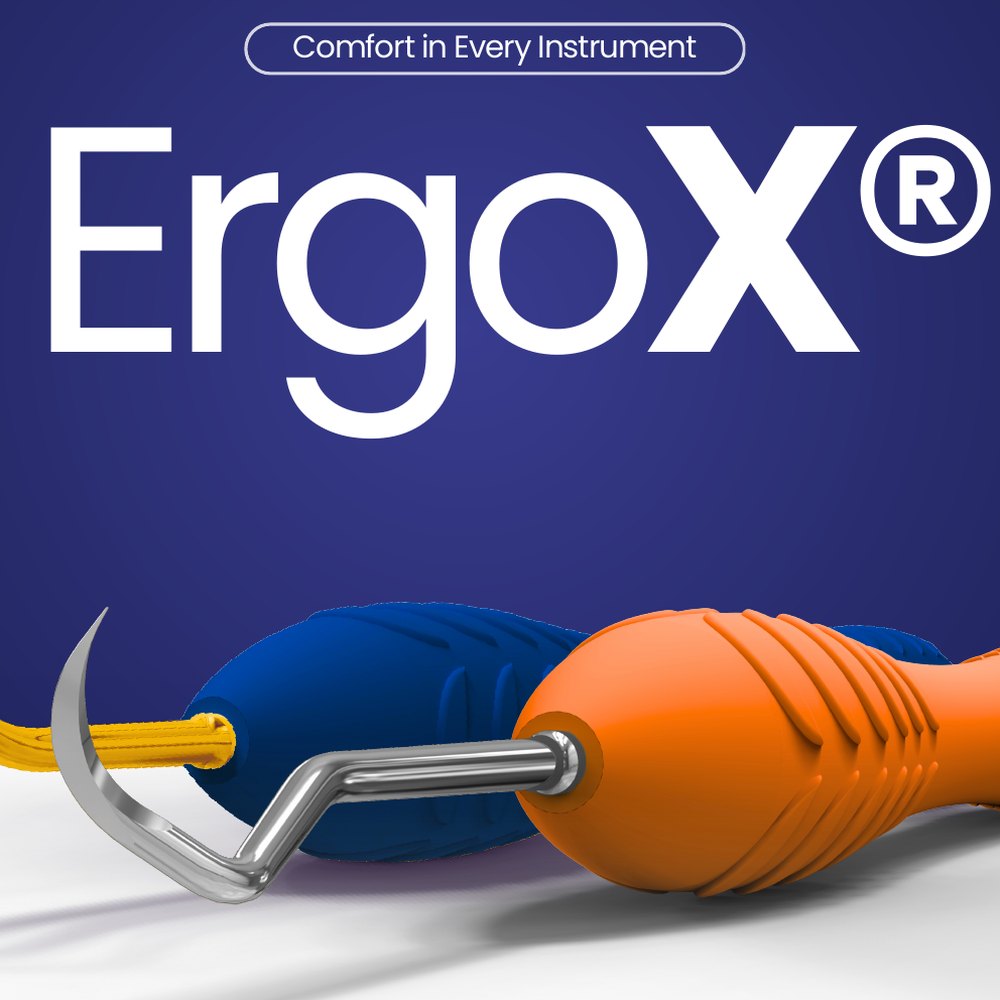
Our mirror system uses cone-socket connection — replace the head when scratched, keep the handle for years. Available in ErgoX silicone (14g), ErgoLite silicone (lighter), and ErgoSteel finishes.
Why front-surface mirrors changed dentistry
A standard "plain" mirror is silvered on the BACK of the glass. When light enters, it reflects partly off the front of the glass (creating a faint "ghost" image) and the bulk reflects off the silvered back. The ghost image overlays the real image, creating a subtle double-vision effect. For routine inspection it's fine. For caries detection, fissure analysis, or precise restoration finishing, the ghost is enough to slow your diagnostic eye.
Front-surface mirrors have the reflective coating applied directly to the FRONT of the glass — no second reflection, no ghost. The image is sharper, contrast is higher, fissure shadows are clearer. Most modern dentistry textbooks recommend front-surface as the default.
The downside: the reflective coating is exposed and scratches more easily than a plain mirror's protected back-coating. Solution: cone-socket handles let you replace the mirror head every 6–12 months without buying a new handle.
Rhodium vs. aluminium coating
Front-surface mirrors are usually rhodium- or aluminium-coated. Rhodium is more reflective, more durable, and resists tarnishing in autoclaves. Aluminium is cheaper but tarnishes faster. For practices using regular sterilization cycles, rhodium pays back within a year.
Magnifying mirrors — when they earn their place
Concave (magnifying) mirrors are useful for detail work — caries detection in deep fissures, marginal gap inspection on indirect restorations. The 1.5× magnification is enough to spot what regular mirrors miss without needing loupes.
Caveat: the magnification only works at a specific focal distance (~5–8mm). Move closer or further and the image distorts.
The cone-socket workflow advantage
Most practices replace the entire mirror when the head scratches — but the handle is still perfect. Cone-socket systems split the two: a one-time handle purchase ([contact for pricing]), then [contact for pricing] mirror heads as consumables. Over 5 years a typical hygienist saves [contact for pricing], plus stays with their preferred handle weight and ergonomics.
Frequently asked questions
How can I tell if a mirror is front-surface?
Does rhodium really last longer than aluminium?
Can I use a magnifying mirror for routine exams?
What's the difference between ErgoX and ErgoLite mirror handles?
How often should I replace the mirror head?
Build your dental instrument range with ErgoDenta
3,300+ instruments with Danish-inspired ergonomic design. One supplier. Full documentation. Ready to ship from Denmark.