
The hygienist's starter kit — building your first periodontal set
What instruments do you actually need in your first year as a dental hygienist? A focused 12-piece kit will cover 95% of your prophylaxis and SRP work — and grow with your career.
A new dental hygienist faces the same question on day one: "Which instruments should I buy?" The catalogue is overwhelming, the recommendations conflict, and senior colleagues each have their own preference. This guide cuts through the noise. Here's a focused 12-piece starter kit that handles 95% of routine prophylaxis and scaling-and-root-planing work — chosen from the ErgoDenta range and built to grow with your career.




The 12-piece starter list
Build the first kit around what you'll actually use every day:
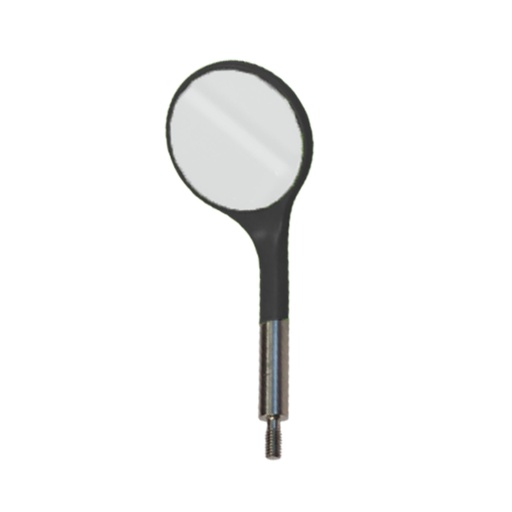
- HD Mouth Mirror, No. 4 (×2) — high-definition front-surface mirror for clear visualisation. One in the kit, one as backup. The HD No. 5 is a slightly larger alternative for posterior access.
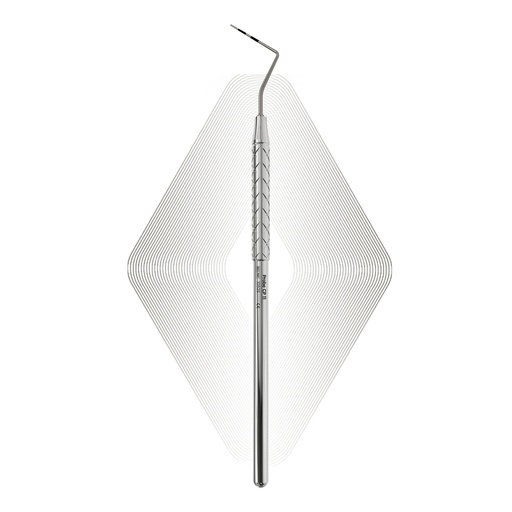
- North Carolina Probe CP-15 — full periodontal charting, millimetre markings 1-15. The standard probe for any baseline and recall periodontal exam.
- WHO probe (CP-11/12) — for BPE / CPI screening. Lighter touch than CP-15 for routine recall scoring.
- Explorer 23 (Shepherd's Hook) — caries detection and margin assessment.
- Explorer 17 / 11/12 — calculus detection in deep pockets, sub-gingival exploration.
- Sickle Scaler H6/H7 — supragingival anterior calculus.
- Sickle Scaler 204S — supragingival posterior calculus.
- Gracey 1/2 — anterior periodontal scaling and root planing.
- Gracey 7/8 — posterior buccal/lingual surfaces.
- Gracey 11/12 — posterior mesial surfaces (the most-used Gracey).
- Gracey 13/14 — posterior distal surfaces.
- Universal Curette (Columbia 13-14) — for routine prophy where the area-specific Graceys would be overkill.
That's it — twelve instruments. Add a college tweezer for cotton roll placement, a sterilisation cassette to hold the kit, and you're ready for your first patient.
Chapter 2Why these specific picks
- HD mirrors over plain — the difference in image quality during periodontal charting is significant. HD mirrors give you the clarity to spot subtle gingival changes that plain mirrors smudge over.
- CP-15 plus a WHO probe — full periodontal charting needs CP-15 (1, 2, 3, 5, 7, 8, 9, 10 mm markings); routine BPE screening is faster with a WHO probe. You need both.
- Two sickle scalers (H6/H7 + 204S) — anterior and posterior have different shank requirements; one sickle does not cover both well.
- Four Graceys, not all nine — 1/2, 7/8, 11/12, 13/14 cover anterior, posterior buccal/lingual, posterior mesial, posterior distal. Add 5/6, 9/10, 15/16, 17/18 in your second year as caseload requires.
- One universal curette — for routine prophy where you don't want to swap between four Graceys. Columbia 13-14 is the most versatile single universal.
Handle choice — does it matter?
Yes, more than any other choice in the kit. The handle is in your hand for 7 hours a day. ErgoDenta offers five handle lines:
- ErgoX® — silicone grip, 11.5 mm. The standard ergonomic choice. Fits most hand sizes.
- ErgoX® Plus — silicone grip, 13.65 mm. Larger grip — favoured by hygienists who experience pinch fatigue with standard handles.
- ErgoSteel Standard — stainless, 9.5 mm. Lightweight and gives the most tactile feedback.
- ErgoSteel Plus — stainless, 10 mm. Slightly thicker than Standard.
- ErgoLite X — lightweight resin over steel. Reduced overall weight, good for long lists.
If you're starting out and don't yet know your preference, choose ErgoX silicone for the periodontal instruments (curettes, scalers) and ErgoSteel Standard for the diagnostic instruments (probes, explorers). Many practitioners find the silicone reduces fatigue during long scaling lists, while steel gives the tactile feedback needed for charting.
Chapter 4ErgoRazor vs standard — is it worth the upgrade?
The ErgoRazor® system applies cryogenic treatment to 440C steel, giving up to 3× longer edge retention than standard instruments. For a new hygienist, the question is whether the upgrade is worth it on day one.
For Graceys — yes. You'll be sharpening these the most often, and the difference between sharpening every 5 procedures and every 15 procedures is significant for both your time and your wrist health.
For sickle scalers — optional. Sickles dull more slowly than Graceys; the upgrade is nice but not essential.
For probes, explorers, mirrors — not relevant. These instruments don't have a cutting edge to maintain; standard versions are fine.
Chapter 5Where the kit grows in years 2 and 3
Once you've put the starter kit through 6–12 months of clinical work, you'll know which additions matter to your practice. Common year-2 additions:
- Mini Gracey set (1/2, 11/12, 13/14) — for narrow pockets, furcations, and recall maintenance therapy.
- Titanium Mini Gracey 1-2 (blue) — for peri-implant maintenance, which becomes a larger part of practice as the implant population ages.
- Furcation probe (Nabers) — for assessing furcation involvement on multi-rooted teeth.
- Hoe scaler — for tenacious supragingival deposits where sickles don't engage cleanly.
- Sterilisation cassette + colour-coded rings — to keep the growing kit organised as it expands beyond a single tray.
The 12-piece starter kit at a glance
| # | Instrument | Why it's in the kit |
|---|---|---|
| 1-2 | HD Mouth Mirror No. 4 (×2) | Sharp visualisation, one in kit + backup |
| 3 | North Carolina CP-15 | Full perio charting |
| 4 | WHO probe CP-11/12 | Faster BPE screening |
| 5 | Explorer 23 | Caries detection |
| 6 | Explorer 17 or 11/12 | Sub-gingival calculus detection |
| 7 | Sickle H6/H7 | Anterior supragingival |
| 8 | Sickle 204S | Posterior supragingival |
| 9 | Gracey 1/2 | Anterior SRP |
| 10 | Gracey 7/8 | Posterior buccal/lingual |
| 11 | Gracey 11/12 | Posterior mesial — most used |
| 12 | Gracey 13/14 | Posterior distal |
Build your hygienist starter kit
All 12 instruments available across the ErgoDenta range — choose your handle line, layer the ErgoRazor system on the curettes, and you're ready for your first patient.
Browse periodontal instruments →Frequently asked questions
How many instruments does a new dental hygienist need?
A focused 12-piece kit (2 mirrors, 2 probes, 2 explorers, 2 sickle scalers, 4 Graceys, 1 universal curette) covers 95% of routine prophylaxis and SRP work. Build out from there in years 2-3 with Mini Graceys, titanium implant tools, furcation probes and hoe scalers as your caseload develops.
Which Graceys should a new hygienist start with?
Four Graceys cover the full mouth: 1/2 (anterior), 7/8 (posterior buccal/lingual), 11/12 (posterior mesial — the most-used Gracey), and 13/14 (posterior distal). Add 5/6, 9/10, 15/16 and 17/18 in your second year as your caseload grows.
Is ErgoRazor worth it for a new hygienist?
Yes for the Gracey curettes — you'll sharpen those most often, and the ErgoRazor system extends edge life up to 3× longer. Optional for sickle scalers (they dull more slowly). Not relevant for probes, explorers and mirrors which don't have cutting edges to maintain.
Should I choose silicone or steel handles for periodontal instruments?
Silicone (ErgoX or ErgoX Plus) reduces hand fatigue across long scaling lists — best for the Graceys you'll use most. Steel (ErgoSteel Standard or Plus) gives more tactile feedback — best for probes and explorers used during charting. Most hygienists end up with a mix.
Do I need both an HD and a plain mouth mirror?
Two HD mirrors are better than one HD plus one plain. HD mirrors give significantly better image quality during periodontal charting — the difference in clarity is worth having both as HD. Keep the second as a backup in case one is being reprocessed.
Why both a CP-15 and a WHO probe?
CP-15 is for full periodontal charting (1, 2, 3, 5, 7, 8, 9, 10 mm markings) — used at baseline and at periodontal review. WHO probe is for fast BPE/CPI screening at routine recall — much quicker for sextant scoring. Both have different roles in routine practice.
Can I use a universal curette instead of Graceys?
Universal curettes (Columbia 13-14, Barnhart 1-2) work for routine prophy and light subgingival work, but they're not ideal for definitive root planing in moderate-to-deep pockets — that's where area-specific Graceys excel. Most hygienists keep one universal for routine prophy plus four Graceys for SRP work.
How much does a starter kit cost roughly?
Costs vary by handle choice and whether you upgrade to ErgoRazor. A balanced 12-piece kit on standard ErgoDenta handles is broadly accessible; layering ErgoRazor on the four Graceys adds to the upfront cost but reduces long-term sharpening and replacement costs. Distributors in your country can give exact pricing for your handle preferences.
Should I buy a sterilisation cassette right away?
Yes — a 12-piece cassette protects the instruments through reprocessing, keeps the kit organised on the chair-side tray, and prevents pinching/bending of the working ends in transit. Pick a perforated stainless cassette sized for 12 instruments; the 5508 ErgoTray series fits a starter kit comfortably.
What instruments should I add in year 2?
Mini Gracey 1/2, 11/12 and 13/14 for narrow pockets and furcations, a Nabers furcation probe, a titanium Mini Gracey 1-2 for peri-implant maintenance, and a hoe scaler for tenacious supragingival deposits. By year 3, add the remaining Gracey numbers (5/6, 9/10, 15/16, 17/18) and a second universal curette for assistant trays.