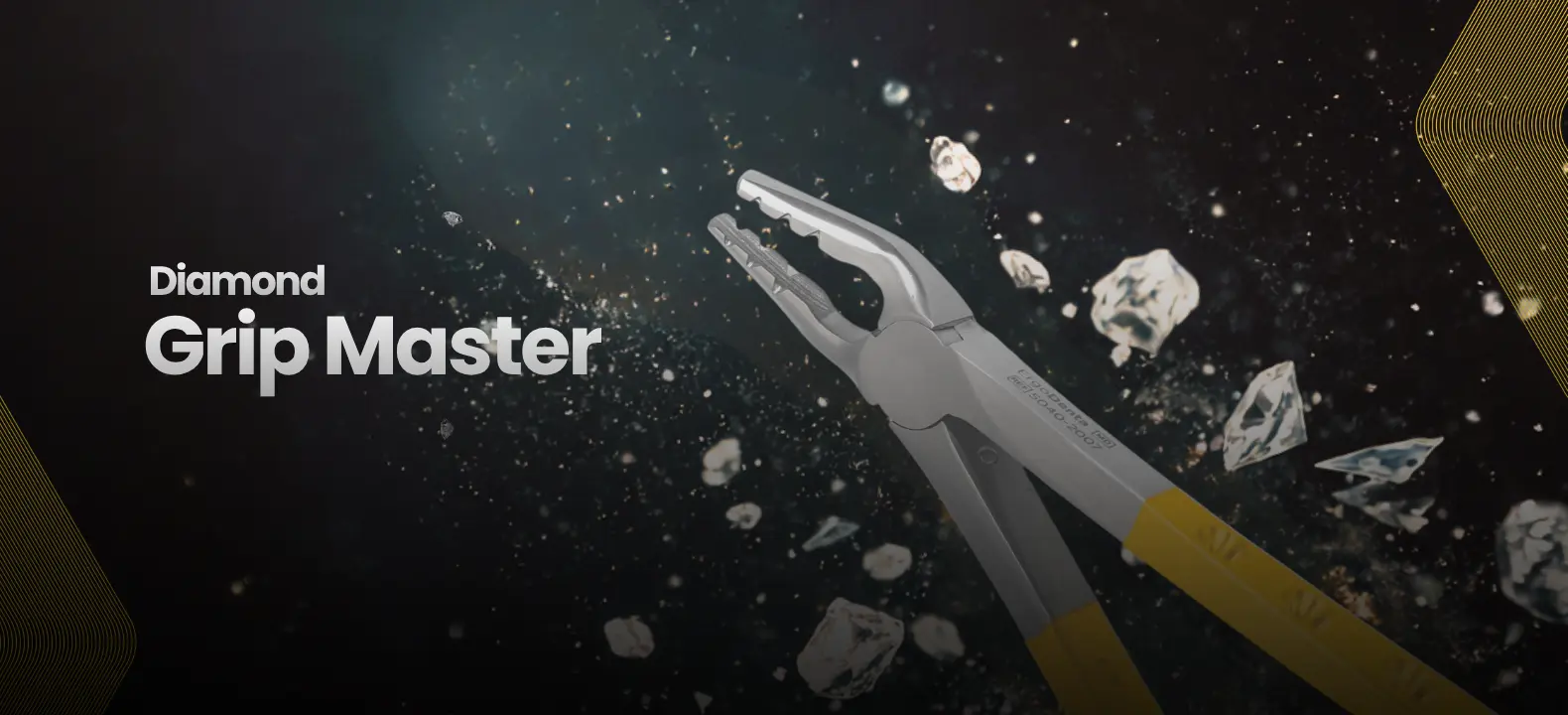
GripMaster Extraction Forceps — maximum grip, minimum effort
Every extraction begins the same way: the beak meets the tooth. What happens in that moment often decides the rest of the procedure. On a smooth, fragile or compromised surface the grip becomes unpredictable — slippage leads to repositioning, repositioning leads to more hand pressure, and over a day of surgery that pressure turns into strain and fractured crowns.
GripMaster diamond-coated extraction forceps were developed by ErgoDenta around one question: what if grip were created at the contact point instead of in the hand? This guide explains how the diamond beak works, walks through the eight patterns, shows when to reach for them and how they compare with the Standard and Diamond EX-Forceps.
TL;DR
GripMaster forceps have diamond grit inside the beaks, so they hold wet, fragile or broken-down teeth with far less squeezing force. The series has eight patterns — universal, anterior, molar and spade root for each arch (article 5040-xxxx) — in familiar extraction geometries, so there is no change in technique. Start with the two universals, Fig. 2007 (upper) and Fig. 2021 (lower).
Grip where it matters most
The defining feature of GripMaster is the diamond-coated beak surface. Rather than relying on increased squeezing force, a fine layer of diamond grit raises friction directly where the forceps engage the tooth.
The tooth is therefore held securely with less grip pressure, including during initial luxation and controlled rotation. The forceps stay where they are placed, so you can concentrate on the movement rather than on correcting the grip. The result is a more stable hold, fewer readjustments and predictable handling through the whole extraction.
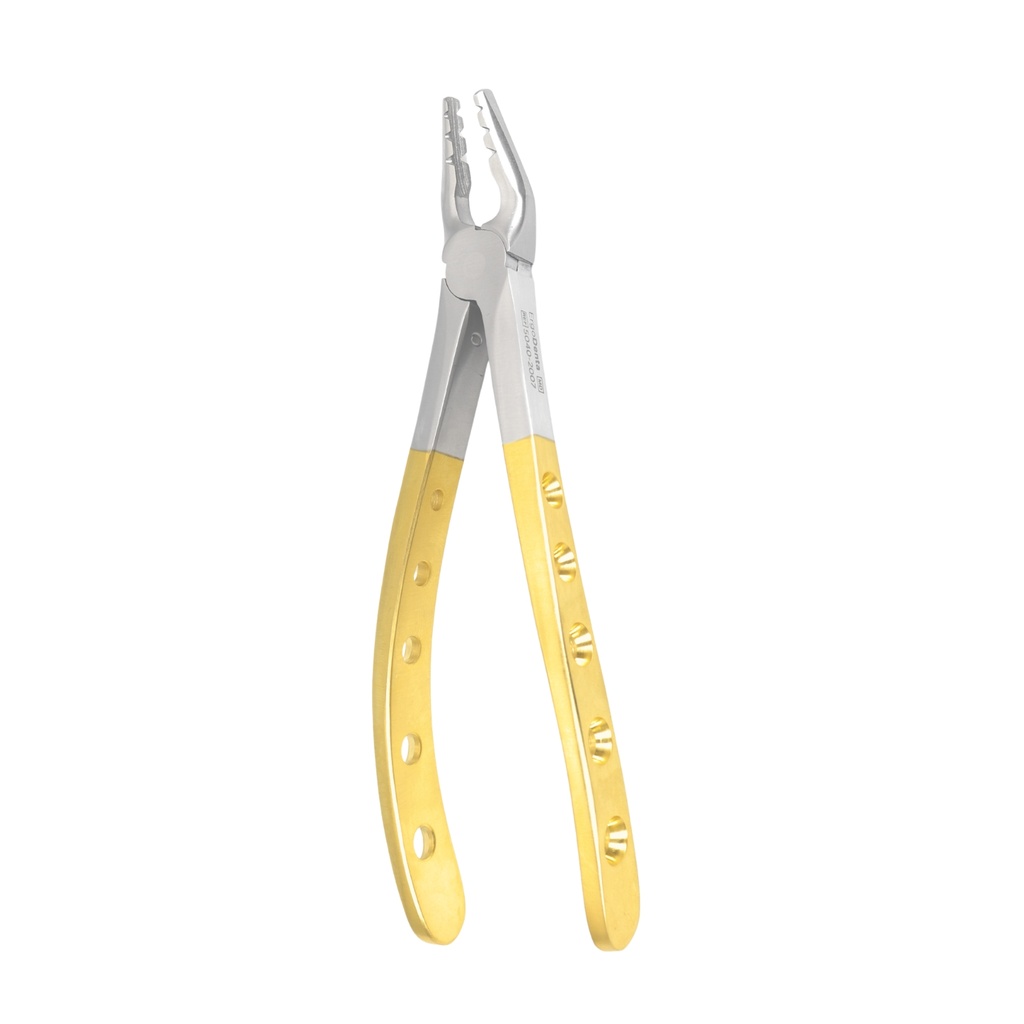
Precision where it counts. The coating is applied inside the beak only, exactly where contact with the tooth occurs. The texture is subtle — fine and sand-like — so it provides holding power without aggressive surface damage, and it survives routine autoclaving.
Control without changing technique
GripMaster follows familiar extraction geometries: universal, anterior, molar and root patterns you already know from the classic series. There is no learning curve and no change in clinical approach. The anatomically contoured beaks adapt to the crown and root form, and the balanced handle lets you apply controlled extraction force with a neutral wrist — the same ergonomic thinking behind every ErgoDenta instrument (see the ergonomic handle question).
The ergonomics work quietly in the background, supporting confidence and control without demanding attention.
The GripMaster range — eight patterns for upper and lower extractions
Extractions vary by anatomy, access and tooth condition. The series covers routine and demanding cases with dedicated designs for each jaw; every Fig. links to its product page in the GripMaster category.
| Pattern | Arch | Application | Typical use |
|---|---|---|---|
| Fig. 20075040-2007 | Upper | Universal | Incisors, canines and premolars; the first upper GripMaster to own |
| Fig. 20025040-2076 | Upper | Anterior | Narrow beaks for upper incisors and canines |
| Fig. 20675040-2067 | Upper | Molar | First and second upper molars (pointed buccal beak) |
| Fig. 12515040-1251 | Upper | Spade root | Upper root remnants and fractured roots |
| Fig. 20215040-2021 | Lower | Universal | Lower anteriors and premolars |
| Fig. 20745040-2074 | Lower | Anterior | Lower incisors and canines with thin crowns |
| Fig. 20795040-2079 | Lower | Molar | Lower first and second molars |
| Fig. 1455040-145 | Lower | Spade root | Lower root remnants and fractured roots |
Upper jaw
Lower jaw
All eight are surgical stainless steel, supplied non-sterile and fully autoclavable. Browse the complete GripMaster series →
When to reach for GripMaster
- Carious, fractured or short clinical crowns — the grit bites into what little surface there is, so you can luxate without crushing.
- Wet or bleeding fields — friction does not depend on a dry surface.
- Endodontically treated, brittle teeth — less squeeze force means fewer crown fractures and fewer retained roots.
- Root remnants — the spade-root patterns (Fig. 1251 upper, Fig. 145 lower) hold fragments that a standard beak slides off; pair them with a root elevator from the Elevators range.
- Atraumatic and implant-site extractions — controlled rotation with minimal force preserves the socket walls. Combine with periotomes and luxators from the Atraumatic Extraction Toolkit, then finish with a bone file (bone files & rongeurs).
GripMaster vs Standard vs Diamond EX-Forceps
ErgoDenta offers three adult forceps series. They share the same steel, hinge quality and handle ergonomics; the difference is the beak.
| Series | Beak surface | Patterns | Best for | Article |
|---|---|---|---|---|
| Standard EX-Forceps | Smooth serrated steel | 17 European Fig. patterns | Routine extractions with an intact crown | 5005- |
| Diamond EX-Forceps | Diamond-coated serrations | 22 European Fig. patterns incl. root and cowhorn forceps | Everyday work where extra grip is wanted on every tooth | 5025- |
| GripMaster | Diamond grit inside wide, contoured beaks | 8 patterns: universal, anterior, molar, spade root × 2 arches | Difficult, fragile or atraumatic cases; maximum hold with minimum pressure | 5040- |
For the complete tooth-by-tooth chart of the Standard and Diamond series, read An Extraction Forceps for Every Tooth; for pattern anatomy and numbering see the Extraction Forceps Numbering Guide and, for the American #150 / #151 system, Universal Extraction Forceps Numbering Decoded.
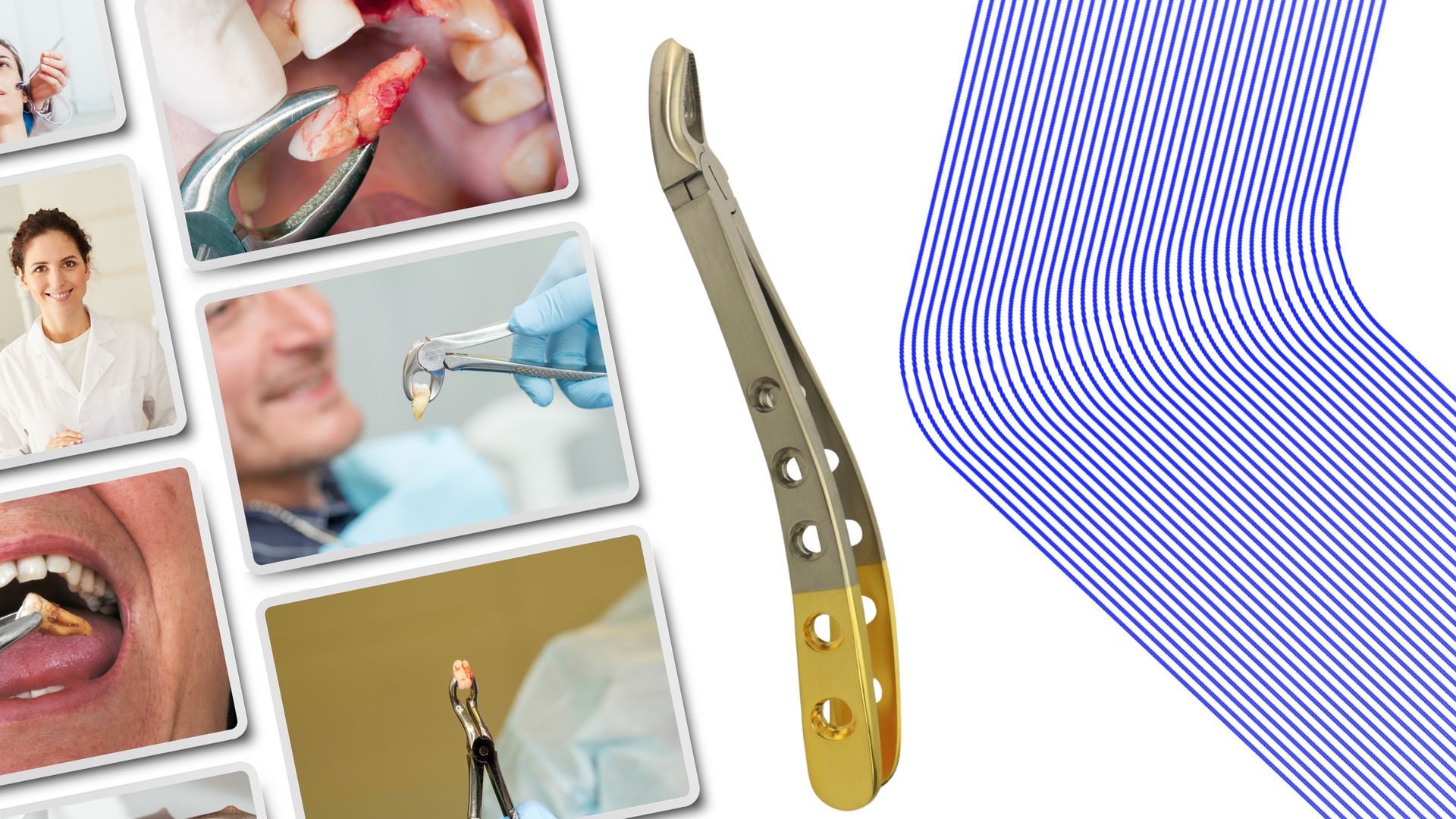
Care and compliance. Clean immediately after use, reprocess in standard autoclave cycles and inspect the beaks at each cycle. GripMaster forceps are CE-marked under EU MDR 2017/745 and produced under ISO 13485; ErgoDenta is FDA registered. Distributors can find the documentation list in our EU MDR checklist.
Frequently asked questions
What makes GripMaster extraction forceps different from ordinary forceps?
How is GripMaster different from the ErgoDenta Diamond EX-Forceps?
When should I reach for a GripMaster forceps?
Does the diamond coating damage the tooth or wear off?
Which GripMaster patterns should a general practice start with?
Are GripMaster forceps autoclavable and CE-marked?
Feel the GripMaster difference
Eight diamond-coated patterns, CE-marked and shipped from Denmark — for the extractions where grip decides the outcome.