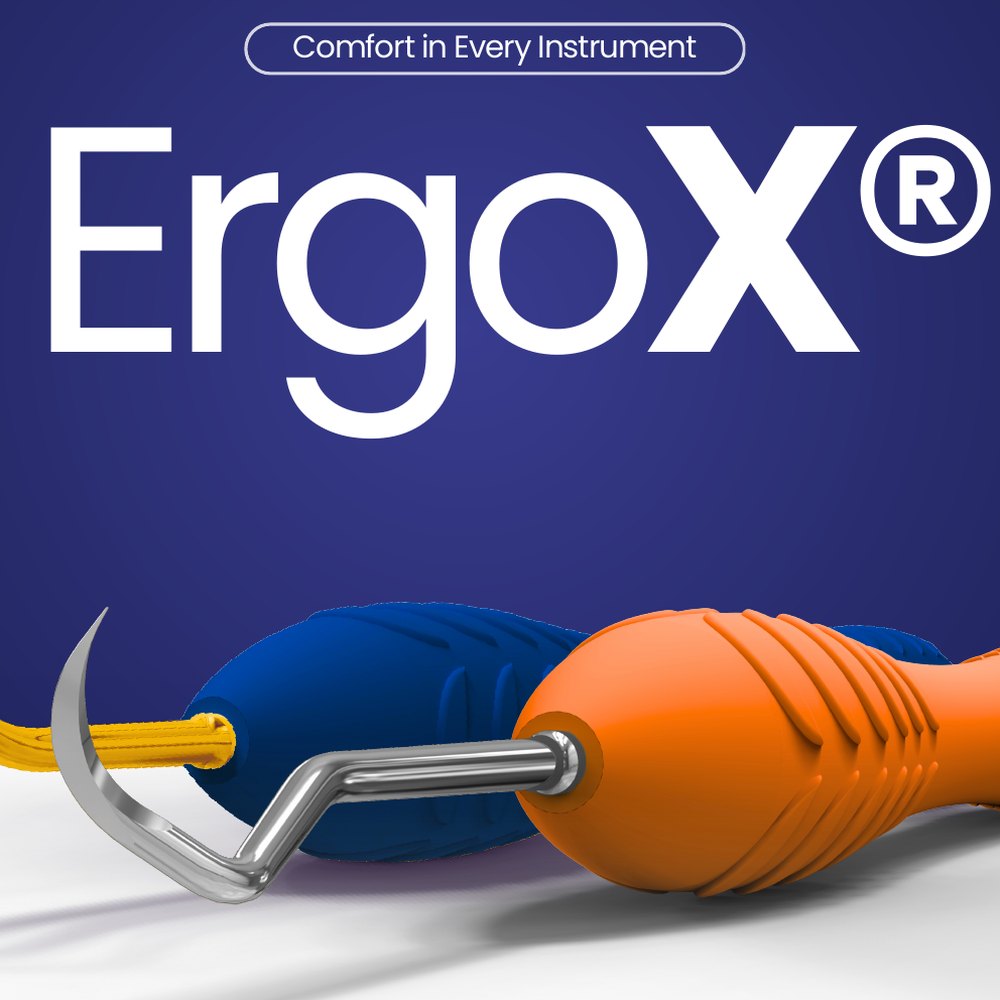
After an extraction, a sharp bony edge left behind delays healing and irritates the patient's tongue for weeks. Rongeurs nibble the spicule away; bone files smooth what's left. Two simple instruments that finish a surgical site properly.
Once a tooth or root is out, the socket margin often has sharp bone. Two surgical instruments deal with it: the rongeur removes bone, and the bone file smooths it. Used together they leave a rounded, atraumatic ridge ready to heal.
Rongeurs — removing bone
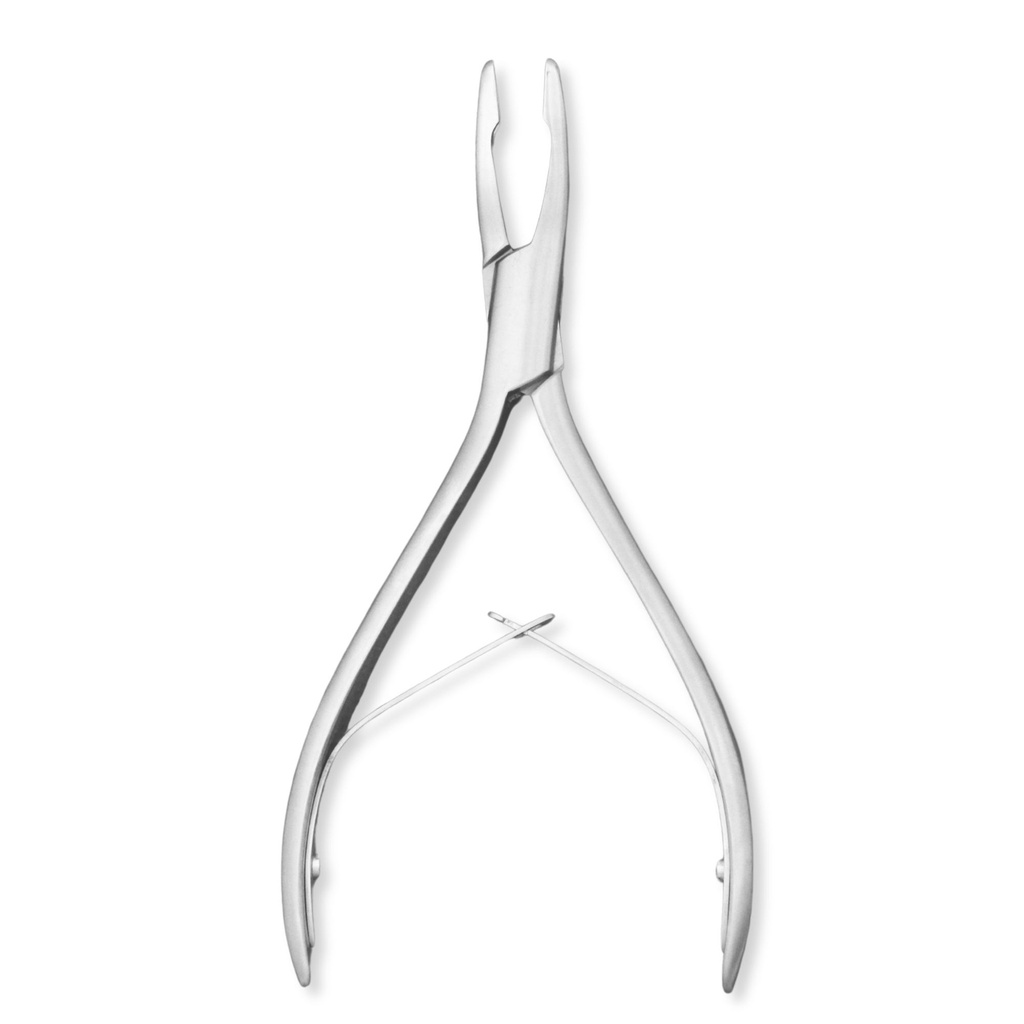
A rongeur is a spring-loaded, plier-like instrument with sharp cup-shaped jaws that bite and remove small pieces of bone. The spring reopens the jaws after each cut so you can work in a steady rhythm. The Friedman pattern is a compact single-action rongeur ideal for trimming socket margins and removing interradicular bone; a mini version gives finer control in tight sites.
- Friedman Fig. 1 (3.0 mm): general alveolar bone trimming after extraction.
- Friedman Mini (2.0 mm): fine work, narrow sites and precise nibbling.
- Cut in small bites, irrigate, and avoid levering — let the jaws do the cutting.
Bone files — smoothing bone
A bone file has a ridged, cross-cut working surface that smooths the bone the rongeur leaves. The Howard pattern is a double-ended file used with a pull stroke (files cut on the pull, not the push). Run it over the ridge until the margin is smooth to a gloved finger.



Finishing the socket — sequence
- Remove sharp bony projections with the rongeur in small bites.
- Smooth the ridge with the bone file using pull strokes.
- Irrigate to remove bone debris.
- Palpate the ridge — it should feel smooth and rounded before closure.