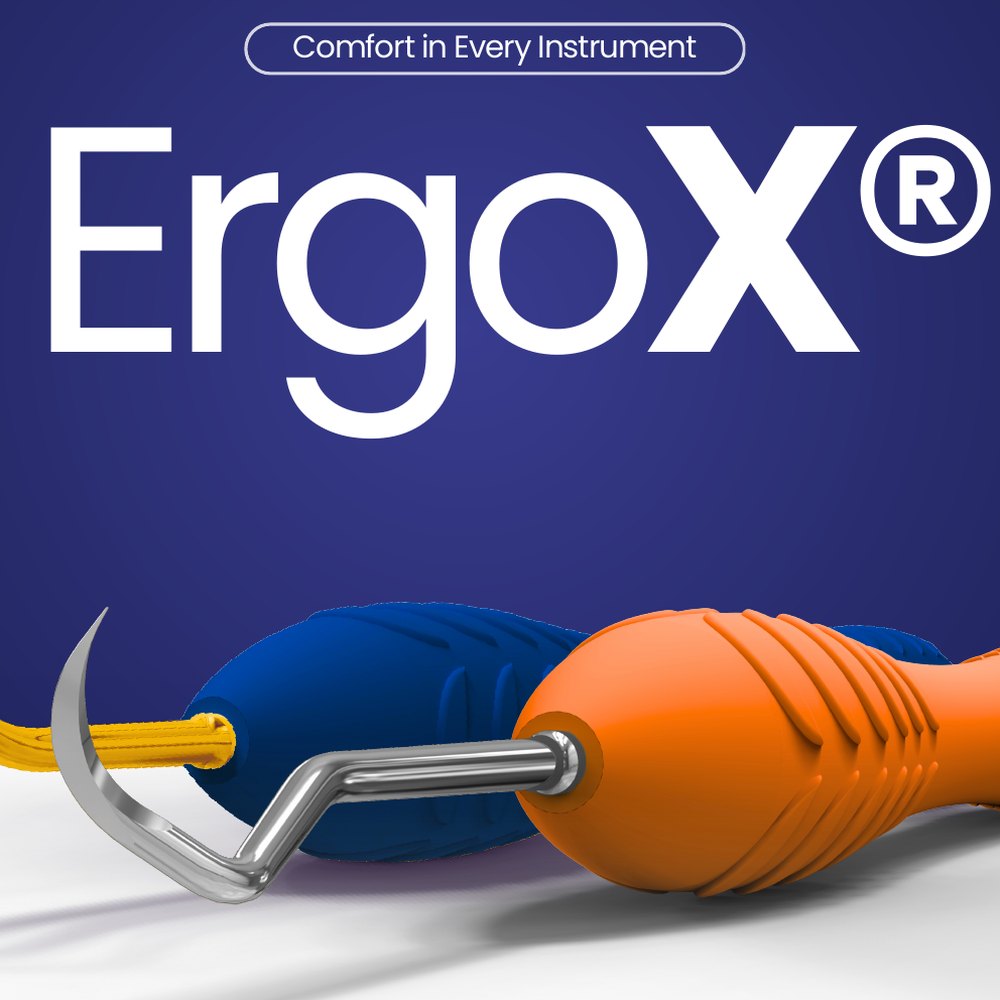

Every restorative, hygiene and surgical appointment is built on a small set of basic dental instruments — the mirror, explorer, probe, scaler, excavator and a handful of others you reach for hundreds of times a week. This guide explains each one: what it is, what it does, and how a better-designed instrument makes the work faster and your hands happier.
If you are building a first operatory kit, training a new graduate, or simply want a clear reference, this is the complete picture. We cover 29 basic instruments grouped by where they're used — diagnostics, scaling and periodontics, restorative, endodontics, oral surgery and isolation — all from the Danish-inspired ErgoDenta catalogue. For each, you'll find what it's for and the design details that reduce hand fatigue and improve control.
New to the field? Our shorter simple guide to the basic dental instruments is a gentler starting point; this article goes deeper.
1. Diagnostic (examination) instruments
The examination set is the foundation of every appointment — you cannot treat what you cannot see or feel. Four instruments do almost all the work.
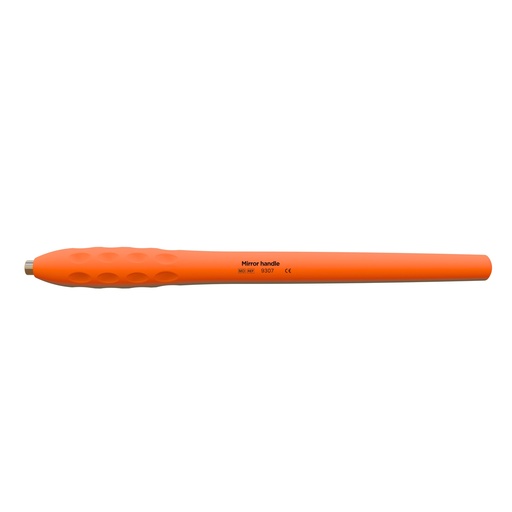
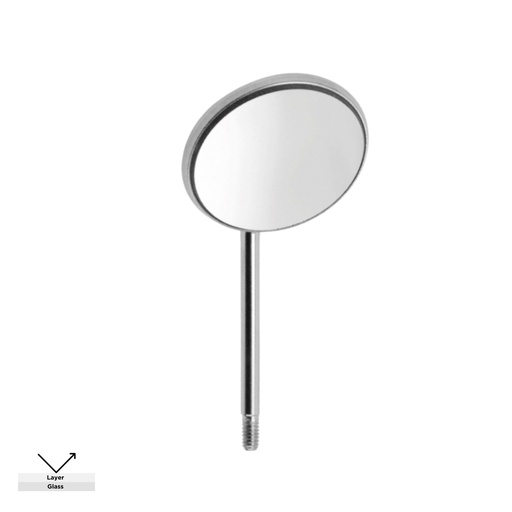
Mouth mirror & handle
The mouth mirror gives indirect vision of surfaces you can't see directly, retracts the cheek and tongue, and reflects light into the field. The handle you choose matters more than any other on the tray because you hold it longest — a light, larger-diameter ergonomic mirror handle reduces pinch force and all-day hand fatigue. Pair it with a front-surface (rhodium) head for a crisp, ghost-free image.
Explorer (dental probe)
The explorer's fine, sharp tip detects caries, calculus, restoration margins and surface irregularities by tactile feedback. The #23 (shepherd's hook) is the everyday workhorse; many ErgoDenta explorers come combined with a periodontal probe on the opposite end so you carry one instrument instead of two.
Periodontal probe
A calibrated, blunt probe that measures pocket depth and bleeding on probing — the core of a periodontal assessment. The WHO/CPITN ball-end probe protects the sulcus floor while giving accurate readings; UNC and Williams markings suit detailed charting.
College (cotton) tweezers
Locking or non-locking serrated tweezers for placing and retrieving cotton pellets, paper points and small items. A secure, non-slip tip means fewer dropped materials and a cleaner workflow.


2. Scaling & periodontal instruments
These remove plaque and calculus above and below the gum line. The right edge shape for the right surface is what makes scaling efficient and atraumatic.
Sickle scaler
A pointed, triangular cross-section scaler for removing supragingival calculus, especially in the anterior and interproximal. The H6/H7 is the classic double-end design. A sharp, well-balanced sickle clears deposits in fewer strokes.
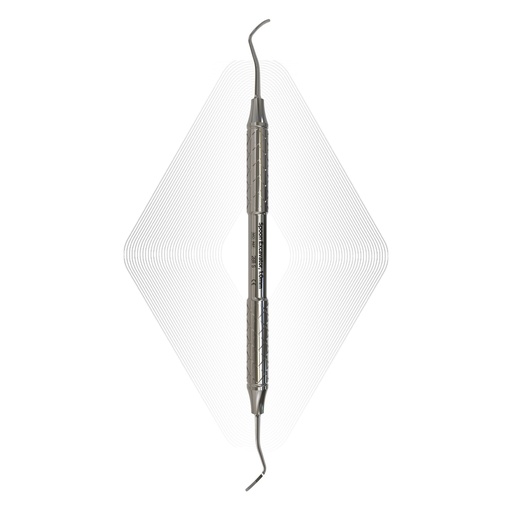
Gracey curette
Area-specific curettes with a single cutting edge and a rounded toe for safe subgingival scaling and root planing. Each number fits a region (e.g. 11/12 mesial posterior, 13/14 distal posterior). ErgoDenta's cryo-treated ErgoRazor edges hold sharpness far longer.
Universal curette
Two cutting edges and a 90° blade angulation make a universal curette usable across all surfaces and quadrants — a versatile single instrument for general debridement when you don't need area-specific access.
Hoe scaler
A hoe pulls heavier calculus off root surfaces with a strong, straight pull stroke — useful on exposed roots and larger tenacious deposits where a curette would take many passes.




3. Restorative instruments
From cavity cleaning to placing, shaping and finishing the restoration — this is the largest basic group, because each step needs the right working end.
Spoon excavator
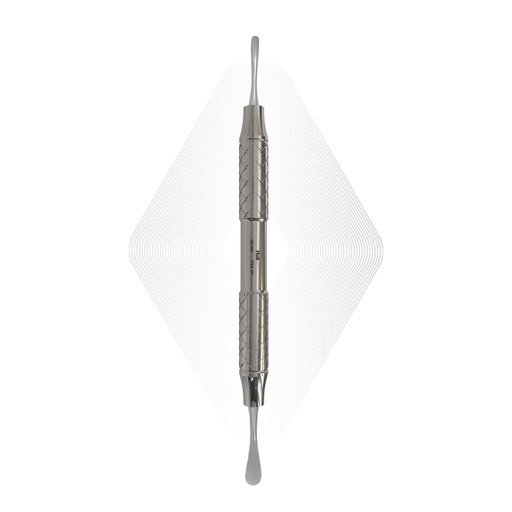
A rounded, bladed spoon for removing soft caries and excess set cement. The circular cutting edge scoops carious dentine cleanly; sizes from small to large match the lesion.
Amalgam condenser / plugger
Packs (condenses) restorative material firmly against the cavity walls to remove voids. Step from small to large nibs as you fill. A serrated face grips amalgam so it doesn't slip. See our condenser sizing guide.
Ball burnisher
A smooth, rounded end used after condensing to smooth the surface and adapt material to the margin for a better seal. Also burnishes matrix bands and pre-contours.
Carver (cleoid-discoid / Nystrøm)
Re-creates occlusal anatomy and removes excess while the material is workable — grooves, ridges and marginal contour. Discoid/cleoid blades shape cusps and fossae. See carvers & burnishers.
Flat plastic / filling applicator
Carries and shapes composite and other plastic materials into the cavity. Non-stick titanium-coated versions (ErgoSlip) stop resin dragging so placement is faster and cleaner.
Cement spatula
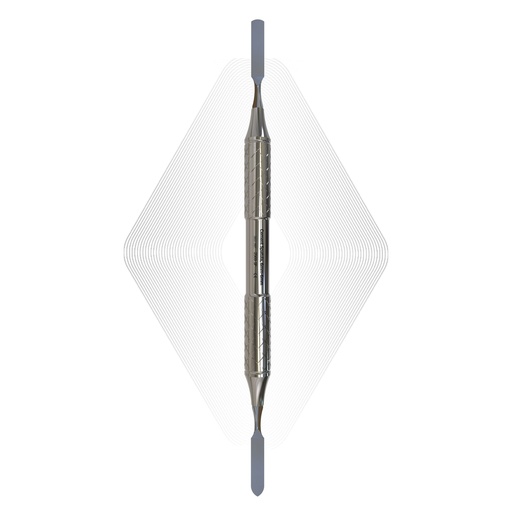
A flat, rigid blade for mixing cements, liners and bases on a pad or slab. A stain-resistant ErgoSteel Plus blade keeps mixes clean. See our cement spatula guide.
Gingival margin trimmer
A hatchet-type hand cutting instrument that bevels and cleans the cervical margin of a proximal box and removes unsupported enamel. Supplied as mesial/distal pairs.
Tofflemire matrix retainer
Holds and tightens a circumferential band so you have a wall to condense against and can rebuild the proximal contact in a Class II. See the Tofflemire guide.






4. Endodontic basics
Root-canal therapy needs a few specialist hand instruments alongside files and rotary.
Endo explorer (DG-16)
A sharp, double-ended explorer for locating canal orifices and checking access cavity walls. The fine straight tip finds calcified or hidden canals.
Endo plugger
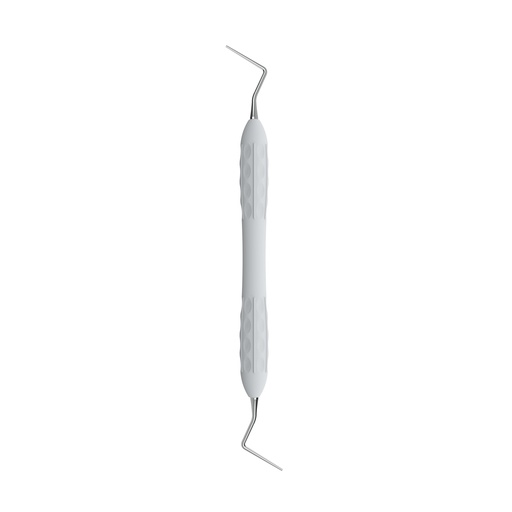
A flat-ended condenser for vertical compaction of gutta-percha — packs the filling apically and laterally for a dense seal. Sized by tip diameter.
Endo spreader
A pointed, tapered instrument for lateral condensation, creating space for accessory gutta-percha points. Finger and hand patterns suit different canals; see our endodontic hand instruments guide.


5. Oral surgery & extraction basics
Extractions and minor surgery rely on a compact set for luxating, elevating, removing and closing.
Extraction forceps
Beak-shaped forceps grip the tooth at the CEJ and deliver it with controlled movements. Beak design is tooth-specific (uppers, lowers, molars, roots). A textured GripMaster handle improves control on difficult extractions.
Root / apical elevator
Elevators luxate the tooth and elevate roots and fragments by wedging and rotating against bone. Straight and apical patterns are the everyday basics.
Luxator
A fine, sharp-bladed instrument that cuts the periodontal ligament and gently expands the socket for atraumatic extraction — preserving bone for implants. See our atraumatic extraction toolkit.
Periosteal elevator (Molt)
Raises and reflects a mucoperiosteal flap off the bone with a pointed and a broad end (e.g. Molt 9). Clean flap reflection means better access and faster healing.
Surgical scissor (Iris)
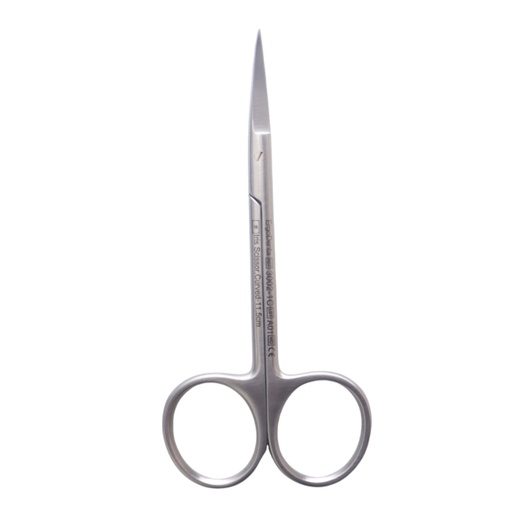
Fine, sharp scissors for cutting tissue and suture. Curved Iris scissors give visibility at the tissue surface; TC inserts hold the edge longer.
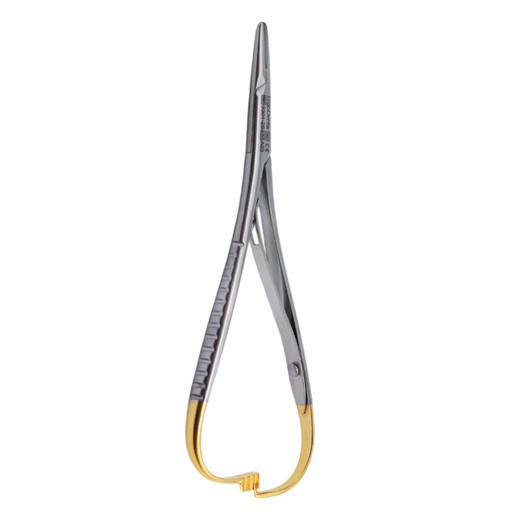
Needle holder (Mathieu)
Grips and drives the suture needle. The Mathieu's ratchet locks with a squeeze for fast intraoral suturing; TC jaws prevent the needle slipping. See needle holders compared.
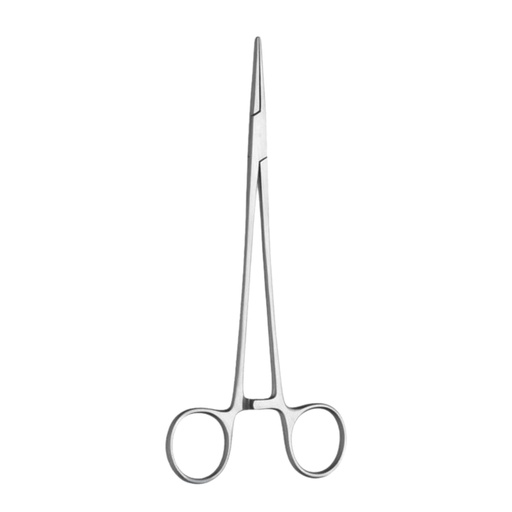
Tissue forceps (Adson)
Holds a flap steady during suturing. The toothed (1×2) Adson grips securely with minimal trauma; the serrated version handles dressings. See tissue & dressing forceps.



6. Isolation — rubber dam
Predictable restorative and endodontic work needs a dry, isolated field. The rubber dam trio sets it up.
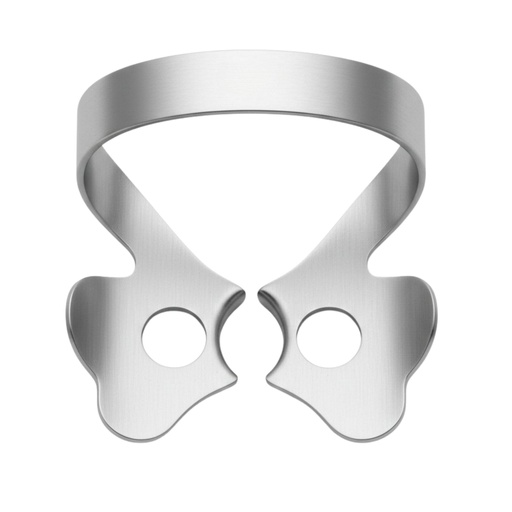
Rubber dam clamp
Anchors the dam and retracts the gingiva around the tooth. Winged and wingless designs cover anteriors, premolars and molars — match the clamp to the tooth (see our clamp selection chart).
Rubber dam clamp forceps
Places and removes the clamp by spreading its jaws. Brewer, Stokes and Ivory patterns differ in tip; all give controlled placement without the clamp pinging off.
Rubber dam punch
The Ainsworth punch makes clean holes of the right diameter in the dam sheet for each tooth — a clean hole prevents tearing and leaks.


Building your basic kit — and why ergonomics matters
A first operatory kit is essentially the diagnostic four, a scaling set, the restorative group, and a small surgical/isolation set. Beyond which instruments you choose, how they feel shapes your career: dental professionals have high rates of hand, wrist and neck strain. Lightweight, larger-diameter, well-balanced handles — like ErgoDenta's ErgoLite and ErgoX ranges — reduce the pinch force and static muscle load that cause those injuries. Colour-coding the handles also speeds tray set-up and reduces mix-ups.