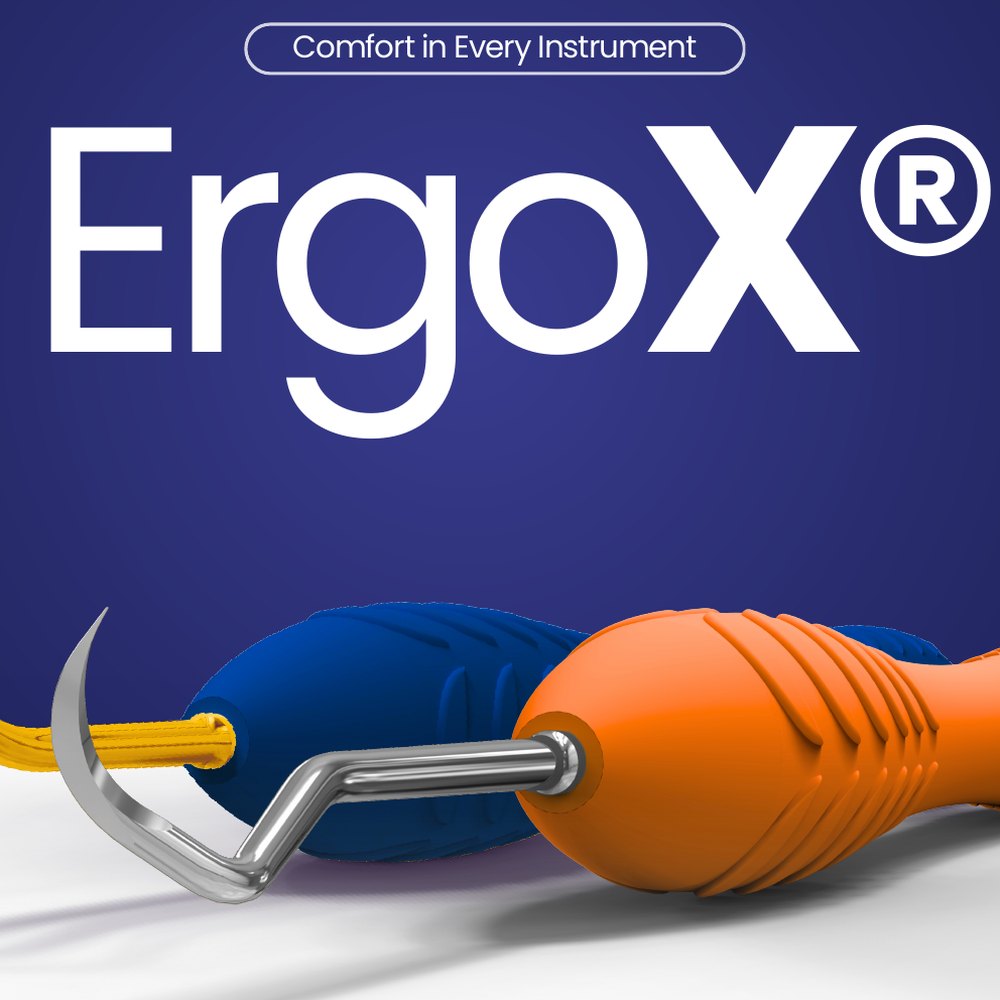
The mouth mirror is the instrument you hold longest in every appointment — so the handle you choose has more effect on hand fatigue than almost any other tool on the tray. Here is how to pick the most ergonomic mouth mirror handle for the way you actually work.
Search any dental catalogue and you will find dozens of mirror handles that look almost identical. They are not. Weight, diameter, surface grip and the threading that connects to the mirror head all change how the instrument feels after the twentieth patient of the day. This guide walks through what an ergonomic mirror handle really needs, and which ErgoDenta handle suits each clinician.
What makes a mirror handle ergonomic?
1. Light weight
A heavy steel handle forces the small muscles of the hand to work continuously just to hold position. A lighter handle lets those muscles relax between strokes. ErgoDenta's ErgoLite handles use a resin body that weighs a fraction of solid steel, which is why hygienists and operators who mirror all day notice the difference first in the thumb and index finger.
2. The right diameter
A slightly larger, rounded handle diameter reduces pinch force — you grip with a relaxed hand instead of a tight three-finger pinch. This is the single biggest ergonomic lever for repetitive-strain prevention, and it is why hollow, large-diameter handles became the standard in modern hygiene.
3. Grip texture
A handle needs to stay controlled when wet. A lightly textured or soft-touch surface keeps the mirror secure without you having to squeeze, even with gloved, saline-wet fingers.
4. Colour coding
Colour is not just cosmetic. Colour-coded handles let you set up trays by operator or by procedure at a glance, which speeds up turnover and reduces mix-ups. ErgoLite handles come in a full colour range for exactly this reason.
Front-surface vs plain mirror head — choose this too
The handle is only half the decision. The mirror head determines image quality. A front-surface (rhodium) mirror reflects light off the very front of the glass, so there is no double image or ghosting — the standard for accurate indirect vision and microscopy. A plain mirror is cheaper but produces a faint second image. For most clinicians a front-surface head on a lightweight handle is the ergonomic and optical sweet spot. We cover the optics in detail in our guide to front-surface, rhodium and magnifying mirrors.
ErgoDenta ergonomic mirror handles
ErgoDenta builds Danish-inspired mirror handles in several ranges. The lightweight, colour-coded ErgoLite line is the most popular choice for all-day mirroring; the silicone-gripped ErgoX and ErgoX Plus handles add a cushioned grip in two diameters. All accept standard threaded mirror heads.
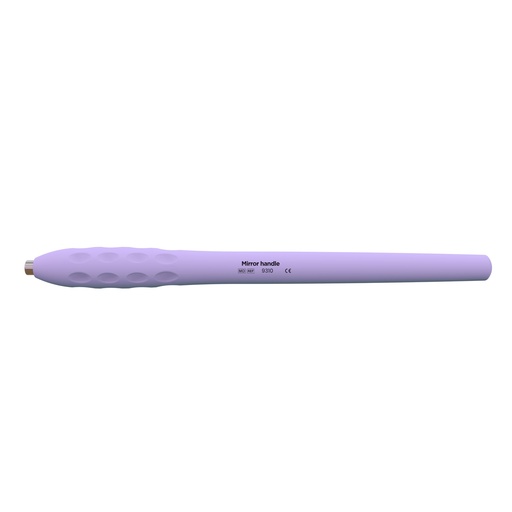
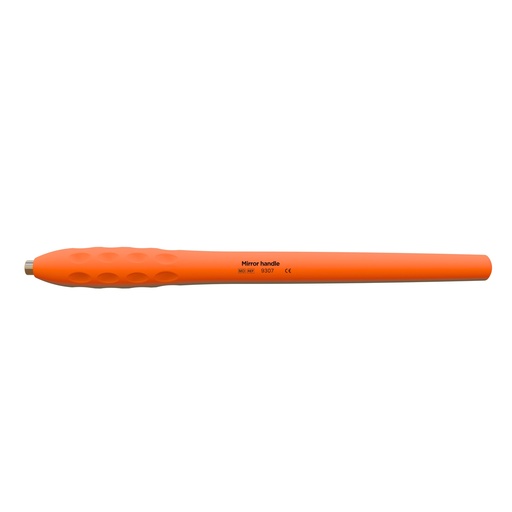
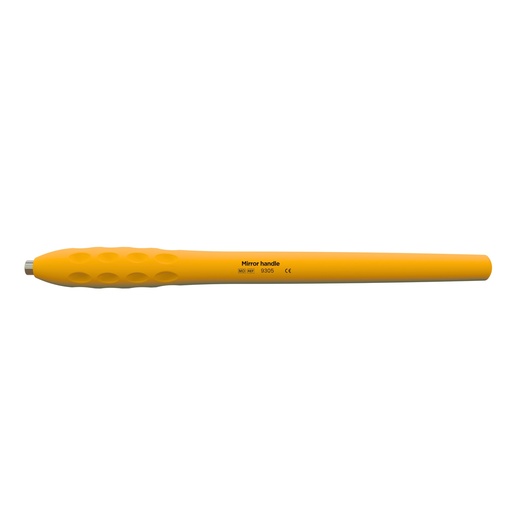
How to choose — a quick rule
- All-day hygiene / high volume: lightest possible handle, larger diameter — ErgoLite.
- You like a cushioned grip: silicone ErgoX or ErgoX Plus.
- Tray organisation matters: colour-code by operator or procedure with ErgoLite colours.
- Image accuracy is critical (endo, microscopy): pair any handle with a front-surface head.