
Carvers & Burnishers — Shaping and Finishing Restorations

Carvers cut anatomy; burnishers smooth and adapt. The shapes and the order of use.
Amalgam and composite carvers and burnishers by ErgoDenta

Carving shapes the restoration; burnishing smooths and adapts it. Two different jobs, two different working ends — and getting both right is the difference between a filling that needs adjusting and one that's right at the chair.

After material is placed and condensed, two instrument families finish the job: carvers remove excess and cut anatomy, and burnishers smooth the surface and adapt margins. This guide covers the shapes ErgoDenta makes and when to reach for each. (For placing and condensing, see our composite placement guide.)

Carvers — shaping the restoration

A carver has a bladed or pointed working end that removes excess material and re-creates occlusal anatomy — grooves, ridges and marginal contour. Common patterns:

  • Carver 5 / Hollenback-type — a versatile pointed carver for occlusal anatomy and interproximal margins.
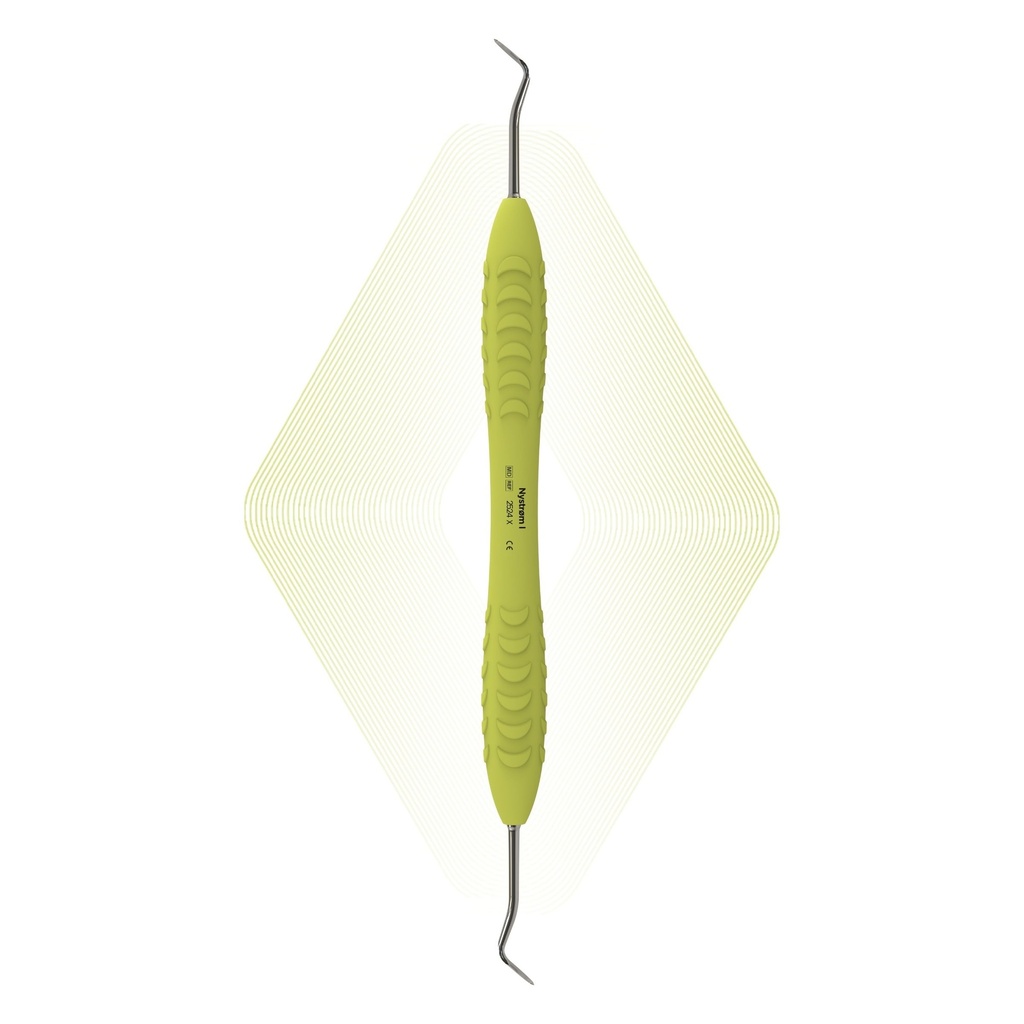
  • Carver-Nystrøm I & III — discoid/cleoid-style carvers for cusps and fossae; different blade widths for fine vs broad anatomy.
  • Knife-carver — a bladed edge for trimming flash and refining margins.

Burnishers — smoothing and adapting

A burnisher has a smooth, rounded working end (ball, football/oval or beavertail) used to smooth the surface, adapt material to the cavity margin and improve marginal seal. ErgoDenta's combination burnisher & plugger instruments give you a condensing end and a smoothing end on one handle.


Carver 5, 2-2.5mm
Carver 5, 2-2.5mm
View product →
Carver-Nystrøm I, 2mm
View product →
Carver-Nystrøm III, 1.7mm
View product →
BallBurnisher & Plugger, Ball ended
Burnisher & Plugger, Ball ended
View product →
Burnisher & Spatel, 1.5-2mm
View product →
See ErgoDenta carvers, burnishers, condensers, spatulas and the full restorative hand-instrument range.
Browse restoration instruments →

Carve, then burnish — the order

  • Condense the material against the walls and floor.
  • Carve the occlusal anatomy and remove excess while the material is workable.
  • Burnish the surface and margins to smooth and adapt.
  • Check the occlusion and refine.

Frequently asked questions

What is the difference between a carver and a burnisher?
A carver has a bladed/pointed end that removes excess and cuts anatomy. A burnisher has a smooth rounded end that smooths the surface and adapts the margins.
What is a Hollenback carver used for?
Carving occlusal anatomy and refining interproximal margins on amalgam and composite. ErgoDenta's Carver 5 is a comparable pointed carver.
What are Nystrøm carvers?
Discoid/cleoid-style carvers for shaping cusps and fossae; ErgoDenta offers them in different blade widths (I and III) for fine and broad anatomy.
When do I burnish?
After carving — to smooth the surface and adapt the material to the cavity margin, improving the marginal seal.
Are these suitable for composite as well as amalgam?
Yes. The carving and burnishing principles apply to both; non-stick titanium-coated options help with composite.
Share this post
Crane-Kaplan Pocket Markers — Mapping the Incision for Gingivectomy
How the pocket marking forceps transfers pocket depth to the tissue surface, and why you need right + left.