For a Class II amalgam or posterior composite, the matrix band is what gives you a tight contact and a wall to condense against. The Tofflemire retainer holds and tightens that band — and choosing Junior, Universal or Senior comes down to the tooth and where you're working.
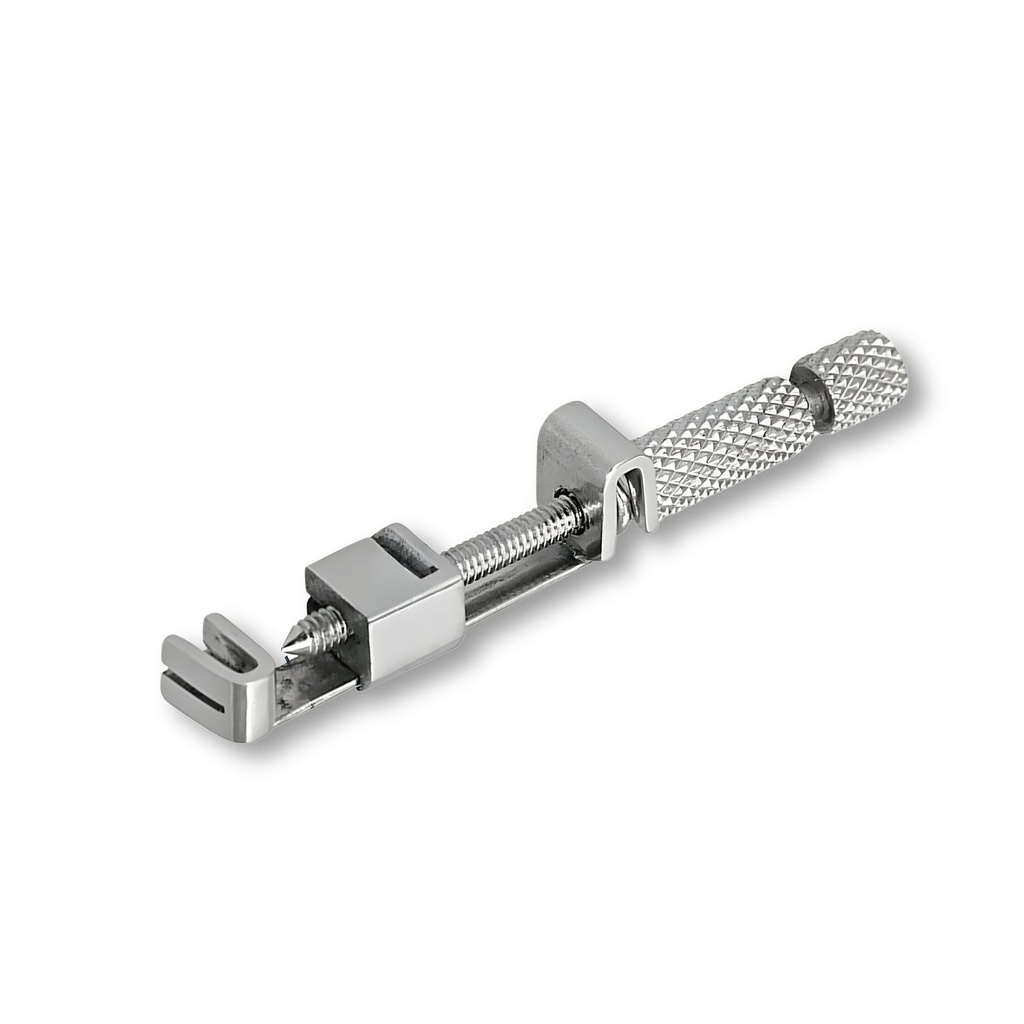
The Tofflemire matrix system is the classic circumferential matrix for posterior restorations: a metal band forms the missing wall, and the Tofflemire retainer holds the band in a loop and lets you tighten it around the tooth. It pairs with matrix bands and wedges to restore proximal contour and contact.
How the Tofflemire works
The retainer has two adjustment knobs: the outer spindle knob locks the band ends in the diagonal slot, and the inner vise knob slides the vise to tighten or loosen the loop. You shape the band into a loop, seat it around the prepared tooth with the smaller circumference at the gingival, wedge the interproximal, and tighten. After condensing and initial carving, you loosen the spindle and remove the retainer, then the band.
Junior vs Universal vs Senior
- Universal — the standard adult retainer; the default for most posterior teeth.
- Junior — smaller, for paediatric and primary teeth or limited access.
- Senior — for larger molars and situations needing a longer reach/band.
- All ErgoDenta Tofflemire retainers are stainless steel and reusable; bands are single-use.



Tofflemire vs sectional matrices
A Tofflemire (circumferential) band wraps the whole tooth and excels at two- and three-surface cavities and build-ups. A sectional matrix with a ring gives a tighter, more anatomic single proximal contact for conservative Class II composites. Many operatories keep both — see our sectional vs Tofflemire comparison for when to choose which.