Oral surgery · instrument guide
A minor oral surgery procedure, whether a surgical extraction, an apicectomy or implant placement, follows the same sequence: incise, raise a flap, retract, work on the bone, clean the site and suture. This guide builds the basic surgical tray around those steps.
A basic oral surgery tray holds a scalpel handle, a periosteal elevator, retractors, tissue forceps, a surgical curette, a bone file, a needle holder and suture scissors. A periosteal elevator lifts the gum and periosteum off the bone. For dental sutures most clinicians use a Mathieu or Crile-Wood needle holder, and a Castroviejo for fine microsurgical sutures.
What is in a basic oral surgery kit?
| Step | Instrument | Why |
|---|---|---|
| Incision | Scalpel handle No. 3 with blades 15, 15c or 12 | Clean, controlled incision |
| Flap | Periosteal elevator (Molt, Freer) | Lifts the full-thickness flap from the bone |
| Retraction | Minnesota, Langenbeck retractors | Protects the flap and cheek and gives access |
| Holding tissue | Adson or surgical tweezer 1:2 | Grips the flap without tearing |
| Bone & socket | Surgical curette (Lucas), bone file, rongeur | Removes granulation tissue and smooths bone |
| Haemostasis | Mosquito forceps | Clamps small vessels and grips fragments |
| Suturing | Needle holder, suture scissors | Closes the wound and cuts the suture |
Incision, flap & retraction
What is a periosteal elevator used for?
After the incision, a periosteal elevator slides under the periosteum and lifts the gum and periosteum off the bone as one full-thickness flap. The sharp end starts the flap; the broader end continues it.
 Scalpel handle No. 3Bard-Parker handleFor blades 11, 12, 15 and 15c.View instrument →
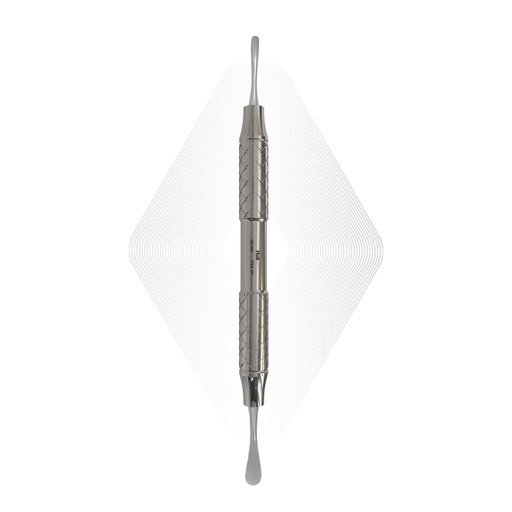 Periosteal elevator MoltMolt 9 / NordbergRaises the mucoperiosteal flap.View instrument →
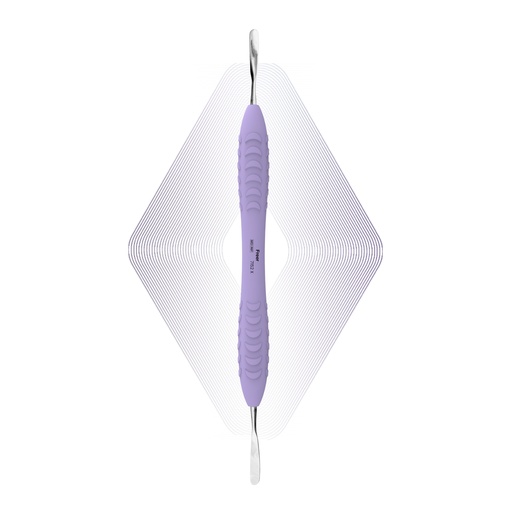 Freer elevatorDouble-ended elevatorFine flap elevation and dissection.View instrument →
 Minnesota retractorCheek retractorRetracts cheek and flap.View instrument →
 Langenbeck retractorTissue retractorHolds the flap away from the site.View instrument →
 Adson tweezer 1-2Tissue forcepsToothed tip grips soft tissue securely.View instrument →
Bone & socket
Instruments for bone and the socket
 Lucas bone curette 85Surgical curetteRemoves granulation tissue from the socket.View instrument →
 Howard bone fileBone fileSmooths sharp bone edges.View instrument →
 Halsted-Mosquito forcepsHaemostatClamps vessels and grasps small fragments.View instrument →
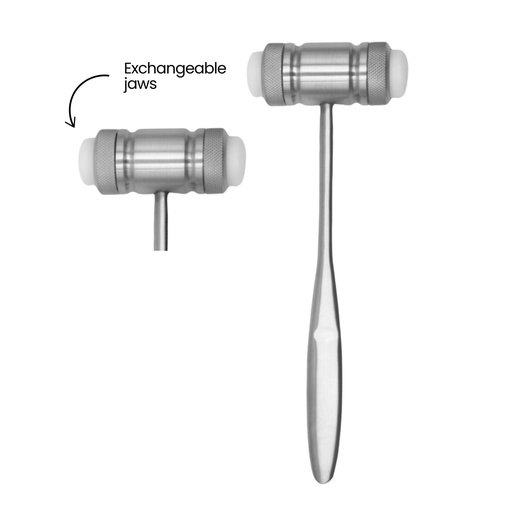 Mead hammerSurgical malletFor osteotomes and chisels.View instrument →
Suturing
Which needle holder is best for dental sutures?
| Needle holder | Design | Best for |
|---|---|---|
| Mathieu | Spring-loaded, ratchet at the end of the handles; palm grip | Fast suturing with 3-0 to 5-0 sutures |
| Crile-Wood / Mayo-Hegar | Ring handles with ratchet; finger grip | General oral surgery sutures |
| Castroviejo | Spring handles held like a pencil, fine jaws | Microsurgery with 6-0 and finer sutures |
Tip: tungsten carbide (TC) inserts in the jaws grip the needle more firmly and last longer; gold handles usually mark TC instruments.
Needle holders and surgical scissors
Scissors in oral surgery are chosen by what they cut: sutures, soft tissue or fine gingival tissue.
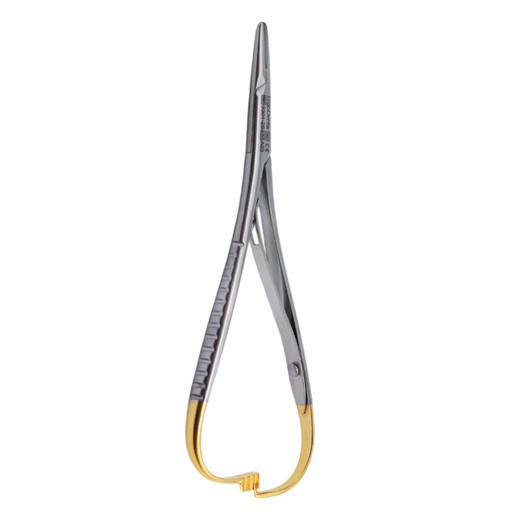 Mathieu needle holderSpring needle holderPalm grip and ratchet for fast suturing.View instrument →
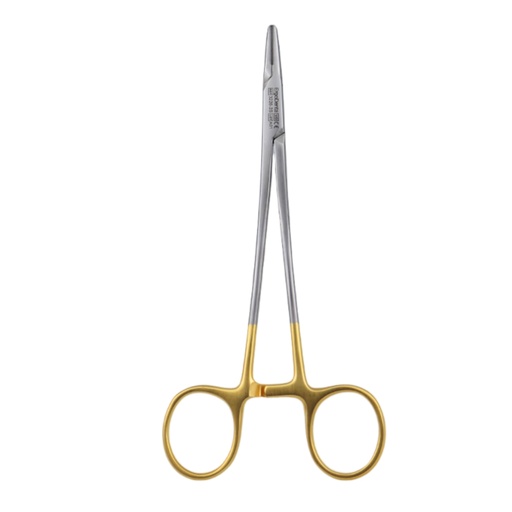 Crile-Wood needle holderRing needle holderEveryday oral surgery sutures.View instrument →
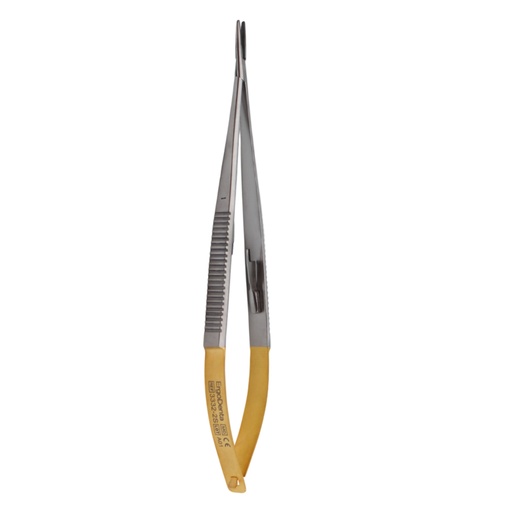 Castroviejo micro needle holderMicro needle holderFine sutures in microsurgery.View instrument →
 Suture scissorsStitch scissorsCuts suture material.View instrument →
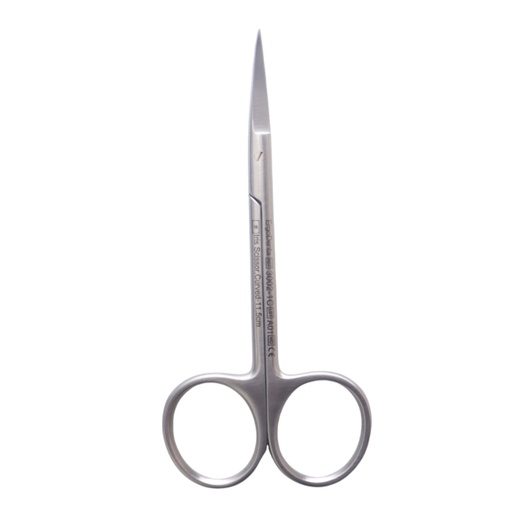 Iris scissorsFine tissue scissorsSmall, sharp scissors for soft tissue.View instrument →
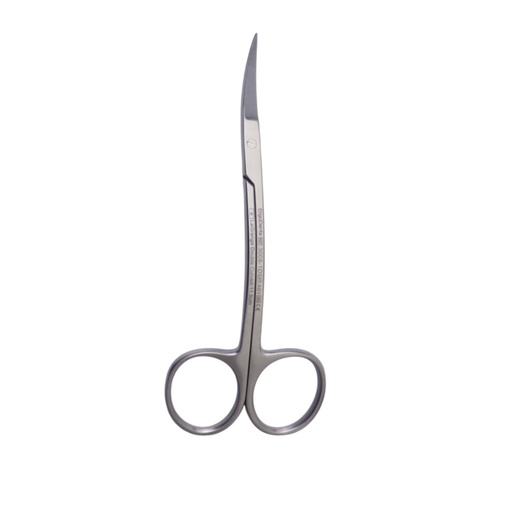 La Grange scissorsDouble-curved gum scissorsTrims gingival tissue.View instrument →
 Goldman-Fox scissorsPeriodontal scissorsTrims tags and flap margins.View instrument →
 Metzenbaum scissorsDissecting scissorsBlunt dissection of soft tissue.View instrument →
Build your surgical tray
Periosteal elevators, retractors, needle holders and scissors, or a ready-made surgery kit.
Questions
Frequently asked questions
What instruments are used in oral surgery?
A scalpel, periosteal elevators, retractors, tissue forceps, surgical curettes, bone files and rongeurs, haemostats, needle holders and scissors. Implant and sinus surgery add osteotomes, bone spreaders and sinus lift instruments.
What is in a basic oral surgery kit?
A scalpel handle, a periosteal elevator, one or two retractors, a tissue forceps, a surgical curette, a bone file, a mosquito forceps, a needle holder and suture scissors.
What is a periosteal elevator used for?
Lifting the gum and periosteum off the bone as one full-thickness flap after the incision, to give access to the bone and root.
Which needle holder is best for dental sutures?
Mathieu and Crile-Wood needle holders are the everyday choice for 3-0 to 5-0 sutures. For fine 6-0 and 7-0 sutures in microsurgery, a Castroviejo needle holder gives more control.
What scissors are used in oral surgery?
Suture scissors for cutting sutures, iris and Metzenbaum scissors for soft tissue, and La Grange or Goldman-Fox scissors for trimming gingival tissue.