Instrument Guide · Surgery
Bone Curettes & Periosteal Elevators — Surgical Hand Instruments Explained
Bone curettes and periosteal elevators are the soft-tissue and bone-handling backbone of every oral surgery tray — extraction, implant placement, GBR, apicoectomy. Here is how to pick the right tip for the right step.
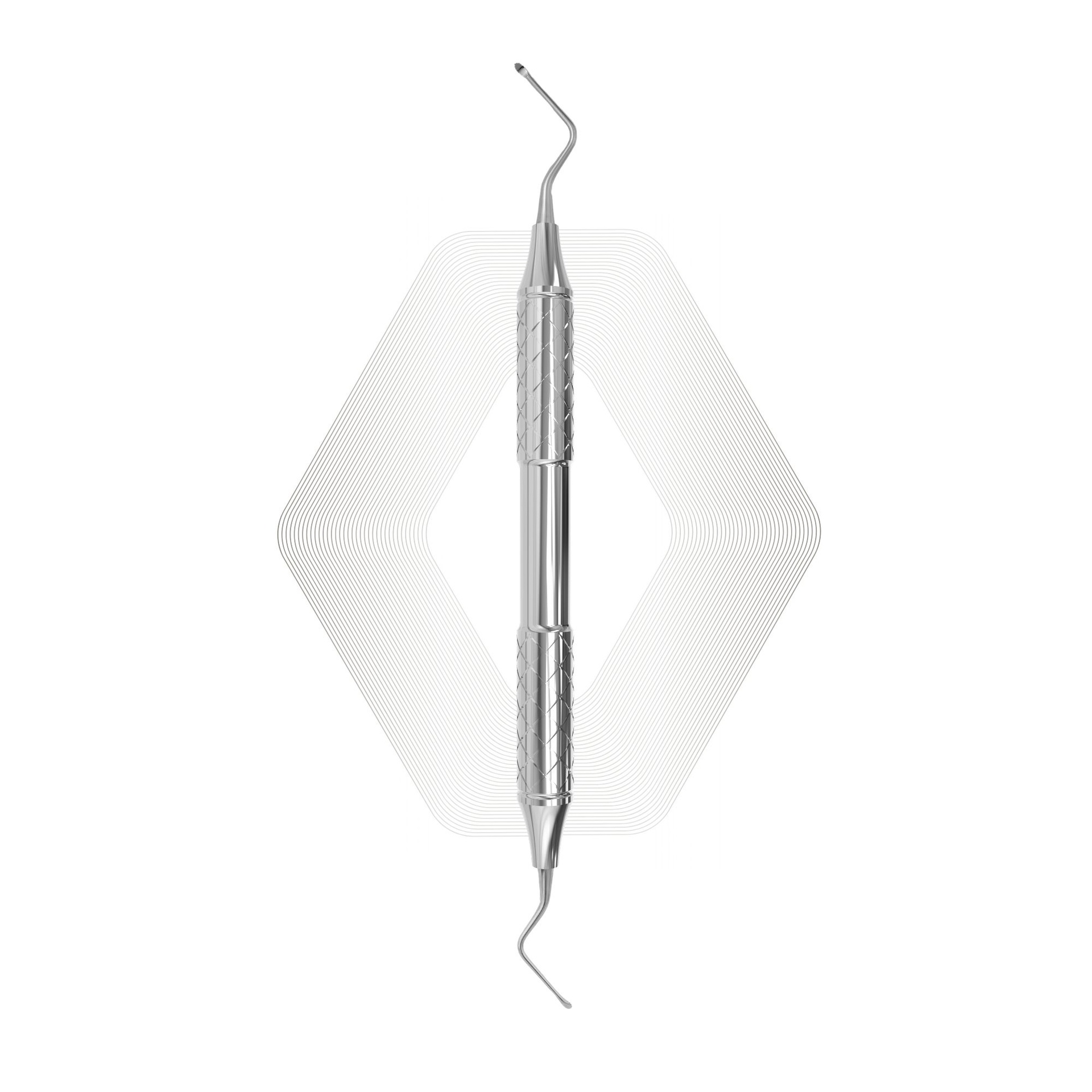
The Lucas family — sizes 84 to 88
| Size | Cup | Best for |
|---|---|---|
| 84 | 2.0 mm | Smallest sockets, periapical pockets, fine debridement |
| 85 | 2.5 mm | Anterior extraction sockets |
| 86 | 3.0 mm | Premolar extraction sockets — most-used universal size |
| 87 | 3.5 mm | Molar extraction sockets, larger cyst enucleation |
| 88 | 4.0 mm | Largest sockets, full-arch surgery |
Periosteal elevators
The periosteal elevator does the opening step of every flap surgery: lifting the periosteum (and the muco-periosteal flap above it) off the bone surface cleanly, in one piece, without tearing.
- Molt 9 / 4-7 mm — universal periosteal elevator, double-ended (small + large blade)
- Buser 4-4 mm — extra-rigid for thicker periosteum (lower posterior, surgical implant sites)
- Glickman 4-4 mm — workhorse periodontal periosteal elevator
- Pritchard PR3 — narrow blade for inter-dental papillae
- Micro-surgical periosteal — for endodontic apicoectomy and microsurgical flap design
The ErgoDenta surgical range
- Lucas Bone Curettes — sizes 84-88, serrated SP series
- Periosteal Elevators — Molt, Buser, Glickman, Pritchard
- Micro-Surgical Periosteal Elevators — for apicoectomy and GBR
Frequently asked questions
What size Lucas bone curette is used most often?
The Lucas 86 (3.0 mm cup) is the most-used universal size — fits most premolar and molar extraction sockets, periapical lesions, and small cyst cavities. Most surgical kits include 84, 86, and 88 to cover the full anatomical range.
Why are bone curettes serrated?
Serrated edges grip granulation tissue, soft bone, and debris far more efficiently than smooth-edged curettes. Fewer strokes, less surgical force, and cleaner sockets in less time.
What is the difference between a periosteal elevator and a bone curette?
A periosteal elevator separates and lifts the muco-periosteal flap from the bone surface — used at the start of flap surgery. A bone curette removes tissue and debris from the bone or socket itself — used during cyst enucleation, granulation removal, and socket debridement after the flap is reflected.
Which periosteal elevator is best for implant surgery?
The Buser 4-4 mm is most popular for implant flap surgery — its rigid design handles thicker mandibular periosteum without flexing. The Molt 9 (4-7 mm double-ended) is also widely used as a universal implant flap elevator.
How often do bone curettes need to be replaced?
Inspect every 50 sterilisation cycles. Replace if the cup edge has lost its serrations, if the cup geometry has bent, or if the working edge no longer scrapes cleanly. With proper handling and re-sharpening, a quality serrated Lucas curette lasts 5+ years in busy practice.