Practice Guide · Sterilize & Organize
Sterilization Cassettes — How to Choose Size, Color and Material
Sterilization cassettes (instrument cassettes / trays) cut reprocessing time, protect delicate tip geometry through autoclave cycles, and let you color-code by procedure or operatory. Here's a practical guide to picking the right cassette, lid, and color for your workflow.
Why use a cassette instead of loose pouching?
- Speed — load once, transport from operatory to reprocessing and back without re-handling each instrument
- Tip protection — instruments don't bang against each other in the autoclave, preserving sharp edges and delicate working tips
- Inventory control — instruments live in defined slots, easier to spot a missing one
- Workflow — color-code by procedure (perio, endo, exam) or by operatory for instant identification
- Cross-contamination — fewer touches per instrument means less hand transfer of bioburden
Cassette sizes — pick by instrument count
| Size | Capacity | External (mm) | Best for |
|---|---|---|---|
| X5 | 5 instruments | 180 × 86 × 26 | Hygiene set, exam set, focused procedure trays |
| X8 | 8 instruments | 180 × 136 × 26 | Restorative set, endo set, basic surgery |
| X10 | 10 instruments | 185 × 145 × 35 | Surgery, full kit, multi-tip procedures |
Color-coding strategy
The biggest workflow gain from cassettes isn't speed — it's visual identification. Color the cassette to match a workflow rule and your team finds the right tray without thinking:
- By procedure — Black = exam, Blue = restorative, Pink = hygiene, Grey = surgery
- By operatory — each room owns one color across all sizes
- By turnaround urgency — coloured cassettes for routine work, grey for "must be back in 30 min"
ErgoTray X5 ships in 7 colors so you have enough variety to encode a clear rule across the practice.
Lids — silicone removable vs metal hinged
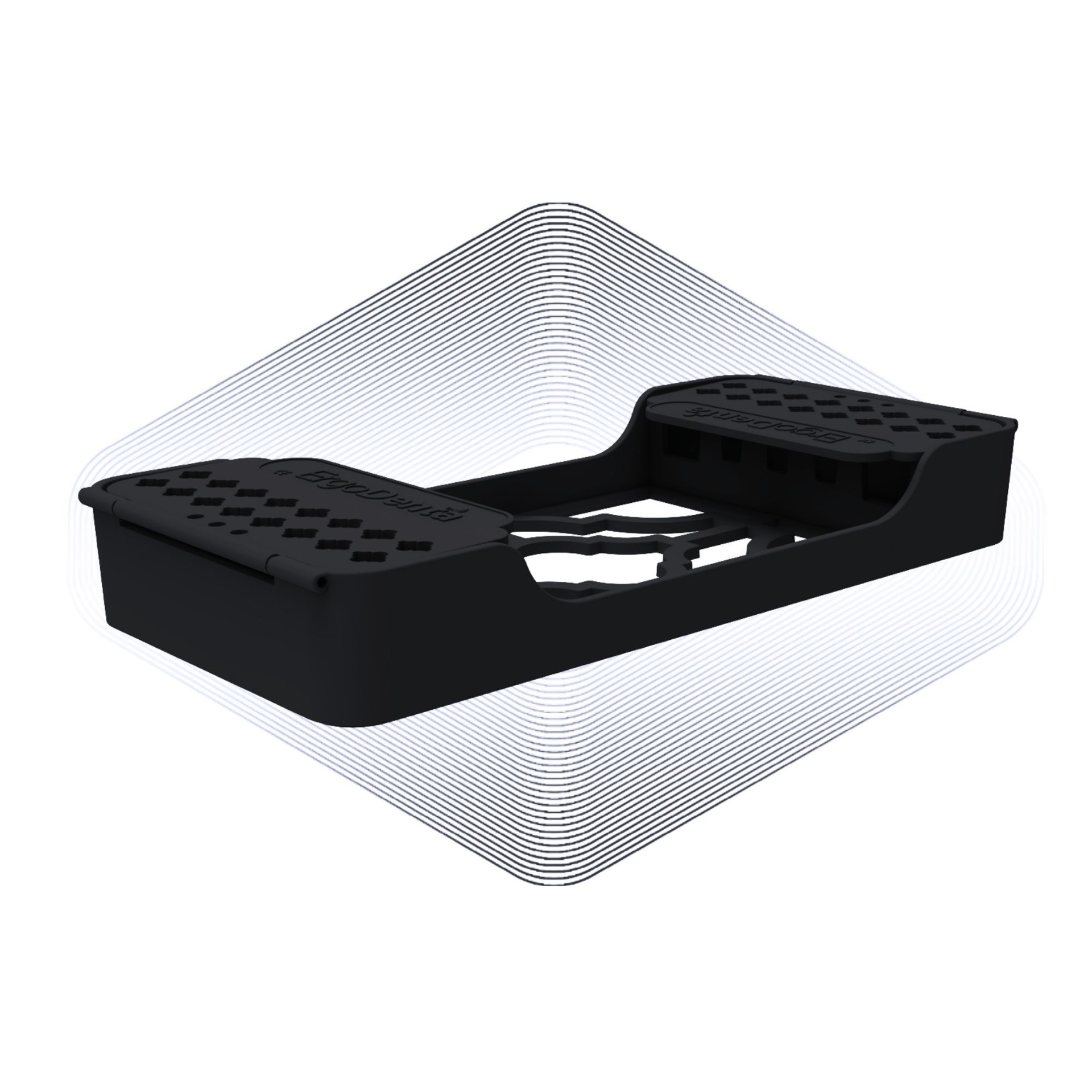
The lid is what turns the cassette from a tray into a true autoclave system. Two options:
- Silicone removable lid — lightweight, easy to lift, color-coded to the cassette base. Best for high-throughput hygiene/restorative
- Metal hinged lid — sturdier, locks shut, ideal for surgery and chairside transport with sharp tips inside
ErgoDenta silicone lids:
Material — why anodized aluminium beats plain steel
ErgoTrays are made from anodized aluminium — light enough to handle one-handed, durable through 1000+ autoclave cycles, and the anodization layer takes color permanently (it won't peel or fade like painted steel cassettes do).
The ErgoDenta ErgoTray range
- 5505K — ErgoTray X5, Black
- 5505B — ErgoTray X5, Blue
- 5505G — ErgoTray X5, Grey
- 5505E — ErgoTray X5, Purple
- ErgoTray X8 — full color range (5508K, B, G, P, O)
Frequently asked questions
How many cassettes do I need per operatory?
Calculate from peak hourly throughput × reprocessing time. A typical hygiene operatory needs 3–5 X5 cassettes per chair (one chairside, one in reprocessing, plus reserve). Restorative operatories typically run with 2–4 X8 cassettes per chair.
Can I autoclave instruments inside a cassette?
Yes — that's the point. ErgoTray cassettes are designed for full autoclave cycles at 134 °C with the instruments loaded. Steam penetrates through the perforations and around the silicone lid. Always follow your local sterilisation validation protocol.
How long does an ErgoTray last?
Anodized aluminium ErgoTrays are validated for 1000+ autoclave cycles. The colour does not fade because the anodization process embeds the colour in the metal surface (unlike paint, which chips and peels).
Should I use silicone or metal lids?
Silicone removable lids are lighter and faster to handle — better for high-throughput hygiene. Metal hinged lids are sturdier and lock shut — better for surgery and transport. Many practices use both: silicone for routine, metal for sharp surgical kits.
Can I customize a cassette layout for a specific procedure?
Yes. ErgoTrays use silicone instrument retainers that can be re-positioned to match any standard 5/8/10-instrument layout. For private-label or fully bespoke layouts, contact ErgoDenta — we work with practices and OEM partners on procedure-specific configurations.