Rubber dam clamp numbers look like a secret code — 12A, 26N, W3, 212SA — but the system is simpler than it appears. This guide decodes every common number so you can build a rational clamp set instead of a drawer of mystery metal.
TL;DR
Low numbers (0–9) = premolars and small molars. Teens and twenties = molars, with A-suffix meaning subgingival serrated jaws and N meaning deep/partially-erupted. 200-series = flat-jawed general molar clamps. 212/212SA = anterior butterfly clamp. W-prefix = wingless version of the same number.
The clamp code, decoded
| Number | Tooth | Design notes |
|---|---|---|
| 00, 212, 212SA | Anteriors | "Butterfly" double-bow clamps for cervical restorations; 212SA is the subgingival variant |
| 2, 2A | Premolars | Flat jaws; A = deeper serrated jaws |
| 3, 4, 5 | Small–large molars | 3 lower, 4–5 upper as a rule of thumb |
| 8, 8A, 8AD | Molars | The workhorse upper molar clamp; 8A grips broken-down teeth subgingivally |
| 10, 11, 14, 14A, 18, 24–28 | Molars (general) | 14A for partially erupted or tilted molars — jaws angle apically |
| 12A, 13A | Lower molars | Left/right-specific subgingival jaws for broken-down lower molars |
| 26, 26N, 201, 205 | Upper molars | N = narrow/deep reach for partially erupted teeth |
| W + number | Same as number | Wingless — dam is stretched over the clamp after seating |
A rational 8-clamp starter set
These eight cover ~95% of isolations: 2 (premolar), 8 and 8A (upper molar, intact/broken), 12A + 13A (lower molar left/right subgingival), 14A (partially erupted), 26N (deep upper), 212SA (anterior cervical).





Winged vs wingless
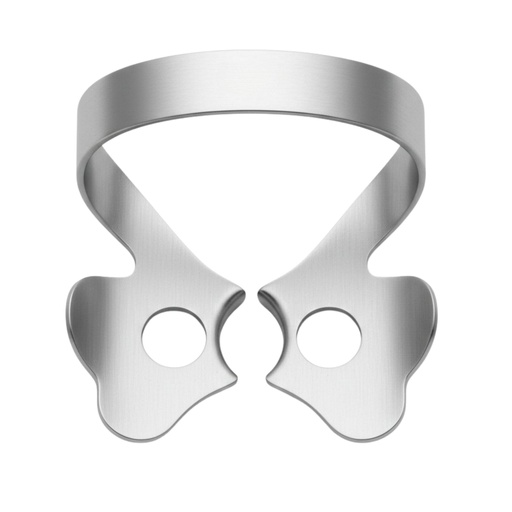
Winged clamps carry the dam to the tooth in one motion (clamp + dam + frame assembled first) — faster once mastered. Wingless (W-series) clamps are seated first, then the dam is stretched over — easier visibility for difficult teeth. Most clinicians standardise on one approach; stock accordingly.
Placement checklist
- Always ligate the clamp with floss before seating — swallowed clamps are an avoidable emergency.
- Four-point contact on the tooth; a rocking clamp is the wrong size, not a technique problem.
- Jaws at or just apical to the height of contour — never on the gingiva alone.
- Check stability with light finger pressure before punching the dam.
Frequently asked questions
What does the A suffix actually mean?
Jaws that are inclined apically with serrations, designed to grip below the height of contour on broken-down or partially erupted teeth — e.g. 8A vs 8.
Which clamp for a lower molar with a large MOD cavity?
12A (right) or 13A (left) — their subgingival jaws grab sound tooth structure below the cavity margins.
Do I need both winged and wingless?
No — pick one workflow. Wingless suits operators who prefer seating the clamp first with full visibility.
What is a 26N clamp used for?
Upper molars that are partially erupted or short-crowned — the N pattern reaches deeper along the axial walls.
Related reading
Build your dental instrument range with ErgoDenta
3,300+ instruments with Danish-inspired ergonomic design. One supplier. Full documentation. Ready to ship from Denmark.