“TC”, “Super-cut”, gold rings, black coating — dental scissors come in several grades, and the label tells you a lot about how they cut and how long they last. Here is what each term means, how to choose, and which scissors are actually meant for cutting sutures.
Dental and oral-surgery scissors look similar at a glance, but the suffix on the catalogue code hides real differences in the cutting edge and the steel. Understanding TC vs Non-TC and Super-cut helps you buy the right instrument for the job — and stops you blunting an expensive tissue scissor on suture thread. We will use the ErgoDenta Scissors range to show each grade.
The quick version
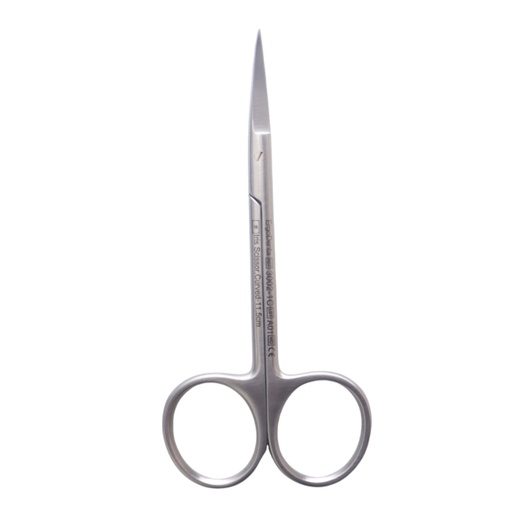
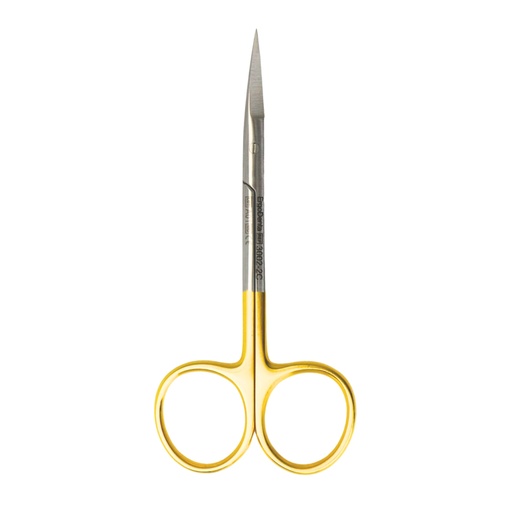
Across most ErgoDenta scissor patterns, the code suffix tells you the grade: -1 is standard steel (Non-TC), -2 is TC (tungsten carbide), -3 is Super-cut, and -4 is the premium Black Super-cut TC. Here is the same Iris scissor in all four grades:


TC vs Non-TC — what tungsten carbide actually means
TC stands for tungsten carbide. On a TC scissor, the cutting edges carry tungsten-carbide inserts — a material far harder than surgical steel. The universal sign is the gold finger rings: across the industry, gold handles mean TC.
Non-TC (standard stainless steel)
A Non-TC scissor has edges machined directly into surgical stainless steel. It is more affordable, perfectly good for lighter or occasional use, and easy to resharpen — but the edge dulls sooner under heavy use.
TC (tungsten carbide)
TC edges stay sharp dramatically longer, give a cleaner cut and resist wear, which lowers the long-term cost per cut in a busy practice. They cost more up front and are identified by those gold rings. Ideal where scissors are used all day, every day.
What is a Super-cut scissor?
A Super-cut scissor pairs one ultra-sharp, micro-ground razor edge with one finely serrated edge. The razor edge slices cleanly while the serrated edge grips the tissue so it cannot slip — giving a very precise, low-trauma cut on delicate flaps and fine suture. ErgoDenta’s Super-cut scissors are typically black-coated too, which reduces glare under the operating light (the same anti-glare logic we cover in our black-instruments article). The top -4 grade combines all three: black coating, Super-cut edge and TC inserts.
Super-cut vs TC vs Non-TC — which should you choose?
They are not simply better-to-worse; they answer different needs:
| Grade | Edge & material | Best for |
|---|---|---|
| Non-TC (-1) | Stainless-steel edges, steel rings | Budget-conscious, lighter or occasional use; cutting sutures |
| TC (-2) | Tungsten-carbide inserts, gold rings | High-volume daily cutting where edge life matters |
| Super-cut (-3) | One razor + one serrated edge | Precise, low-trauma cuts on fine tissue and suture |
| Black Super-cut TC (-4) | Super-cut edge + TC inserts + black anti-glare coating | Premium choice for microsurgery and demanding clinicians |
Browse the families directly: Iris Scissors, Metzenbaum Scissors, Mayo Scissors, Goldman Fox Scissors and Micro Surgical Scissors. For the full pattern overview, see Dental Surgical Scissors — Iris, Spencer, Goldman-Fox & La Grange.
Which scissors are suture scissors?
Suture scissors are made to cut suture thread — not tissue. They are deliberately robust and inexpensive so your fine tissue scissors (Iris, Metzenbaum) never get blunted on thread. Two jobs, two designs:
Cutting the suture during placement — a straight or curved blunt-tip operating scissor such as the Classic Suture Scissor (3009 / 3010).
Removing stitches — a Spencer (stitch) suture scissor (3037 / 3039) with a small hook or notch on one blade that slides under the suture and lifts it for a clean snip, plus the Angled Suture Scissor (3046) so you can see the thread as you cut.





Find them all under Suture Scissors. A golden rule: keep a dedicated suture scissor on the tray and never cut sutures with your Iris or Metzenbaum tissue scissors — see the suturing workflow alongside our needle holders guide.