Instrument Guide · Surgery
Dental Surgical Scissors — Iris, Spencer, Goldman-Fox, La Grange
Surgical scissors are deceptively simple — two blades and a pivot — but the right design for the right job makes the difference between clean tissue cuts and ragged margins. Here is a clinician guide to the four scissor families every dental practice needs.
The four scissor families
| Scissor | Length | Tip | Best for |
|---|---|---|---|
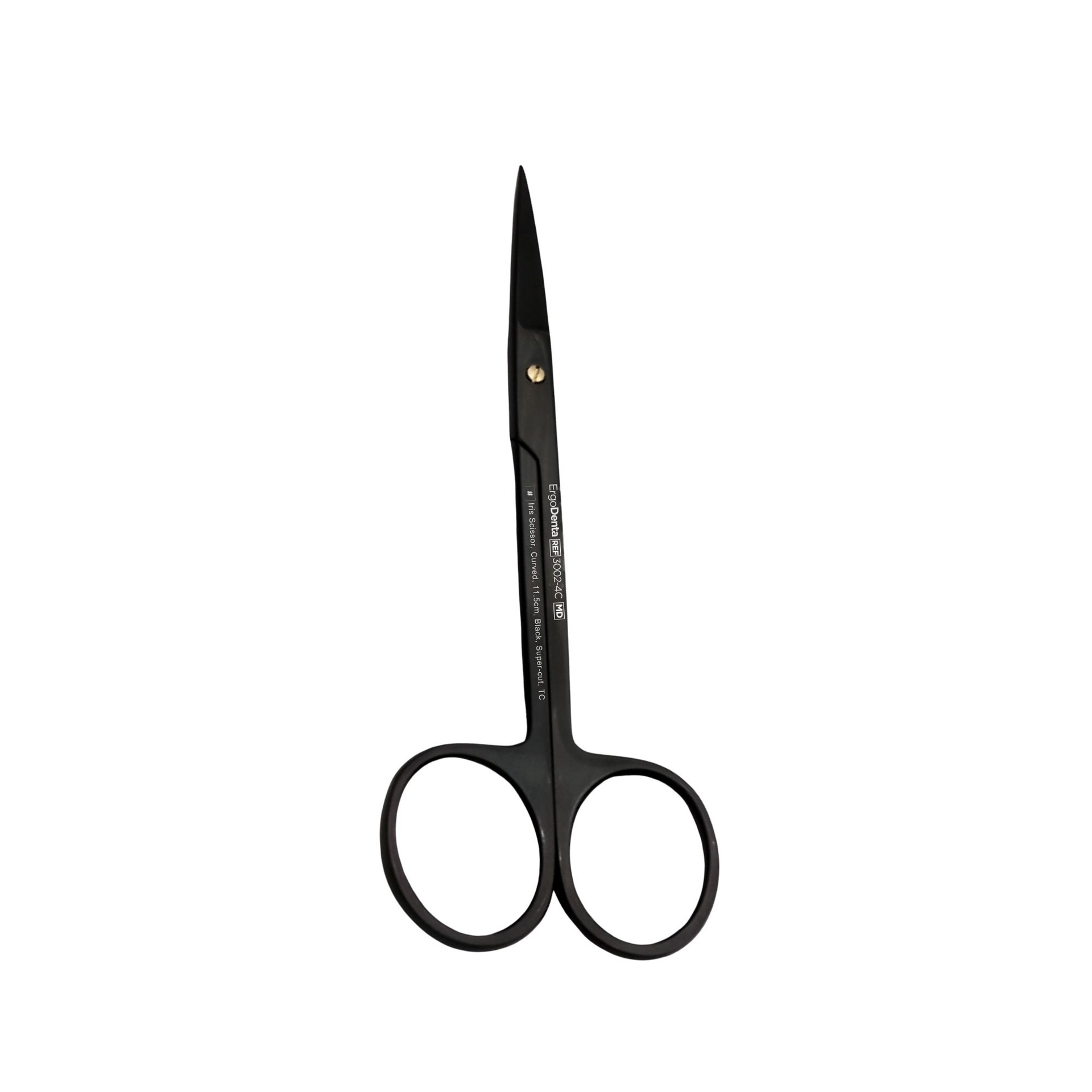
| Iris | 10-11.5 cm | Sharp/sharp, fine point | Soft tissue dissection, fine suture cutting |
| Spencer (Suture) | 9-12 cm | Hooked notch + straight blade | Suture removal — the notch traps the suture |
| Goldman-Fox | 13 cm | Serrated curved/straight blades | Periodontal flap surgery, gingivectomy |
| La Grange | 11.5 cm | S-shaped curved blades | Reaching posterior tissue without rotating wrist |
| Metzenbaum | 14.5 cm | Long shank, blunt tip | Soft-tissue blunt dissection |
Curved vs straight — when to use which
Straight scissors are for cuts where you can come straight at the tissue — anterior suture work, surface trim, or anywhere visualisation is unobstructed.
Curved scissors are for cuts where the tissue plane runs at an angle to your visual axis — most posterior intra-oral work. The curve lets the tip stay tangent to the tissue without rotating your wrist into an awkward position.
Super-cut, TC, and Black-coated
- Standard stainless steel — workhorse, sharp on first use, dulls with autoclave cycles. Cheapest.
- TC (Tungsten Carbide insert) — gold-handle scissors with TC blade inserts. Hold an edge ~5x longer than standard steel. Re-sharpenable.
- Super-cut — micro-serrated blade edge that grips and cuts simultaneously. Cannot be re-sharpened.
- Black-coated — DLC (diamond-like carbon) coating, matte finish reduces operatory-light glare into the surgeon eye, plus extra edge longevity.
The ErgoDenta scissor range
- Iris Scissor 11.5 cm — straight or curved, in standard, TC, super-cut, and black-coated finishes (3002 series)
- Spencer Suture Scissors — angled or straight
- Goldman-Fox 13 cm — curved super-cut TC for periodontal flap work
- La Grange double-curved — for posterior access
- Browse the full scissor range →
ErgoDenta surgical scissor range
Browse the full range across Iris, Spencer, Goldman-Fox, La Grange, Noyes and Metzenbaum patterns — straight, curved, super-cut, and double-curved — in our Surgery shop.
Frequently asked questions
What is the difference between Iris and Spencer scissors?
Iris scissors have two sharp pointed blades for fine tissue dissection and accurate cutting. Spencer scissors have one straight blade and one with a hooked notch — the notch slides under a suture to trap it before cutting, preventing accidental tissue damage during suture removal.
Should I buy super-cut or TC scissors?
TC (tungsten carbide insert) scissors hold a sharp edge much longer and can be re-sharpened — better long-term economics for heavy users. Super-cut scissors have micro-serrated edges that grip slippery suture material — better for clean suture cuts but cannot be re-sharpened.
Why are some scissors handles gold-colored?
Gold-handle rings are the universal industry signal that a scissor has tungsten carbide (TC) inserts in the blade. Spotting gold handles tells the assistant immediately to expect premium pricing and to handle accordingly during reprocessing.
Can I autoclave dental surgical scissors?
Yes — all dental surgical scissors are designed for full autoclave cycles at 134 °C. To preserve sharpness: open the joint before sterilising, do not pile loose scissors on top of each other in the same cassette, and lubricate the joint occasionally with instrument lube.
How often should surgical scissors be replaced?
Standard steel scissors typically lose performance after 18-24 months in a busy practice. TC-insert scissors can last 5+ years with periodic professional sharpening. Replace immediately if blades are misaligned, the joint is loose, or the tip is chipped.