
Needle holders for dental suturing — Mathieu vs Mayo-Hegar vs Castroviejo
The needle holder is the most under-rated instrument on the surgical tray. Mathieu, Mayo-Hegar, Crile-Wood and Castroviejo each handle suturing differently — here's how to pick the right one for your hand and your case.
Suturing is where surgical work either looks finished or unfinished. The needle holder is the tool that makes the difference. Tungsten-carbide jaws, the right length, and a closure mechanism that suits your hand — these are not cosmetic details. ErgoDenta carries 28 needle holders across the Mathieu, Mayo-Hegar, Crile-Wood and Castroviejo families, all with TC (tungsten carbide) jaw inserts.
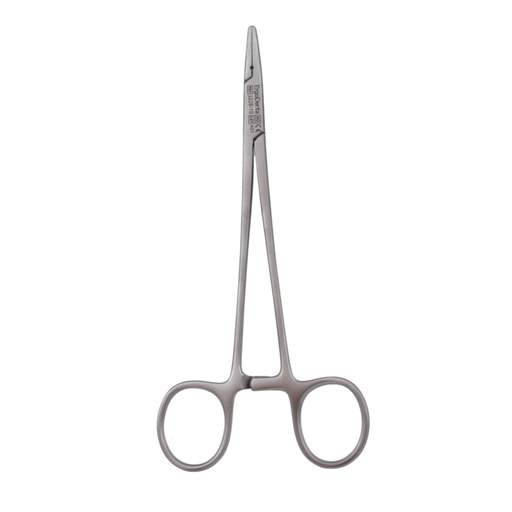

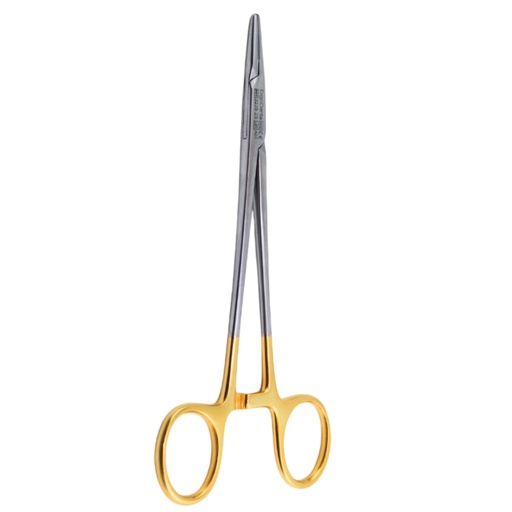
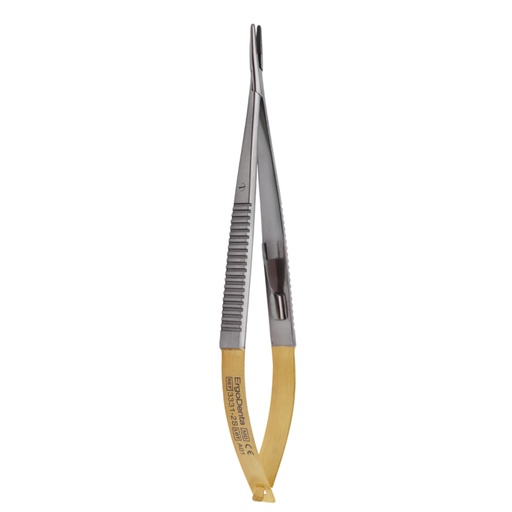
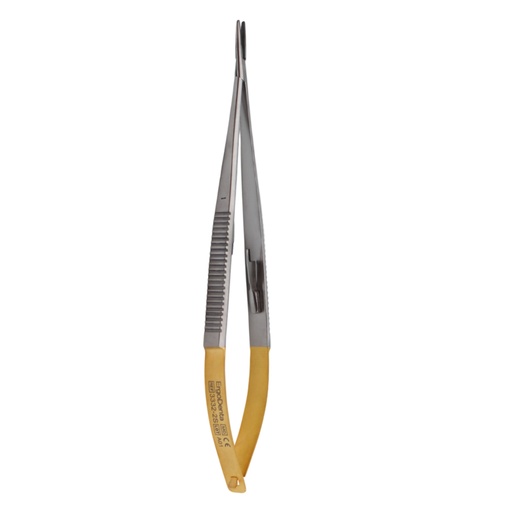

The four needle holder families
- Mathieu — palm-grip closure with a spring ratchet inside the handle. Closes by squeezing the palm; opens by squeezing further. No finger rings — the entire instrument sits inside the operator's palm. Fast and intuitive for routine suturing.
- Mayo-Hegar — ringed handle with finger loops, like a hemostat. Standard ratchet locking. The most widely taught and most familiar to operators trained in general surgery.
- Crile-Wood / Crile Ryde — ringed handle, ratchet locking, slimmer jaw than Mayo-Hegar. The everyday oral surgery needle holder for routine suturing.
- Castroviejo — pencil-grip with internal spring closure. No ratchet. Used in microsurgery and periodontal microsurgery where fine control matters more than speed.
Tungsten carbide (TC) jaw inserts
The jaw of a needle holder grips the suture needle. Without grip, the needle rotates as you push it through tissue — frustrating in routine cases, dangerous in tight access. TC inserts solve this problem.
Tungsten carbide is much harder than the surrounding stainless steel. TC inserts are pressed into the jaws of the needle holder, presenting a much more aggressive cross-hatched gripping surface. The needle locks in place, the operator drives it through tissue with full control, and the instrument lasts longer because the TC jaw faces wear at a fraction of the rate of plain steel.
All ErgoDenta needle holders 14 cm and longer carry TC jaw inserts as standard (designated by the "TC" suffix in the part number).
Chapter 3Choosing length
Needle holder length should match the access requirement, not the operator's preference for handle length:
- 14 cm — anterior access, periodontal microsurgery, anterior tooth extractions. Compact and fast in tight spaces.
- 15 cm — general oral surgery, premolar and first molar suturing. The "everyday" length most operators reach for first.
- 16 cm — Castroviejo Barraquer microsurgical work, minor mid-arch access.
- 18 cm — posterior access, third molar surgery, deep oral surgical sites where the operator needs reach.
For high-volume surgical practices, stock 14 cm and 18 cm at minimum. For general practice, a single 15 cm Crile-Wood TC will cover 80% of cases.
Chapter 4Mathieu vs Mayo-Hegar — the closure debate
The single biggest workflow choice is whether to use a ringed handle (Mayo-Hegar, Crile-Wood) or a palm-grip Mathieu.
Mayo-Hegar / Crile-Wood (ringed) — operator places thumb and ring finger in the loops, drives the needle, releases the ratchet by lateral finger pressure. Familiar from general surgical training. Slower per-suture but maximum fine control.
Mathieu (palm-grip) — operator wraps the palm around the handle, squeezes once to close, squeezes once more to open. No finger placement, no ring engagement, much faster suture-to-suture. Less precise control, but a periodontal flap closure can be completed substantially faster.
For routine periodontal flap closure, Mathieu wins on speed. For one-off precision work — single sutures in tight access, microsurgical knots — ringed designs win on control. Many surgeons keep both on the kit.
Chapter 5Castroviejo & periodontal microsurgery
Castroviejo needle holders are pencil-grip instruments without ratchets — the operator's grip pressure controls the jaw closure directly. This continuous fine control is essential for periodontal microsurgery, where the suture material is 6-0 or finer and the tissue is delicate.
The ErgoDenta Castroviejo range spans 14, 16 and 18 cm in straight and curved variants. The Castroviejo Barraquer (16 cm) is a longer-reach variant designed for slightly deeper microsurgical access.
For practitioners doing peri-implant soft tissue work, root coverage procedures, or any microsurgical closure, the Castroviejo is not optional — the level of control simply isn't available from a ratcheted instrument.
At a glanceFour needle holder families — at a glance
| Family | Closure | Length | Best for |
|---|---|---|---|
| Mathieu | Palm-grip spring ratchet | 14 cm | Fast routine periodontal flap closure |
| Mayo-Hegar | Ringed handle, ratchet | 15 cm | General oral surgery |
| Crile-Wood / Crile Ryde | Ringed handle, ratchet | 14–18 cm | Slim-jaw everyday suturing |
| Castroviejo | Pencil-grip, no ratchet | 14–18 cm | Microsurgery, periodontal microsurgery |
Build your suturing kit
28 needle holders across Mathieu, Mayo-Hegar, Crile-Wood and Castroviejo families. All with tungsten carbide (TC) jaw inserts on 14 cm and longer variants. from a Danish dental instrument company.
Browse all 28 needle holders →Frequently asked questions
What is a Mathieu needle holder?
A Mathieu needle holder is a palm-grip suturing instrument with an internal spring ratchet. The operator wraps the palm around the handle, squeezes once to close the jaws on the needle, drives the needle through tissue, then squeezes once more to open the jaws. No finger rings — the whole instrument sits inside the palm. It's faster than ringed designs for routine suturing.
Why do needle holders have tungsten carbide inserts?
Tungsten carbide is much harder than stainless steel. TC inserts pressed into the jaw faces present an aggressive cross-hatched gripping surface that locks the suture needle in place, allowing the operator to drive the needle through tissue with full control. TC jaws also wear far slower than plain steel, so the instrument lasts longer.
Is Mayo-Hegar or Crile-Wood better for dental suturing?
Crile-Wood is generally preferred in oral surgery — slimmer jaws give better access to intraoral tissue, and the lighter handle reduces operator fatigue across long surgical lists. Mayo-Hegar is widely used in general surgery and works fine in dentistry; the choice is operator preference. Both are ringed-handle ratcheted designs.
When should I use a Castroviejo needle holder?
Castroviejo needle holders are pencil-grip instruments without ratchets — the operator's grip pressure directly controls jaw closure. Use them for periodontal microsurgery, peri-implant soft tissue work, root coverage procedures, or any closure with 6-0 or finer suture material. The continuous fine control is not available from ratcheted designs.
What length needle holder do I need?
Match length to access: 14 cm for anterior and microsurgery, 15 cm for general oral surgery and routine premolar/first molar work, 18 cm for posterior access and third molar surgery. For general practice, a single 15 cm Crile-Wood TC covers 80% of cases. High-volume practices stock 14 cm + 18 cm at minimum.
Why does my needle keep rotating in the needle holder?
The jaw grip is failing. Either (1) the TC inserts are worn and need to be re-faced or replaced, (2) the jaws have come out of alignment and need to be re-set, or (3) the instrument has plain steel jaws (not TC) and the steel has worn smooth. Switch to a needle holder with sharp TC inserts and the rotation stops.
Can I sterilise needle holders with the jaws closed?
No — always autoclave with the ratchet open. Sterilising under closure stresses the joint, accelerates wear, and can cause permanent jaw misalignment. Open the ratchet fully before placing in the cassette, and keep them open through the entire reprocessing cycle.
What's the difference between Crile-Wood and Crile Ryde?
Both are ringed-handle ratcheted needle holders with similar overall geometry. Crile Ryde has slightly different jaw proportions and is sometimes preferred for finer suturing. Performance differences are marginal — most operators settle on one based on availability and habit. Both are fine choices for general oral surgery.
Are Castroviejo needle holders worth the investment for general practice?
Only if you do periodontal microsurgery, peri-implant soft tissue work, or root coverage procedures regularly. For general practice with routine flap closure, a 15 cm Crile-Wood TC or a Mathieu is the better investment. Castroviejos shine when the suture material is 6-0 or finer; they're overkill for 4-0 or 5-0 routine sutures.
How do I keep my needle holders working long-term?
Three habits: (1) always autoclave with the ratchet open. (2) Lubricate the joint after every cycle with instrument oil. (3) Inspect the TC jaw inserts under magnification monthly — when the cross-hatching is worn smooth, send the instrument for re-facing or replace. Done correctly, a TC needle holder lasts 5–10 years of regular use.