Explorers
Dental explorers for caries detection, fissure checks and margin exams. Shepherd hook, 17, 23, Holst and more — single or double-ended.
👀 Recently viewed Clear
Why dentists choose ErgoDenta for Explorers
Explorers are the instrument you pick up first — for caries detection, margin checks and fissure exams. Our range covers the classics you reach for every day: Explorer 23 (shepherd hook), Explorer 17, Explorer 5, 8, 9, the long-reaching Holst, and popular double-ended combinations like 17-23, 5-8, 5-9 and 9-17.
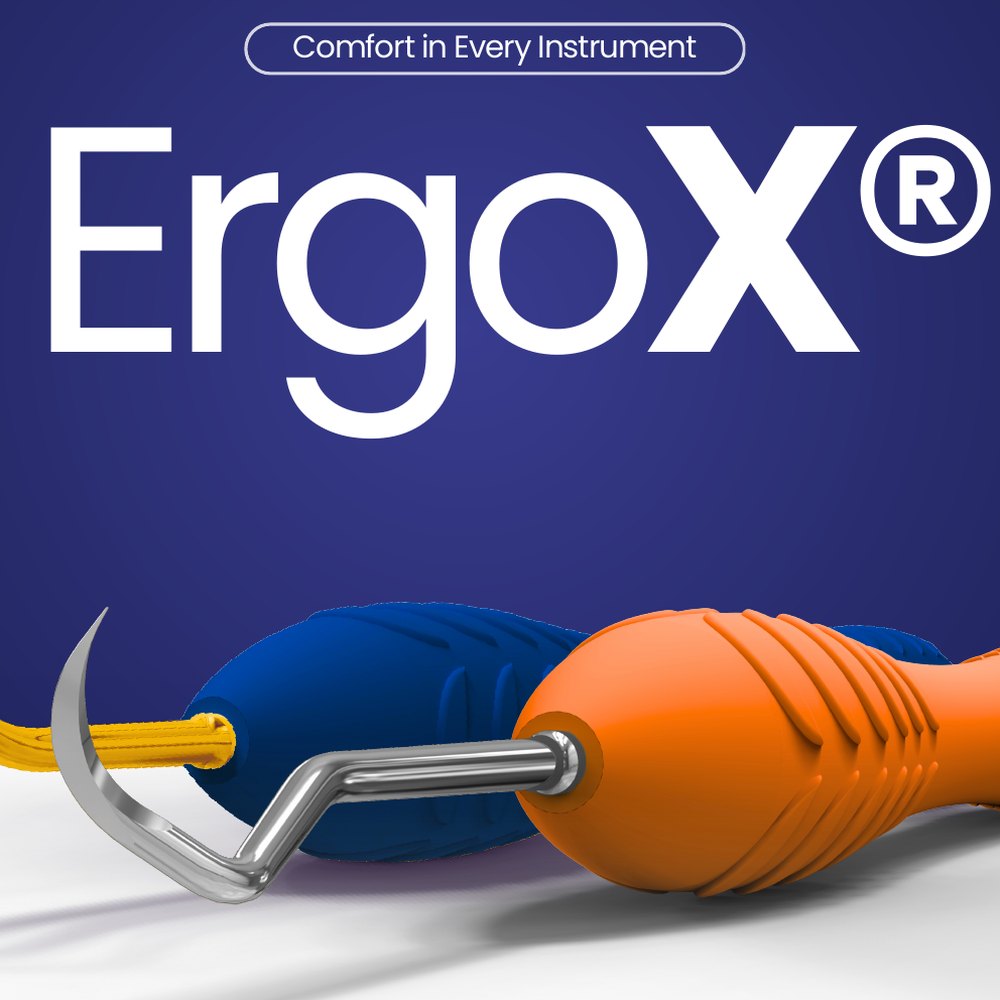
Choose single-ended models when you want a focused, balanced feel, or double-ended explorers to cover two workflows with one instrument. Available across ErgoDenta stainless, ErgoLite color handles and the lightweight ErgoTip — every tip is hand-finished for a true, sensitive feel on enamel.
Single-Ended Explorers
Single-ended dental explorers for caries detection and calculus feel — Shepherd Hook, Holst, Explorer 23, 17, 9, 8, 5, 3A and Weston tips on ergonomic handles.
Browse Single-Ended Explorers →Double-Ended Explorers
Double-ended dental explorers on a single ergonomic handle — both symmetric (Explorer 23, Holst) and asymmetric pairings (5-9, 17-23, 17C-23, 5-8, 9-17). ErgoDenta, ErgoLite and ErgoLite X.
Browse Double-Ended Explorers →Explorer ErgoTips
Replaceable explorer working tips for the ErgoTip modular handle system — Explorer 23, 17, 9, 8, 5, 3A, Holst, 29 patterns. Quick-swap diagnostic tips.
Browse Explorer ErgoTips →