
Dental excavators — spoon, discoid-cleoid & hatchet compared
Three working-end shapes, three different jobs at the chair. Here's how to tell a spoon, discoid-cleoid and hatchet excavator apart — and pick the right one for the cavity in front of you.
The hand excavator is one of the oldest dental instruments still in daily use — and one of the most under-discussed. Whether you're removing soft carious dentine in primary teeth or refining a cavity margin before adhesive placement, the working-end shape decides what the instrument can do. ErgoDenta carries 26 hand excavators across the ErgoLite, ErgoX and ErgoSteel handle lines.
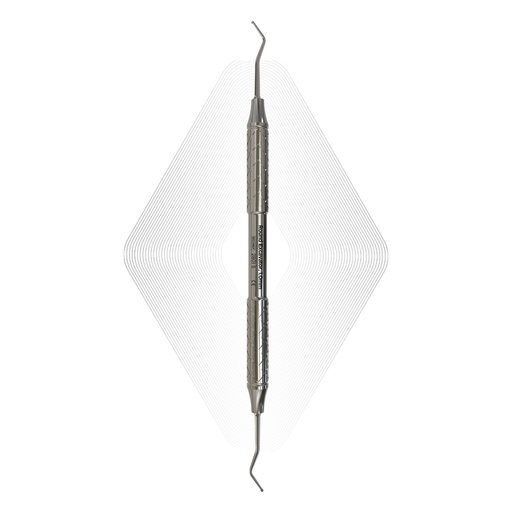
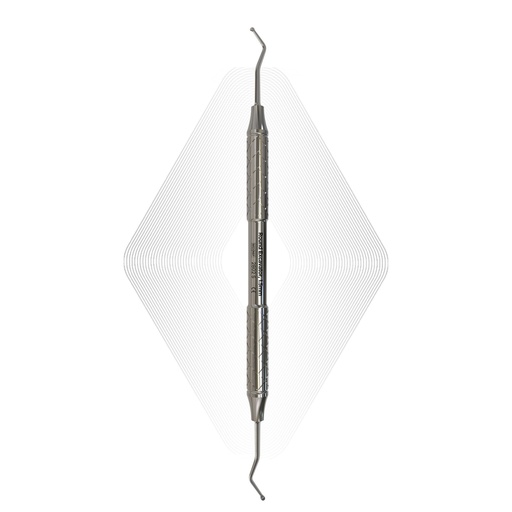
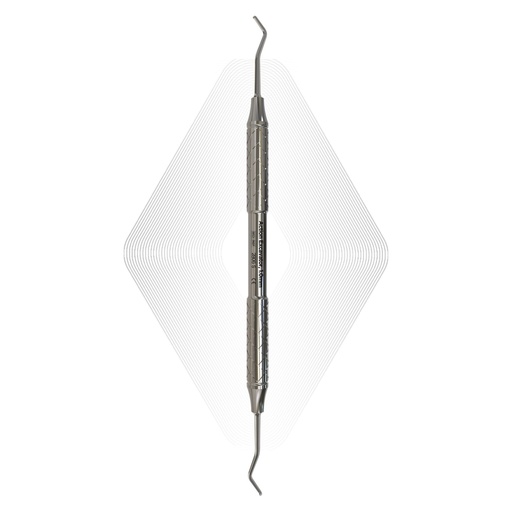
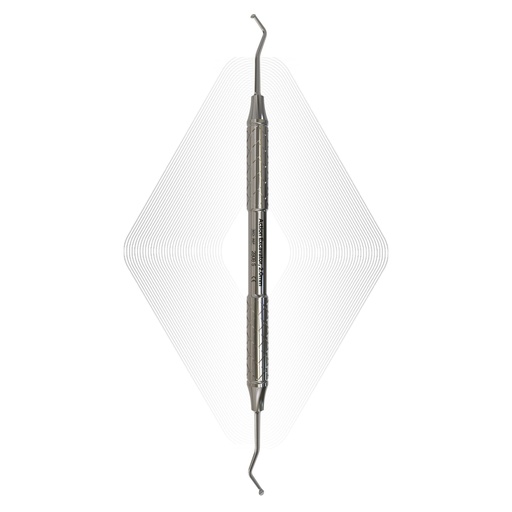


Three working ends, three jobs
Hand excavators all share the same fundamental design — a double-ended instrument with curved working ends used for removing soft material from a cavity preparation. What changes between types is the shape of the working end, and that shape decides the clinical job:
- Spoon excavators — concave, scoop-shaped working ends. The cutting edge runs around the perimeter. Used for scooping out soft carious dentine and refining cavity walls.
- Discoid-cleoid excavators — disc-shaped on one end (discoid), claw-shaped on the other (cleoid). The flat disc carves amalgam contours; the cleoid claw refines occlusal anatomy.
- Hatchet excavators — bevelled, axe-shaped blade. The cutting edge is at the end of the working tip rather than around it. Used for sharp cavosurface margin refinement and enamel work.
When to reach for which
Match the shape to the task and the choice becomes obvious:
- Removing soft caries — spoon excavator (round or oval). Larger sizes (1.5–2.5 mm) for bulk removal, smaller (0.5–1.0 mm) for finishing near the pulp.
- Carving amalgam restorations — discoid-cleoid. The disc shapes the marginal ridges; the cleoid refines pits and grooves.
- Cavosurface margin refinement — hatchet excavator. The straight bevelled cutting edge cleaves enamel rods cleanly along the margin.
- Pediatric dentistry — small spoon excavators (0.5–1.0 mm) are the workhorse, especially for primary tooth caries removal where minimal pressure is required.
ErgoDenta's excavator lines
The full range covers every common shape and size, across three handle families:
- ErgoLite Action Excavators — lightweight handle, ideal for long restorative lists. Sizes 1.0, 1.5, 2.0, 3.5 mm.
- ErgoLite Round Excavators — classic spoon design with round working end. Sizes 1.0, 1.5, 2.0, 3.5 mm.
- ErgoX Excavator series — silicone grip handles, 31L / 32L / 33L numbering for surgical-grade excavator-elevator hybrids used in atraumatic dentine and root tip removal.
All three lines are fully autoclavable, available on standard handles or with ErgoRazor® cryogenic treatment for up to 3× longer edge life.
Chapter 4Sharpening & care
An excavator that won't bite into soft dentine doesn't just slow you down — it forces you to apply more pressure and risks tearing healthy tissue. Quick guidelines:
- Sharpen the cutting edge after every 10–15 procedures using a flat sharpening stone at a 30° angle to the bevel.
- For discoid-cleoid, sharpen along the curve of the disc — keep the angle consistent; rotate the instrument as you stroke.
- Use ErgoRazor® variants for clinics that prefer to sharpen less often — the cryogenically treated 440C steel holds its edge up to 3× longer.
- Replace the instrument when the working end has been re-shaped beyond the original profile — sharpening only restores edge, not geometry.
Choosing your starter excavator set
For a general practice covering both primary and permanent teeth, a balanced six-piece kit looks like this:
- Round excavator 1.0 mm — small caries, near-pulp work
- Round excavator 1.5 mm — mid-size cavities, primary teeth
- Action excavator 2.0 mm — larger restorations
- Action excavator 3.5 mm — bulk dentine removal
- Discoid-cleoid (paired) — amalgam carving
- Hatchet — cavosurface margin refinement
Build out from there based on caseload — pediatric clinics often add a second pair of small spoons; restorative-heavy practices add a second discoid-cleoid for the assistant tray.
At a glanceSpoon vs discoid-cleoid vs hatchet — at a glance
| Feature | Spoon excavator | Discoid-cleoid | Hatchet excavator |
|---|---|---|---|
| Working-end shape | Concave scoop | Flat disc + claw | Bevelled axe blade |
| Cutting edge location | Around the perimeter | Disc rim + cleoid edge | End of the working tip |
| Primary clinical use | Caries removal | Amalgam carving | Margin / enamel refinement |
| Best for primary teeth | ✓ Small sizes | Limited | Limited |
| Best for permanent teeth | ✓ All sizes | ✓ Restorative carving | ✓ Margin refinement |
| Sharpening frequency | Every 10–15 procedures | Every 15–20 procedures | Every 10–15 procedures |
Build your excavator set with ErgoDenta
26 excavators across spoon, discoid-cleoid and hatchet shapes, on ErgoLite, ErgoX and ErgoSteel handle lines — all autoclavable, all from a Danish dental instrument company.
Browse all 26 excavators →Frequently asked questions
What's the difference between a spoon and a discoid-cleoid excavator?
A spoon excavator has a concave scoop with the cutting edge running around the rim — used for removing soft carious dentine. A discoid-cleoid is a paired instrument: the disc end carves flat surfaces (like amalgam contour) and the cleoid claw refines occlusal anatomy. They serve different clinical tasks and most restorative kits include both.
When should I use a hatchet excavator instead of a spoon?
Reach for a hatchet when you need to refine the cavosurface margin or cleave enamel rods cleanly along a preparation edge. The bevelled axe-shaped blade cuts at the end of the working tip rather than around it, giving precise control on the margin. Use a spoon for the scooping work — removing soft dentine from inside the cavity.
What sizes of excavators do I need in a general dental practice?
A balanced six-piece set covers most clinical situations: round 1.0 mm, round 1.5 mm, action 2.0 mm, action 3.5 mm, a paired discoid-cleoid, and one hatchet. Pediatric-heavy practices add a second pair of small spoons (0.5–1.0 mm). Restorative-heavy practices add a second discoid-cleoid for assistant trays.
Are excavators safe to use near the pulp?
Yes — in fact, hand excavators are preferred over rotary instruments when working close to the pulp because they give tactile feedback that warns you before you risk pulp exposure. Use the smallest spoon size (0.5–1.0 mm) and very light pressure. Only remove dentine that is visibly demineralised and offers no resistance.
How often should I sharpen my excavators?
Every 10–15 procedures, or whenever the cutting edge no longer slices cleanly into dentine. A dull excavator forces you to apply more pressure, which compromises tactile feedback and risks tearing tissue. ErgoRazor® variants use cryogenically treated 440C steel that holds its edge up to 3× longer between sharpenings.
What's the difference between Action and Round excavators?
Both are spoon-shaped, but Action excavators have a more elongated, oval working end designed for efficient bulk removal of carious dentine, while Round excavators have a circular working end better suited to controlled finishing work and smaller cavities. Most practices stock both shapes in a few sizes.
Can I use a single excavator across primary and permanent teeth?
Technically yes, but a small spoon excavator (0.5–1.5 mm) is far better for primary teeth — the smaller working end gives the control needed for thin enamel and pulp proximity. For permanent teeth, mid-size to larger excavators (2.0–3.5 mm) work efficiently. Most pediatric practices keep dedicated small excavators.
How do I sharpen a discoid-cleoid excavator?
Use a flat sharpening stone at a 30–40° angle to the bevel. For the disc end, rotate the instrument continuously as you stroke so you sharpen all around the disc rim. For the cleoid claw, sharpen the inner cutting edge with short, controlled strokes. Keep the angle consistent — that matters more than exact degree.
Are autoclave cycles harmful to excavator cutting edges?
Standard autoclave cycles do not dull stainless steel excavator edges directly, but the heating-cooling cycle can cause minor microstructural changes over time. The bigger sharpness threat is improper sharpening or accidental contact with hard surfaces during reprocessing. ErgoDenta excavators are fully autoclavable — store them in cassettes during the cycle to protect the edges.
Why are some excavators called 'X' (e.g. 31L | ErgoX)?
The 'X' suffix indicates the ErgoX silicone-grip handle line — a thicker, ergonomic handle designed to reduce hand fatigue across long restorative lists. The number (31L, 32L, 33L) follows the standard surgical excavator-elevator numbering used across the dental industry; the suffix L marks left-curved variants where applicable.