Buy from stock, order to forecast, or build your own brand — each dental instrument sourcing model trades speed, margin and commitment differently. Choosing the right one (usually a blend) is what keeps your shelves full, your cash flow healthy and your customers loyal. Here is how to decide.
Every dealer, clinic group and distributor eventually asks the same question: should we buy dental instruments from stock, commit to made-to-order production, or build our own private-label brand? There is no single right answer — the best partners blend all three across their catalogue. Below we break down how each model works, what it costs you in speed, margin and commitment, and how to build a sourcing mix that grows with your business. Prefer to browse first? See the full ErgoDenta catalogue of 3,300+ reusable, ergonomic instruments available from stock.
The three dental instrument sourcing models at a glance
Think of stock, made-to-order and private label as three points on a curve that trades commitment for margin. The more you plan and commit, the better your pricing and brand control — but the more capital and lead time you invest. Here is the quick comparison:
| Factor | Buy from stock | Made-to-order / forecast | Private label / OEM |
|---|---|---|---|
| Speed | Fastest — ships from inventory | Planned to a schedule | Longest — set-up + production |
| Unit price | Standard | Keener with committed volume | Best at scale |
| Commitment | Lowest — order as needed | Medium — forecast volumes | Highest — branding + MOQs |
| Working capital | Light | Moderate | Higher upfront |
| Branding | ErgoDenta / neutral | ErgoDenta / neutral | Your brand, your spec |
| Best for | Testing ranges, long-tail, top-ups | Predictable core movers | Proven flagship lines |
1. Buy from stock
Fastest route, lowest commitment. You order catalogue items as you need them and they ship from existing inventory. This is the model most partners start with, and the one they keep for the bulk of their range.
How it works
Order any quantity of any in-stock item from the catalogue — no forecast, no minimum production run. You pay standard wholesale pricing and receive ErgoDenta-branded (or neutral) instruments ready to sell.
Best for
- Testing a new range before committing to volume
- Covering long-tail and occasional-demand items
- Fast top-ups when a line sells out
- Keeping working capital light and flexible
The trade-off
Standard pricing and standard branding. You gain speed and flexibility; you give up the keener unit pricing and brand ownership that commitment unlocks.
2. Made-to-order (forecast-based supply)
Better pricing, planned availability. You commit to volumes against a rolling forecast and we schedule production to match. This is the sweet spot for your proven core movers — the items you know you will sell.
How it works
Share your expected demand for key lines. We plan production and raw-material purchasing around it, so stock is ready when you need it and priced for the volume you commit to.
Best for
- Core movers with predictable, repeatable demand
- Protecting availability on your best sellers
- Improving margin without a full branding project
- Smoothing supply so you are never caught short
The trade-off
You plan ahead and commit to volumes. In return you get keener pricing and reliable availability — a fair exchange once demand is proven.
3. Private label / OEM
Highest margin and loyalty, highest commitment. Your brand on our instruments — or instruments built to your specification. This is how dealers turn a proven range into an asset customers can only buy from them.
How it works
We produce under your brand: your logo, packaging and, where needed, your spec. Minimum order quantities and a one-time branding set-up apply. See our private-label / OEM guide for the full process.
Best for
- Flagship lines you want to own and defend
- Building brand loyalty and repeat business
- Maximising margin once volumes justify set-up
- Differentiating from competitors selling the same generic tools
The trade-off
The highest commitment: MOQs, branding set-up and lead time. Best reserved for lines that are already proven, where the margin and loyalty pay back the investment.
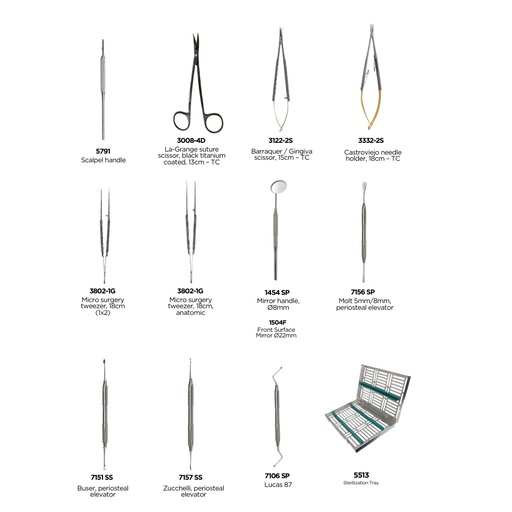
Explore what is available from stock

How to blend the three models
The smartest sourcing strategy is not choosing one model — it is matching each model to where a product sits in its life cycle. A simple framework:
- New or unproven range: start from stock to test real demand with zero commitment.
- Proven core movers: move to made-to-order forecasts for better pricing and guaranteed availability.
- Flagship lines you want to own: go private label for maximum margin and customer loyalty.
- Long-tail and occasional items: keep on stock so you never tie up capital in slow movers.
Most established ErgoDenta partners run all three at once — stock for breadth and flexibility, forecast for their reliable sellers, and private label for the lines that define their brand.