Elevators
Complete elevator range — straight and curved luxating elevators, luxating kits, root tip elevators, and modern X-Tool elevators for atraumatic surgery.
👀 Recently viewed Clear
Why dentists choose ErgoDenta for Elevators
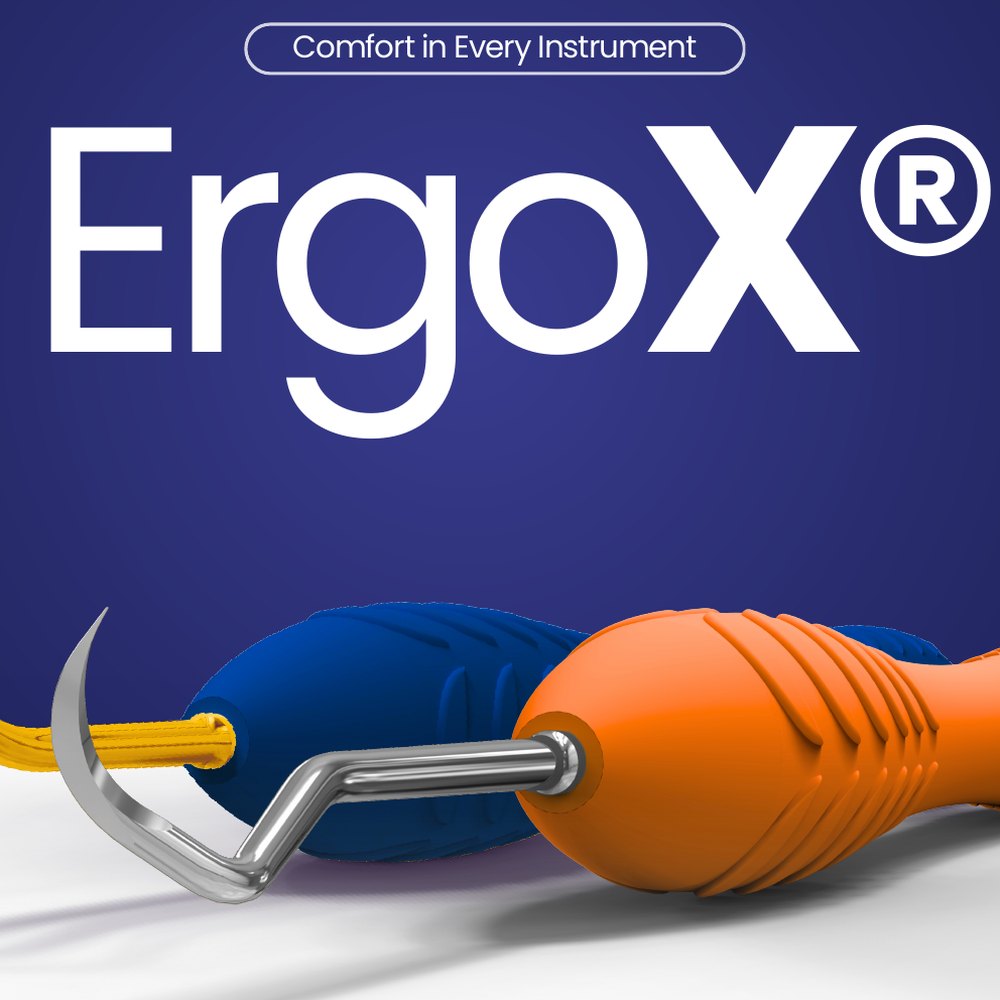
Patient elevation — not brute force — is what makes extractions atraumatic. Our Elevators range gives you every option in one place: straight and curved Luxating Elevators in full size progressions, complete Luxating Elevator Kits for predictable setup, a full library of Root Tip Elevators, and our modern X-Tool Elevators designed for implant-site preservation and atraumatic cases.
Blades are precision-machined and heat-treated to hold an edge through heavy use. Ergonomic handles transfer rotational force efficiently, so you keep tactile feedback on PDL release rather than fighting your instrument.
Pair any of them with our ErgoLite Luxating Elevators for a lighter-weight, color-coded variant popular with solo practitioners.
Luxating Elevators
Premium luxating elevators in 2.5mm, 3mm, 4mm, 5mm — straight & curved. Standard, Gold-coated & X-Tool series. Atraumatic tooth luxation, preserves bone.
Browse Luxating Elevators →Root Elevators
Classic root elevators for whole-root extraction. Bein, Hylin, Cryer, Flohr, Lindo-Levian, Kopp, Apical, Bernard, Berten, Winter, Williger and more.
Browse Root Elevators →Root Tip Elevators
Fine root tip elevators for removing fractured tips and root fragments. Heidbrink straight/right/left in 1.5mm and 2.5mm. ErgoSteel Mini ergonomic handle.
Browse Root Tip Elevators →Specialty Elevators
Specialty atraumatic extraction tools. Periotomes (anterior, posterior, curved), Periosteal elevators, Widman Knives, Appexo and Williger. Tissue-preserving.
Browse Specialty Elevators →