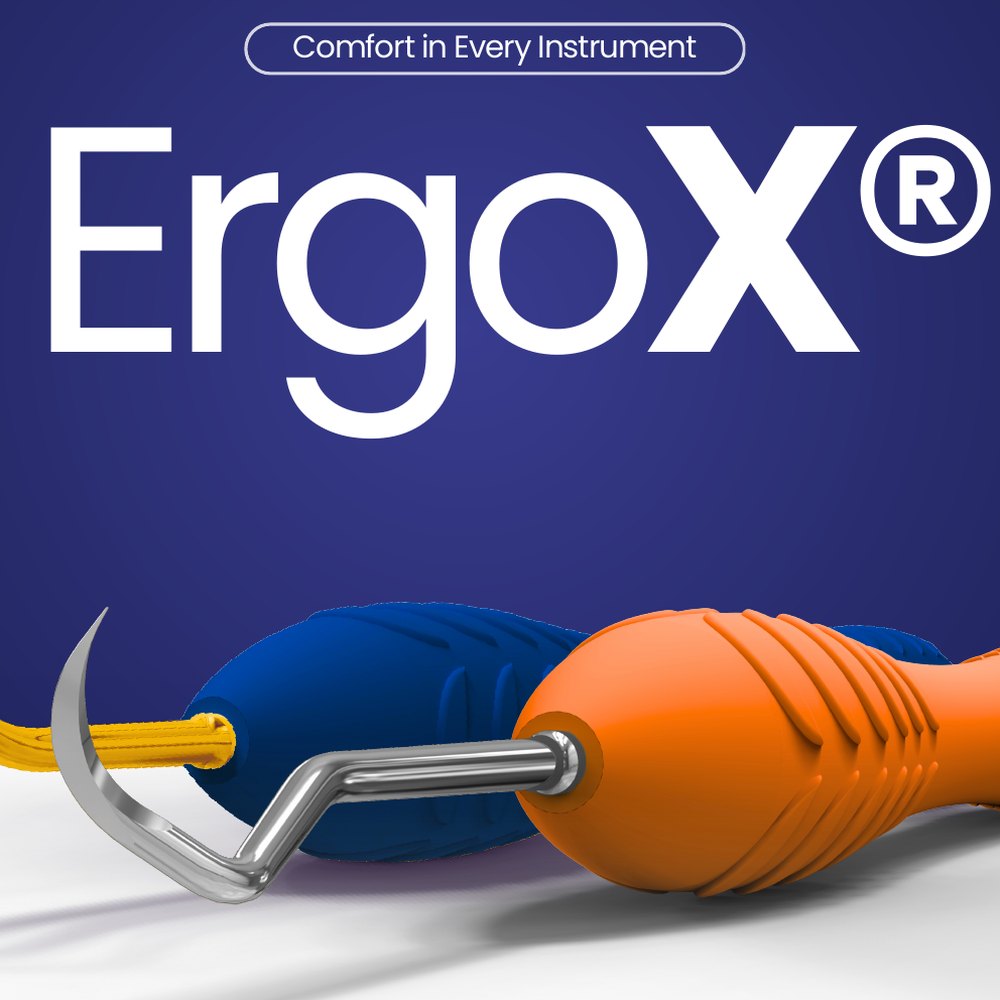
Removing a crown without destroying it — or the prep underneath — comes down to the right tool for the situation: a tapping remover, a gripping plier, a spreader for splitting, or scissors for a temporary. Here's the kit and when each one wins.
Crown and bridge removal is a regular task with a surprisingly varied toolkit. ErgoDenta's crown & bridge instruments cover the main approaches — automatic (tapping) removers, gripping pliers, spreaders/splitters and crown scissors.
Tapping crown removers
These deliver a controlled impulse along the crown's path of withdrawal to break the cement seal. A hooked or adhesive tip engages the margin and a sliding weight (automatic) or mallet provides the force.
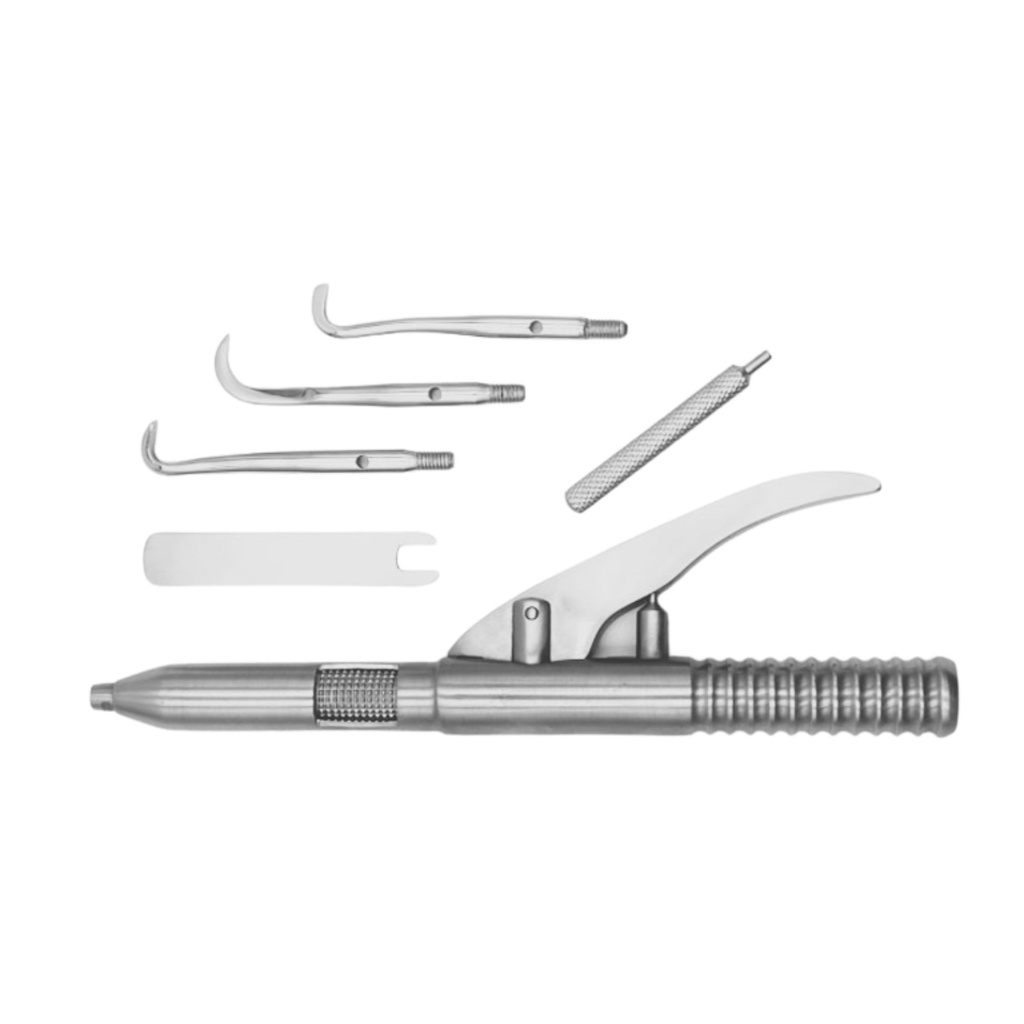
- Automatic crown remover (3 tips) — a spring/slide-weight handle delivers repeatable taps without a separate mallet; interchangeable tips engage different margins.
- Miller crown remover (4 tips) — classic remover with a range of tips for posterior and anterior crowns.
Gripping & spreading instruments
- Furrer / Lindblom crown remover pliers — rubber-tipped or serrated jaws grip the crown so you can apply controlled withdrawal force without crushing it.
- Crown spreader / splitter plier — opens a sectioned crown along a cut groove, or spreads a bridge connector, to lift it off the prep.
Crown scissors
BeeBee saw-edge crown scissors (straight and curved) trim and remove temporary crowns, festoon crown margins and cut matrix/temporary material. The saw edge grips without slipping.





Which to reach for
- Saving a cemented crown: gripping plier (Furrer/Lindblom) or automatic tapping remover.
- Crown already sectioned: spreader/splitter to lift it off.
- Temporary / acrylic crown: crown scissors to trim and remove.