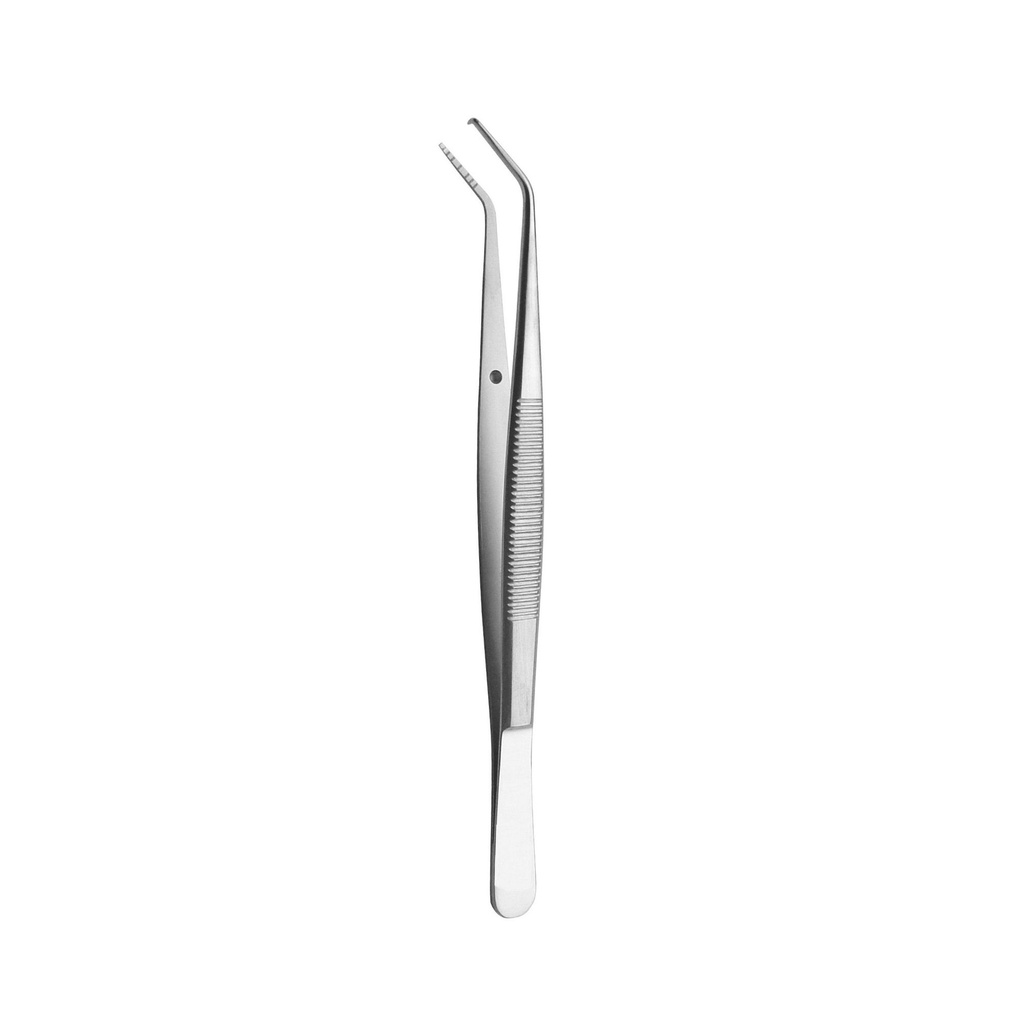
Before you incise for a gingivectomy, you need to know exactly where the pocket base is on the outside of the gum. The Crane-Kaplan pocket marker shows you — it pinches a pinpoint bleeding mark at the correct level so your incision follows the pocket, not a guess.
The Crane-Kaplan pocket marking forceps is a small but essential periodontal instrument. One beak slides into the pocket to its base; the other beak, angled outward, presses on the outer gingiva. Squeezing leaves a tiny bleeding point on the surface that marks the pocket depth — a series of these points maps the incision line for a gingivectomy or flap.
Why a pocket marker matters
Periodontal pockets aren't visible from the outside. Marking the pocket base externally lets you place the gingivectomy incision apical to the pocket at the right bevel, so you remove the diseased wall without over- or under-cutting. Probing tells you the depth; the marker transfers that depth to the tissue surface where you actually cut.
Right and left angled — why you need both
Because the marking beak is angled, a single instrument reaches one direction comfortably. ErgoDenta supplies right-angled and left-angled versions so you can mark all aspects of the arch cleanly. There is also a lightweight ErgoLite version for reduced hand fatigue during longer perio cases.



How to use it
- Insert the straight beak to the base of the pocket.
- Bring the angled (external) beak against the outer gingiva at the same level.
- Pinch gently to leave a pinpoint bleeding mark.
- Repeat around the tooth to create a dotted incision guide, then bevel your gingivectomy incision apical to the marks.