
Practice Guide · Endodontics & Restorative
Rubber Dam Setup — Clamps, Forceps, Punches and Frames Explained
Rubber dam isolation is the gold standard for endodontic and restorative work — better moisture control, better visualisation, safer for the patient. But it intimidates some clinicians because the setup involves four different instrument categories. Here's how each one fits, and a 5-step workflow that takes under 90 seconds with practice.
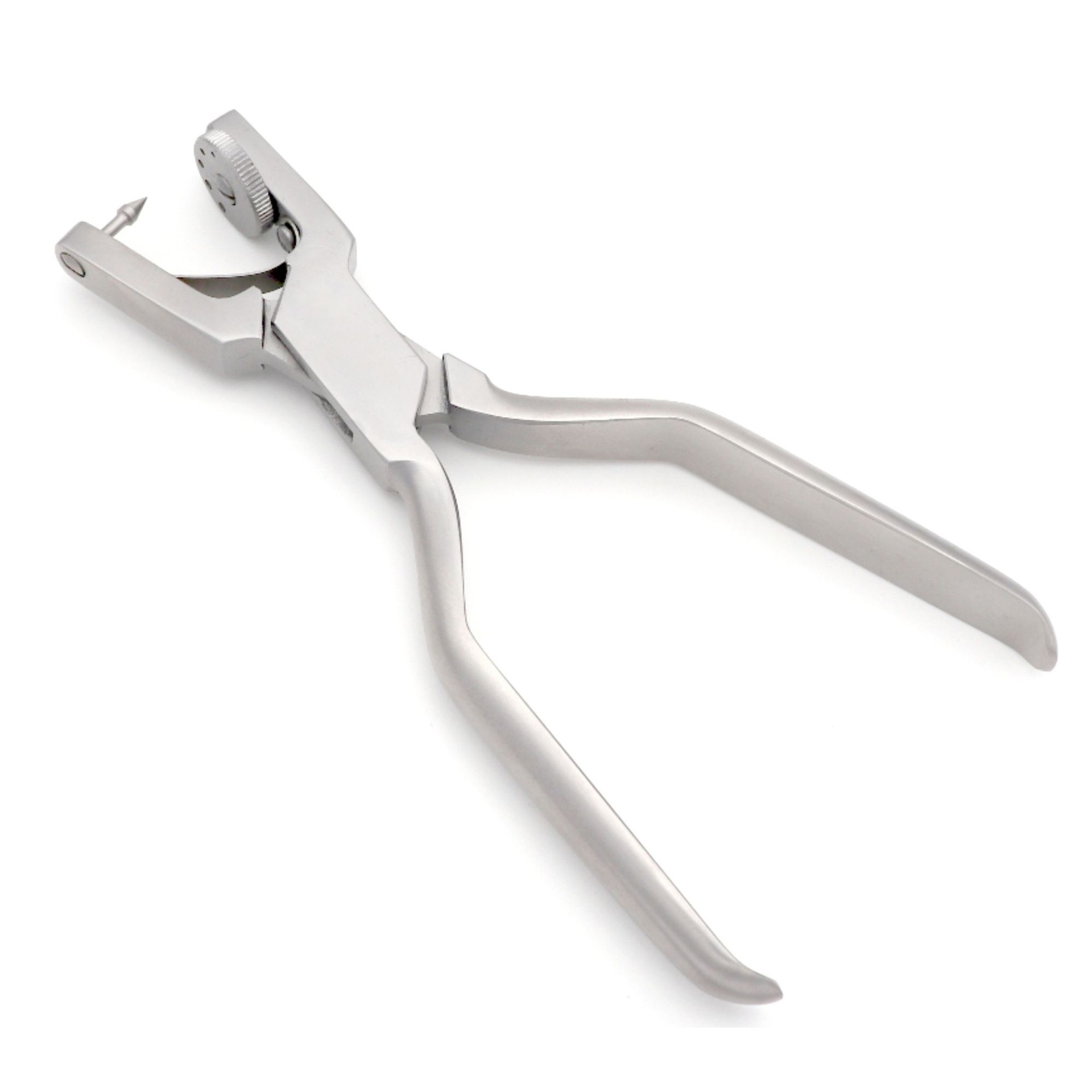
The four-instrument rubber dam system
| Instrument | Job | When you use it |
|---|---|---|
| Punch (Ainsworth) | Punches the holes in the dam sheet | Before placement — match hole size to tooth |
| Clamp Forceps (Ivory) | Carries the clamp to the tooth, opens/closes the clamp | During clamp placement and removal |
| Clamp | Anchors the dam on the most-distal tooth | One per case — selected by tooth anatomy |
| Frame | Holds the dam stretched and out of the way | Once the dam is over the tooth |
Choosing the right clamp
Rubber dam clamps are categorized by tooth type:
- 00 — anterior, smallest jaws, premolars and small anteriors
- 212 — anterior with retentive notches, ideal for Class V on incisors
- 206 / 208 — pre-molar, winged design
- 106L / 106R — anterior, butterfly winged for Class III
- 204 — molar, classic universal molar clamp
- 56S — molar, low-profile for partially erupted teeth
- W14 — molar wingless, for tight inter-occlusal access
- 7A / W7 — lower molar designs
A typical practice keeps a starter set of 6–8 clamps covering the common tooth groups. Add more as the procedure mix demands.
The 5-step rubber dam workflow
- Plan — identify the working tooth and the most-distal anchor tooth. Pick the right clamp.
- Punch — punch holes in the dam sheet, one per tooth to be exposed. Use the Ainsworth punch — different hole sizes for different teeth.
- Anchor — load the clamp into the Ivory forceps, place a safety floss tie through the clamp's bow, then seat the clamp on the most-distal tooth.
- Stretch & pass — stretch the dam over the clamp first, then over each subsequent tooth heading mesially, working the dam through inter-proximal contacts with floss.
- Frame — slip the dam onto the frame to keep it stretched and out of the way.
The ErgoDenta rubber dam range
- 2741 — Ainsworth Rubber Dam Punch, 17 cm
- 2715 — Ivory Clamp Forceps, 17 cm
- K2701-00 — Anterior Clamp #00
- K2701-212 — Anterior Clamp #212 (Class V)
- K2703 — Molar clamp range (204, 8A, 27, etc.)
- K2705 — Upper molar clamp range
Tips for faster, safer dam placement
- Always tie a safety floss through the clamp's bow — if it slips, you can retrieve it without endoscopic intervention.
- Punch over a paper template first if your spacing is off — the Ainsworth punch has graduated hole sizes for different teeth.
- Lubricate the dam edges with a tiny smear of petroleum jelly to ease passage through tight inter-proximal contacts.
- Keep clamp jaws clean and corrosion-free — rust pits create stress concentrations that lead to clamp fracture during seating.
Frequently asked questions
Why is rubber dam isolation important in endodontics?
Rubber dam keeps the operative field dry, prevents salivary contamination of the canal system, protects the airway from accidentally swallowed/aspirated files, and gives clear visualisation of the access cavity. The American Association of Endodontists requires rubber dam for all endodontic treatment.
What's the difference between a winged and wingless clamp?
Winged clamps have small lateral extensions that help retain the dam material — you can pre-stretch the dam over the clamp's wings before seating, then snap the dam off the wings once placed. Wingless clamps are smaller and used where space is limited, but require the dam to be placed after the clamp is seated.
How do I select the right clamp for a tooth?
Match the clamp design to tooth type: 00 / 212 for anteriors, 206 / 208 for pre-molars, 204 / 56S / W14 for molars. The clamp's jaws should engage the tooth at four points (mesial, distal, buccal, lingual) without rocking. Test before tying off the safety floss.
How do I prevent clamp slippage and patient injury?
Always tie a length of dental floss through the bow of the clamp before placement, with the free end exiting the patient's mouth. If the clamp dislodges or fractures, you can retrieve it via the floss. Inspect clamps for jaw pitting or hairline fractures before each use.
Can I use the same clamp on multiple patients?
Yes — clamps are reusable instruments designed to be cleaned, inspected, and autoclaved between patients. Replace any clamp showing jaw deformation, pitting, hairline cracks, or springback failure (clamp doesn't return to closed position when forceps are released).